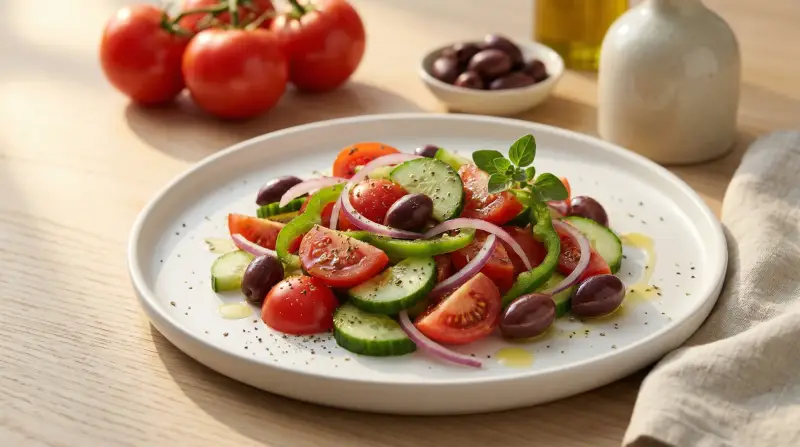
Mediterranean Low-Glycemic Greek Salad
A vibrant, blood sugar-friendly Greek salad featuring crisp vegetables, briny olives, and creamy feta—perfect for stable energy and Mediterranean wellness.
This Mediterranean-inspired salad is a glycemic health champion, combining fresh, low-GI vegetables with healthy fats that slow glucose absorption. The fiber-rich cucumbers and tomatoes provide essential nutrients without spiking blood sugar, while the extra virgin olive oil delivers heart-healthy monounsaturated fats that improve insulin sensitivity. The protein and fat from feta cheese further moderate the glycemic response, making this an ideal meal for sustained energy.
Traditional Greek salads are naturally low-glycemic because they emphasize whole vegetables and healthy fats over processed carbohydrates. The red onions contain quercetin, a flavonoid that may help regulate blood sugar levels, while the olives provide additional healthy fats and antioxidants. Bell peppers contribute vitamin C and fiber, both beneficial for metabolic health.
For optimal blood sugar management, enjoy this salad as a starter before protein-rich main courses, or add grilled chicken or chickpeas to make it a complete low-GI meal. The vinegar in the dressing has been shown to improve insulin sensitivity when consumed with meals, making this salad both delicious and functionally beneficial for glucose control.
Blood Sugar Impact
This salad will have minimal impact on blood sugar levels due to its very low glycemic load of 1.5 and GI of 15. The high fiber content from fresh vegetables and healthy fats from olive oil will promote stable blood sugar and sustained energy for 3-4 hours.
Blood Sugar Tips
- ✓ Add a protein source like grilled chicken, chickpeas, or feta cheese to further slow digestion and enhance satiety while maintaining stable blood sugar
- ✓ Eat this salad as a starter before higher-carb foods in your meal to leverage the fiber and fat content for better overall glycemic control
- ✓ Pair with a 10-15 minute walk after eating to help muscles utilize any glucose and maintain optimal blood sugar stability
🥗 Ingredients
- 227 g ripe tomatoes, cut into bite-sized pieces
- 170 g English cucumber, sliced into half moons
- 57 g small red onion, thinly sliced
- 120 g medium green bell pepper, sliced
- 113 g Kalamata olives
- 0.75 tsp dried oregano, plus more for serving
- 0.25 tsp fine sea salt
- 0.5 tsp fresh ground black pepper
- 2 tbsp red wine vinegar
- 3 tbsp extra virgin olive oil
- 113 g feta cheese, cut into generous slices
- 8.0 oz ripe tomatoes, cut into bite-sized pieces
- 6.0 oz English cucumber, sliced into half moons
- 2.0 oz small red onion, thinly sliced
- 4.2 oz medium green bell pepper, sliced
- 4.0 oz Kalamata olives
- 0.75 tsp dried oregano, plus more for serving
- 0.25 tsp fine sea salt
- 0.5 tsp fresh ground black pepper
- 2 tbsp red wine vinegar
- 3 tbsp extra virgin olive oil
- 4.0 oz feta cheese, cut into generous slices
👨🍳 Instructions
- 1
Place the thinly sliced red onion in a bowl of cold water and let soak for 10 minutes. This step mellows the sharp bite while maintaining crispness. Drain thoroughly and pat dry with paper towels.
- 2
In a large serving bowl, combine the bite-sized tomato pieces, cucumber half-moons, drained red onion slices, and green bell pepper strips. Toss gently to distribute the vegetables evenly.
- 3
Add the Kalamata olives to the vegetable mixture along with the dried oregano, sea salt, and a generous grinding of fresh black pepper. Toss everything together and allow the salad to rest for 5 minutes so the vegetables release their natural juices.
- 4
Give the salad another gentle toss to redistribute the seasonings and vegetable juices that have accumulated at the bottom of the bowl.
- 5
Drizzle the red wine vinegar evenly over the salad, followed by the extra virgin olive oil. Toss gently but thoroughly to coat all vegetables with the dressing.
- 6
Arrange the feta cheese slices on top of the salad, nestling them attractively among the vegetables. Sprinkle additional dried oregano over the feta and vegetables.
- 7
Serve immediately at room temperature for optimal flavor, or refrigerate for up to 30 minutes if you prefer a chilled salad. For best blood sugar management, enjoy this salad at the beginning of your meal or pair it with grilled protein.
📊 Nutrition Per Serving
| Per Serving | Whole Dish | |
|---|---|---|
| Calories | 259 | 1038 |
| Carbs | 10g | 40g |
| Sugars | 5g | 21g |
| Natural Sugars | 5g | 21g |
| Protein | 6g | 23g |
| Fat | 23g | 90g |
| Saturated Fat | 6g | 26g |
| Unsaturated Fat | 16g | 63g |
| Fiber | 3g | 11g |
| Soluble Fiber | 1g | 2g |
| Insoluble Fiber | 1g | 5g |
| Sodium | 1088mg | 4353mg |
Predicted Glucose Response
What if you...
Estimated model — individual responses vary. Not medical advice.
🔄 Lower GI Swaps
Cherry tomatoes have slightly lower glycemic impact due to higher skin-to-flesh ratio and concentrated nutrients. Sun-dried tomatoes in small amounts provide intense flavor with minimal carbohydrate load. Roasted red peppers offer similar color and sweetness with comparable low glycemic impact.
Scallions and chives provide onion flavor with even lower carbohydrate content per serving, resulting in negligible glycemic load. Shallots offer a milder flavor and can be used in smaller quantities while maintaining taste impact.
While feta is already low-glycemic, goat cheese has slightly lower lactose content and similar protein-to-carb ratio. Halloumi provides more protein per serving, which further helps stabilize blood sugar. Aged parmesan has virtually zero carbohydrates and high protein, making it excellent for blood sugar control.
While bell peppers are already low-glycemic, zucchini has even fewer carbohydrates per serving. Celery and radishes provide satisfying crunch with near-zero glycemic impact and add freshness to the salad.
🔬 The Science Behind This Recipe
Why This Recipe Works for Blood Sugar Balance
This Mediterranean Greek Salad is a blood sugar superstar with an impressively low glycemic load of just 1.5 per serving. The secret lies in its foundation of non-starchy vegetables that are packed with fiber and water but contain minimal carbohydrates. Tomatoes, cucumbers, and bell peppers are composed of over 90% water, which means they provide volume and satisfaction without triggering significant glucose responses. The fiber in these vegetables—particularly the soluble fiber in tomatoes—slows down digestion and creates a gentle, sustained release of any natural sugars into your bloodstream rather than causing a sharp spike.
The kalamata olives add another crucial element: healthy monounsaturated fats. When you eat fat alongside carbohydrates, it acts like a metabolic brake pedal, slowing gastric emptying and the rate at which glucose enters your bloodstream. This is why the estimated glycemic index of 15 is so remarkably low—these fats work synergistically with the fiber to create an even more gradual blood sugar response. The raw onions contribute quercetin, a flavonoid that research suggests may improve insulin sensitivity over time.
To maximize the blood sugar benefits of this salad, enjoy it as a starter before your main course. Eating vegetables first creates a "fiber buffer" in your digestive system that blunts the glucose impact of any higher-carb foods you eat afterward. You can also boost the protein content by adding grilled chicken, chickpeas, or feta cheese, which further stabilizes blood sugar and increases satiety. Remember: the glycemic load accounts for portion size, so you can enjoy a generous serving of this salad without worry.
Related recipes
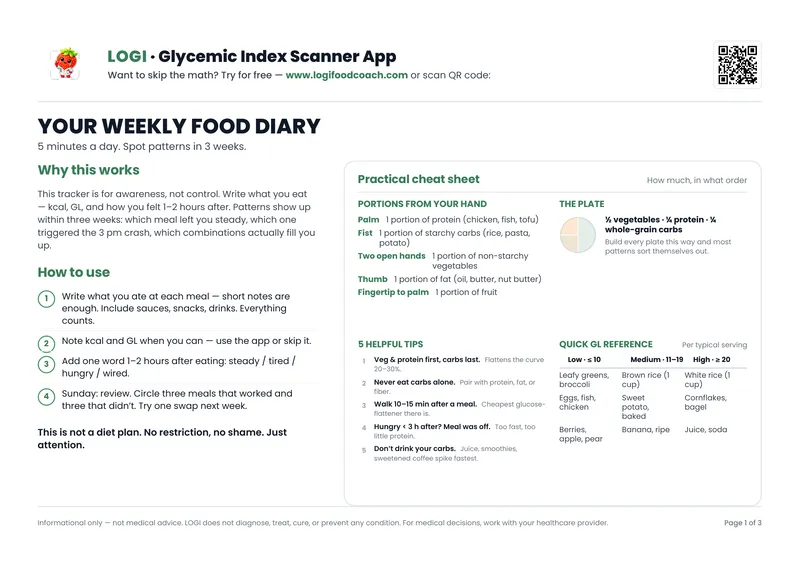
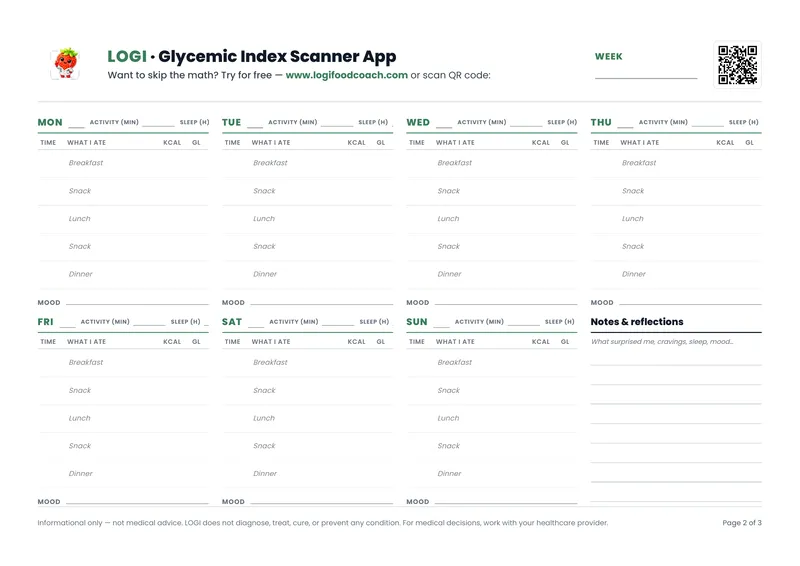
Free PDF — 3 pages
Your Weekly Food Journal
Track meals, glycemic load & mood. Spot patterns in 3 weeks.
No spam. Unsubscribe anytime.