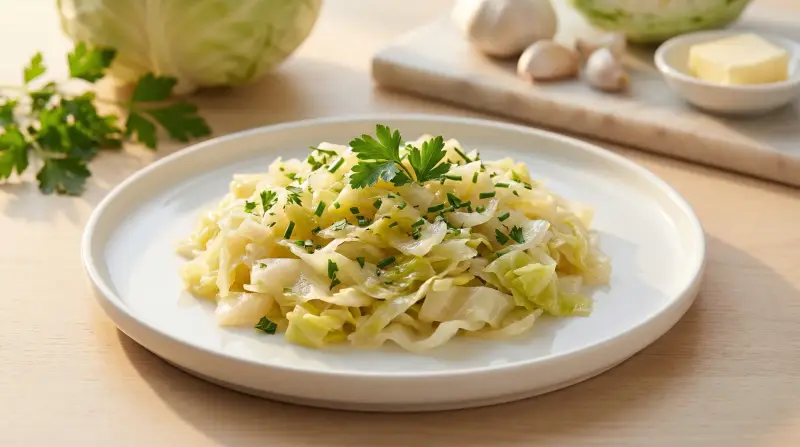
Low-Glycemic Butter-Braised Cabbage
Tender braised cabbage with rich butter creates a blood sugar-friendly side dish that's both satisfying and nutritious for stable glucose levels.
This simple yet elegant cabbage dish is a perfect example of how whole, unprocessed vegetables can be both delicious and exceptionally beneficial for blood sugar management. Green cabbage has an impressively low glycemic index of approximately 10, making it an ideal choice for anyone monitoring their glucose levels. The high fiber content slows digestion and promotes steady energy release throughout your meal.
The gentle cooking method preserves the cabbage's natural sweetness while creating a tender, melt-in-your-mouth texture. Adding butter or olive oil provides healthy fats that further slow glucose absorption, creating an even more favorable metabolic response. This dish is particularly effective when eaten at the beginning of your meal—the fiber and volume help moderate blood sugar spikes from other foods consumed afterward.
Beyond its glycemic benefits, cabbage is rich in vitamin C, vitamin K, and powerful antioxidants that support overall metabolic health. This recipe transforms humble cabbage into a comforting side dish that pairs beautifully with lean proteins like grilled chicken, baked fish, or legumes. It's proof that eating for stable blood sugar doesn't mean sacrificing flavor or satisfaction.
Blood Sugar Impact
Minimal blood sugar impact expected. With a very low glycemic load of 2.2 and GI of 10, this dish will cause virtually no blood sugar spike and provide stable energy without insulin response.
Blood Sugar Tips
- ✓ Eat this as a side dish with protein and healthy fats to create a complete low-glycemic meal
- ✓ The butter content helps slow any minimal carbohydrate absorption, so don't skip the fat
- ✓ This makes an excellent first course before higher-glycemic foods to help blunt their impact through increased satiety and fiber
🥗 Ingredients
- 900 g 1 large head green cabbage
- 1 tbsp 1 tablespoon kosher salt, for boiling water
- 2 tbsp 2 tablespoons salted butter or olive oil
- 0.75 tsp 3/4 teaspoon kosher salt, for seasoning
- 0.5 tsp Fresh ground black pepper, to taste
- 2.0 lb 1 large head green cabbage
- 1 tbsp 1 tablespoon kosher salt, for boiling water
- 2 tbsp 2 tablespoons salted butter or olive oil
- 0.75 tsp 3/4 teaspoon kosher salt, for seasoning
- 0.5 tsp Fresh ground black pepper, to taste
👨🍳 Instructions
- 1
Fill a large pot with water and add 1 tablespoon of kosher salt. Place over high heat and bring to a rolling boil.
- 2
While the water heats, inspect the cabbage head and peel away any damaged, wilted, or discolored outer leaves. Discard these leaves.
- 3
Cut the cabbage head into quarters, then remove the tough core from each quarter. Slice the cabbage into thin ribbons, about 1/4 to 1/2 inch wide.
- 4
Once the water reaches a full boil, carefully add the shredded cabbage. Stir gently to submerge all pieces. Cook for 12 to 15 minutes until the cabbage becomes very tender and translucent.
- 5
Test the cabbage for doneness by tasting a piece—it should be soft with no raw crunch remaining. When ready, pour the contents into a colander and drain thoroughly, allowing excess water to drip away.
- 6
Transfer the drained cabbage to a large serving bowl. While still hot, add the butter or olive oil and toss until it melts and coats the cabbage evenly.
- 7
Season with 3/4 teaspoon kosher salt and several grinds of fresh black pepper. Toss well to distribute the seasonings. Taste and adjust salt as needed until the flavors are bright and well-balanced.
- 8
Serve immediately while hot. For optimal blood sugar management, enjoy this as the first course of your meal or alongside a lean protein source.
📊 Nutrition Per Serving
| Per Serving | Whole Dish | |
|---|---|---|
| Calories | 107 | 428 |
| Carbs | 13g | 53g |
| Sugars | 7g | 29g |
| Natural Sugars | 7g | 29g |
| Protein | 3g | 12g |
| Fat | 6g | 24g |
| Saturated Fat | 4g | 14g |
| Unsaturated Fat | 2g | 8g |
| Fiber | 6g | 23g |
| Soluble Fiber | 2g | 7g |
| Insoluble Fiber | 4g | 16g |
| Sodium | 2179mg | 8715mg |
Predicted Glucose Response
What if you...
Estimated model — individual responses vary. Not medical advice.
🔄 Lower GI Swaps
While butter has minimal impact on blood sugar, olive oil and avocado oil contain monounsaturated fats that can improve insulin sensitivity and help stabilize blood glucose levels. Adding cinnamon to ghee provides compounds that may enhance insulin function.
Savoy cabbage has slightly more fiber per serving than regular cabbage, further lowering glycemic impact. Bok choy and swiss chard have even lower carbohydrate content (1-2g per cup vs 5g for cabbage), resulting in an even lower glycemic load while providing similar texture and nutrients.
Adding turmeric with black pepper enhances curcumin absorption, which has been shown to improve insulin sensitivity. Fenugreek contains soluble fiber and compounds that slow carbohydrate absorption. Cayenne pepper contains capsaicin, which may improve glucose metabolism and insulin response.
🔬 The Science Behind This Recipe
# Why This Recipe Works for Blood Sugar Balance
Butter-braised cabbage is a powerhouse for blood sugar management, with an impressively low glycemic load of just 2.2 and a GI of 10. Cabbage belongs to the cruciferous vegetable family, which means it's packed with fiber but extremely low in digestible carbohydrates—the primary driver of glucose spikes. A full serving contains only about 5 grams of total carbs, with roughly 2 grams coming from fiber that your body doesn't convert to glucose. This fiber slows digestion and creates a gentle, sustained energy release rather than a sharp blood sugar spike. The braising process actually makes the fiber more accessible while breaking down tough cell walls, helping you feel satisfied without overloading your system with glucose.
The addition of butter isn't just for flavor—it's a strategic choice for metabolic health. Dietary fat significantly slows gastric emptying, meaning food moves from your stomach to your intestines more gradually. This delayed digestion translates directly to a slower, more controlled release of any glucose into your bloodstream. The fat also triggers the release of hormones that signal fullness, helping prevent overeating and the subsequent blood sugar rollercoaster that comes with large portions.
To maximize the benefits of this dish, consider eating it at the start of your meal. Research shows that consuming vegetables before higher-carb foods can reduce post-meal glucose spikes by up to 73%. Pair this cabbage with a protein source like grilled chicken or fish to further stabilize blood sugar, and consider a 10-minute walk after eating to help your muscles absorb glucose more efficiently. With such a minimal glycemic impact, this recipe proves that blood-sugar-friendly eating can be both delicious and deeply satisfying.
Related recipes
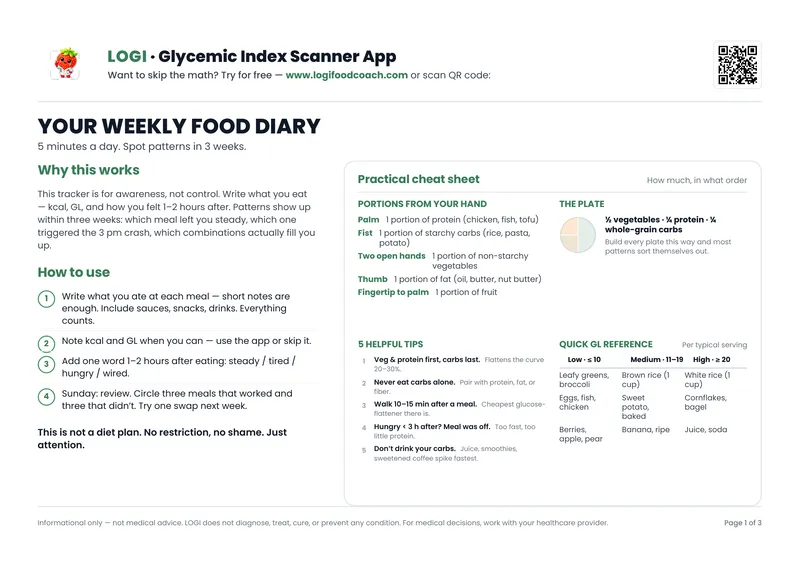
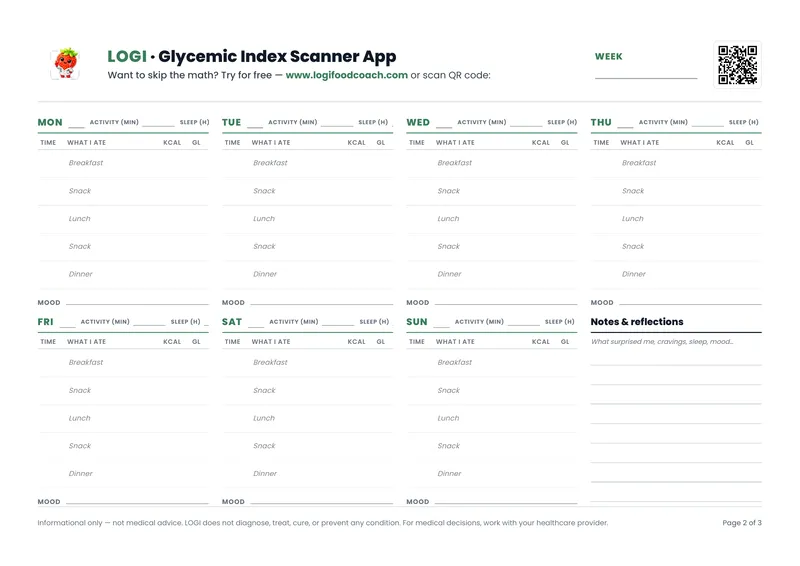
Free PDF — 3 pages
Your Weekly Food Journal
Track meals, glycemic load & mood. Spot patterns in 3 weeks.
No spam. Unsubscribe anytime.