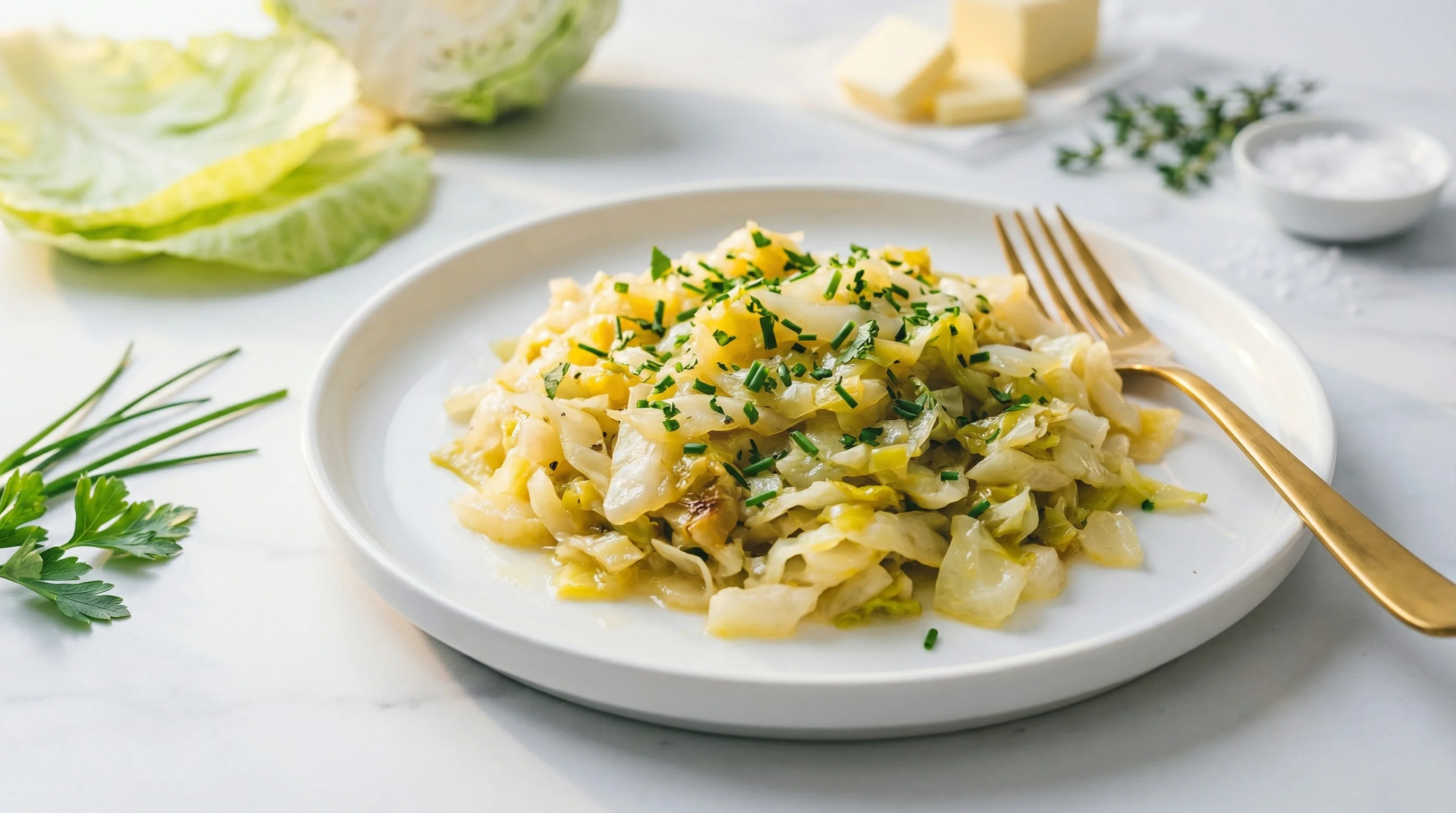
Low-Glycemic Butter-Braised Cabbage
Tender cabbage gently simmered and finished with rich butter creates a blood sugar-friendly side dish that's both comforting and nutritious.
This simple yet elegant cabbage dish is a perfect example of how humble vegetables can become stars on your low-glycemic plate. Cabbage scores impressively low on the glycemic index (GI of approximately 10), making it an excellent choice for blood sugar management. The high fiber content slows glucose absorption while providing sustained energy without spikes.
The gentle boiling method preserves the cabbage's natural sweetness while softening its texture to buttery perfection. When finished with quality butter or olive oil, the fat content further slows digestion and glucose release into your bloodstream. This dish pairs beautifully with lean proteins like grilled chicken or fish, creating a balanced meal that supports stable blood sugar levels throughout your day.
For optimal glycemic control, enjoy this as part of a complete meal rather than alone. The cruciferous vegetables in the cabbage family also provide powerful antioxidants and anti-inflammatory compounds that support overall metabolic health. Consider eating your cabbage first before other components of your meal—this "vegetable-first" approach has been shown to improve post-meal glucose response by up to 30%.
Blood Sugar Impact
Minimal blood sugar impact expected. With a very low glycemic load of 2.2 and GI of 10, this dish will provide stable energy without causing significant glucose elevation, making it excellent for blood sugar management.
Blood Sugar Tips
- ✓ Pair this dish with a protein source like grilled chicken or fish to create a complete, blood-sugar-friendly meal
- ✓ Eat this as a side dish before consuming any higher-carb foods on your plate to leverage the fiber content for better glucose control
- ✓ The butter content will slow digestion further - enjoy this dish warm to maximize satiety and maintain steady energy levels
🥗 Ingredients
- 1 pcs 1 large head green cabbage
- 1 tbsp 1 tablespoon kosher salt, plus more for seasoning
- 2 tbsp 2 tablespoons salted butter or olive oil
- 0.5 tsp Fresh ground black pepper to taste
- 1 pcs 1 large head green cabbage
- 1 tbsp 1 tablespoon kosher salt, plus more for seasoning
- 2 tbsp 2 tablespoons salted butter or olive oil
- 0.5 tsp Fresh ground black pepper to taste
👨🍳 Instructions
- 1
Fill a large stockpot with water and add 1 tablespoon of kosher salt. Place over high heat and bring to a rolling boil.
- 2
While the water heats, prepare your cabbage by removing any damaged or discolored outer leaves. Cut the head into quarters, remove the tough core, then slice the cabbage into thin ribbons about 1/4-inch wide.
- 3
Once the water reaches a full boil, carefully add the shredded cabbage to the pot. Stir gently to submerge all pieces in the boiling water.
- 4
Allow the cabbage to boil uncovered for 12 to 15 minutes, stirring occasionally. The cabbage is ready when it's very tender and has lost its raw crunch but still maintains some structure.
- 5
Drain the cooked cabbage thoroughly in a colander, allowing excess water to drip away for about 1 minute. Gently press with a spoon to remove additional moisture.
- 6
Transfer the drained cabbage to a large serving bowl. While still hot, add the butter or olive oil and toss until the fat melts and coats every strand.
- 7
Season generously with fresh ground black pepper and additional kosher salt to taste, starting with about 3/4 teaspoon. Toss well and taste, adjusting seasoning until the flavors are bright and well-balanced. Serve immediately while hot.
📊 Nutrition Per Serving
| Per Serving | Whole Dish | |
|---|---|---|
| Calories | 248 | 993 |
| Carbs | 18g | 71g |
| Sugars | 1g | 4g |
| Natural Sugars | 1g | 4g |
| Protein | 3g | 13g |
| Fat | 21g | 84g |
| Saturated Fat | 7g | 30g |
| Unsaturated Fat | 14g | 55g |
| Fiber | 7g | 28g |
| Soluble Fiber | 2g | 8g |
| Insoluble Fiber | 5g | 20g |
| Sodium | 9512mg | 38049mg |
Predicted Glucose Response
What if you...
Estimated model — individual responses vary. Not medical advice.
🔄 Lower GI Swaps
While butter has minimal impact on blood sugar, plant-based oils provide heart-healthy monounsaturated fats that can improve insulin sensitivity and help stabilize blood glucose levels over time.
These cruciferous alternatives have even lower glycemic loads than regular cabbage (GL under 1) and contain compounds that may enhance glucose metabolism and insulin function.
Mineral-rich salts provide trace minerals like chromium and magnesium that support healthy insulin function and glucose metabolism, though the blood sugar impact remains negligible for all salt types.
🔬 The Science Behind This Recipe
# The Science Behind Low-Glycemic Butter-Braised Cabbage
This butter-braised cabbage is a blood sugar champion, boasting an exceptionally low glycemic index of 10 and a glycemic load of just 2.2 per serving. Cabbage is a non-starchy vegetable packed with fiber—about 2 grams per cup—which slows down digestion and prevents rapid glucose absorption into your bloodstream. The fiber acts like a protective barrier, creating a gel-like substance in your digestive tract that moderates how quickly carbohydrates break down into sugar. Even better, cabbage contains very few digestible carbohydrates to begin with, meaning there's simply not much glucose available to spike your blood sugar in the first place.
The addition of butter isn't just for flavor—it's a strategic metabolic move. The fat in butter further slows gastric emptying, meaning food leaves your stomach more gradually and enters your small intestine at a controlled pace. This extended digestion time translates to a gentler, more sustained release of any glucose into your bloodstream rather than a sharp spike. Fat also triggers the release of hormones that signal fullness, helping you feel satisfied longer and reducing the likelihood of reaching for higher-glycemic snacks later.
To maximize the blood sugar benefits of this dish, try eating it at the start of your meal before any starches or grains. This "vegetables first" approach has been shown to reduce post-meal glucose spikes by up to 73% in some studies. The fiber and fat create a metabolic buffer that blunts the impact of any carbohydrates that follow. A 10-minute walk after enjoying this meal can further help your muscles absorb glucose, keeping blood sugar stable and steady.