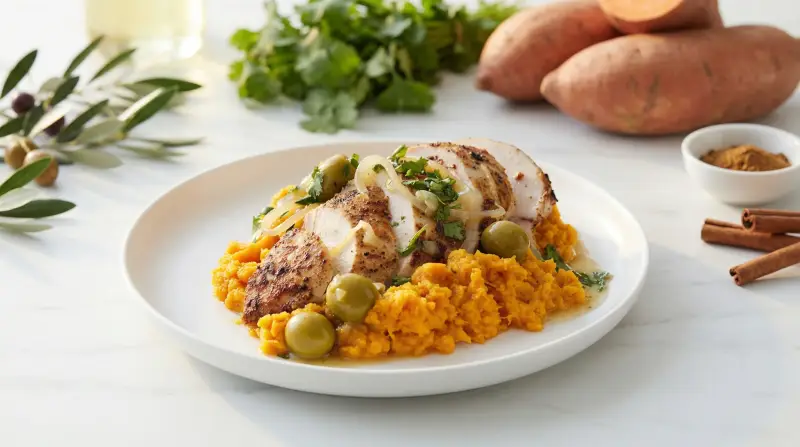
Moroccan-Spiced Chicken with Creamy Sweet Potato Mash
Aromatic ras el hanout chicken paired with velvety sweet potato mash creates a blood sugar-friendly comfort meal that's both satisfying and nourishing.
This Moroccan-inspired dish transforms simple ingredients into a glycemic-friendly feast that won't spike your blood sugar. Sweet potatoes, despite their name, have a lower glycemic index than regular potatoes thanks to their fiber content and resistant starch. The combination of lean chicken breast provides sustained protein to slow glucose absorption, while the warm spices of ras el hanout add depth without any glycemic impact.
The magic of this recipe lies in its balanced macronutrient profile. The chicken delivers high-quality protein that helps moderate blood sugar response, while the sweet potatoes provide complex carbohydrates with a GI of around 44-61 depending on preparation. Olive oil adds healthy monounsaturated fats that further slow digestion. The olives contribute additional healthy fats and antioxidants, making this a metabolically smart choice.
For optimal blood sugar management, serve this dish with a side of leafy greens or a simple cucumber salad, and eat the vegetables first to prime your digestive system. The honey is used sparingly at just half a teaspoon per serving for a touch of sweetness in the sauce, but you can reduce it further or substitute with a small amount of date paste if desired. This meal is best enjoyed at lunch or early dinner when insulin sensitivity is typically higher.
Blood Sugar Impact
Moderate blood sugar impact with a gradual rise due to the sweet potato content, though the protein from chicken and healthy fats from olive oil will help slow glucose absorption. Expect steady energy for 2-3 hours with a gentle decline rather than a sharp spike.
Blood Sugar Tips
- ✓ Eat the chicken and vegetables first before the sweet potato mash to leverage the protein and fiber for slower carbohydrate absorption
- ✓ Keep portion size of the sweet potato mash to about 1/2 to 3/4 cup to manage the glycemic load
- ✓ Take a 10-15 minute walk after eating to help muscles absorb glucose and blunt the post-meal blood sugar rise
🥗 Ingredients
- 1000 g sweet potatoes, peeled and cubed
- 2 tsp ras el hanout spice blend
- 4 pcs skinless, boneless chicken breasts
- 2 tbsp extra virgin olive oil
- 1 pcs yellow onion, thinly sliced
- 1 pcs garlic clove, crushed
- 200 ml low-sodium chicken stock
- 2 tsp raw honey
- 2 tbsp fresh lemon juice
- 15 pcs green olives, pitted
- 20 g fresh coriander leaves, chopped
- 2.2 lb sweet potatoes, peeled and cubed
- 2 tsp ras el hanout spice blend
- 4 pcs skinless, boneless chicken breasts
- 2 tbsp extra virgin olive oil
- 1 pcs yellow onion, thinly sliced
- 1 pcs garlic clove, crushed
- 14 tbsp low-sodium chicken stock
- 2 tsp raw honey
- 2 tbsp fresh lemon juice
- 15 pcs green olives, pitted
- 0.7 oz fresh coriander leaves, chopped
👨🍳 Instructions
- 1
Place the cubed sweet potatoes in a large pot and cover with cold salted water. Bring to a boil over high heat, then reduce to medium-high and cook for 15 minutes until the potatoes are fork-tender and easily pierced.
- 2
While the potatoes cook, combine the ras el hanout with a pinch of sea salt and freshly ground black pepper in a small bowl. Pat the chicken breasts dry with paper towels, then rub the spice mixture evenly over all sides of each breast.
- 3
Heat 1 tablespoon of olive oil in a large frying pan or skillet over medium-high heat. Once shimmering, add the spiced chicken breasts and sear for 3 minutes on each side until golden brown and aromatic. The chicken won't be fully cooked yet. Transfer the chicken to a plate and set aside.
- 4
In the same pan, add the sliced onion and cook for 5 minutes, stirring occasionally, until softened and translucent. Add the crushed garlic and cook for another 30 seconds until fragrant. Pour in the chicken stock, honey, and lemon juice, stirring to combine and scraping up any browned bits from the bottom of the pan.
- 5
Return the seared chicken breasts to the pan along with any accumulated juices. Add the green olives, then reduce heat to medium-low. Simmer uncovered for 10 minutes, turning the chicken once halfway through, until the sauce reduces to a syrupy consistency and the chicken reaches an internal temperature of 165°F (74°C).
- 6
Drain the cooked sweet potatoes thoroughly and return them to the pot. Add the remaining 1 tablespoon of olive oil and mash until smooth and creamy. Season with salt and pepper to taste. For an even creamier texture, you can add a splash of the cooking water if needed.
- 7
Remove the chicken from the pan and let rest for 2 minutes, then slice each breast thickly on the diagonal. Stir the chopped coriander through the warm sauce in the pan.
- 8
To serve, divide the sweet potato mash among four plates. Top each portion with sliced chicken, then spoon the olive and coriander sauce generously over the top. For optimal blood sugar control, consider serving with a side of steamed greens or a crisp salad, and eat the vegetables first before the main dish.
📊 Nutrition Per Serving
| Per Serving | Whole Dish | |
|---|---|---|
| Calories | 495 | 1979 |
| Carbs | 59g | 237g |
| Sugars | 15g | 61g |
| Natural Sugars | 15g | 61g |
| Protein | 40g | 161g |
| Fat | 11g | 44g |
| Saturated Fat | 2g | 8g |
| Unsaturated Fat | 9g | 35g |
| Fiber | 9g | 36g |
| Soluble Fiber | 0g | 1g |
| Insoluble Fiber | 1g | 3g |
| Sodium | 465mg | 1859mg |
Predicted Glucose Response
What if you...
Estimated model — individual responses vary. Not medical advice.
🔄 Lower GI Swaps
Cauliflower, celeriac, and turnip have significantly lower glycemic index (GI 15-35) compared to sweet potato (GI 63), reducing the overall glycemic load while maintaining a creamy mash texture.
These zero-calorie sweeteners have no impact on blood sugar (GI 0) versus honey which has a GI of 58 and contributes directly to glycemic load.
While all alliums have relatively low GI, using smaller amounts of shallots or the green parts of scallions provides flavor with minimal carbohydrate content, further reducing glycemic load.
Commercial chicken stocks often contain added sugars and starches that increase glycemic load; bone broth or homemade versions ensure no hidden carbohydrates that could spike blood sugar.
🔬 The Science Behind This Recipe
Why This Recipe Works for Blood Sugar Balance
This Moroccan-spiced chicken dish demonstrates a masterclass in blood sugar management through strategic ingredient pairing. Sweet potatoes, despite their name, have a moderate glycemic index of around 63 when boiled, but the key lies in how we're serving them. By mashing sweet potatoes with olive oil, we're adding healthy fats that significantly slow down carbohydrate digestion and glucose absorption. The fat creates a coating around the starch molecules, requiring your digestive system to work harder and longer to break them down. This means a gentler, more gradual rise in blood sugar rather than a sharp spike. Additionally, sweet potatoes contain resistant starch and fiber—about 4 grams per cup—which further moderates their glycemic impact.
The lean chicken breast is your metabolic hero here, providing high-quality protein without added fat. Protein triggers the release of hormones that help regulate blood sugar and promote satiety, keeping you fuller longer and preventing the blood sugar rollercoaster that leads to cravings. When you eat protein alongside carbohydrates, your body releases less insulin than it would for carbs alone, creating a more stable glucose response. The aromatic ras el hanout spice blend isn't just for flavor—cinnamon, a common component, has been shown in studies to improve insulin sensitivity and help cells absorb glucose more efficiently.
For optimal blood sugar control, start your meal with a few bites of the chicken and any accompanying vegetables before moving to the sweet potato mash. This "protein and vegetables first" approach can reduce post-meal glucose spikes by up to 73% according to recent research. The moderate glycemic load of 32.5 per serving means this meal delivers a reasonable amount of carbohydrates that won't overwhelm your system, especially when balanced with the protein and fat.
Related recipes
Free PDF — 3 pages
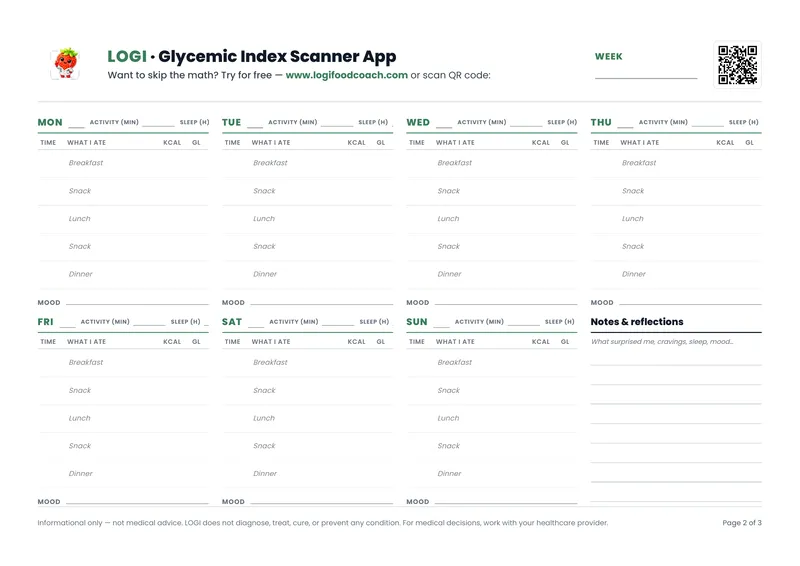
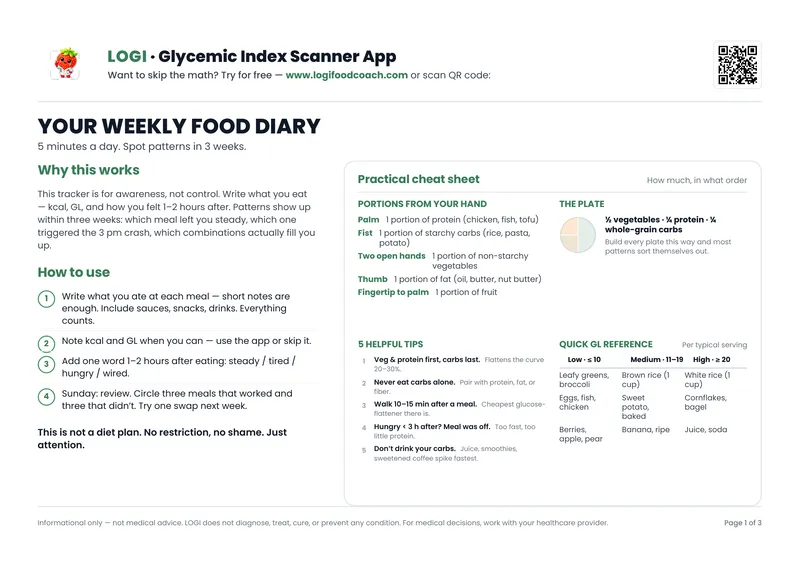
Your Weekly Food Journal
Track meals, glycemic load & mood. Spot patterns in 3 weeks.
No spam. Unsubscribe anytime.