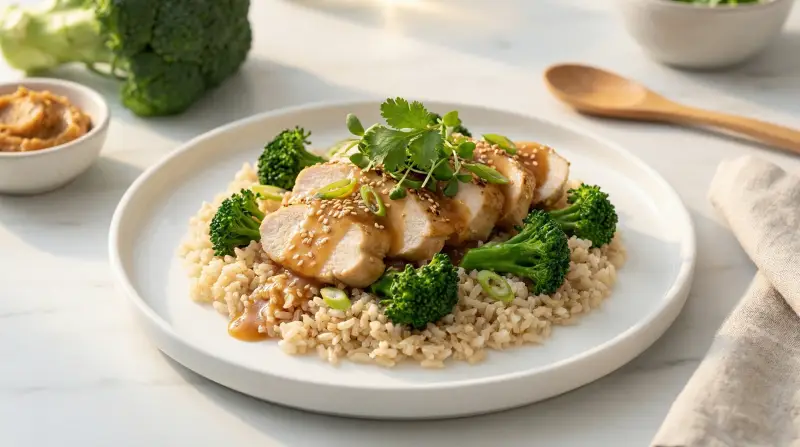
Miso-Glazed Chicken with Brown Rice and Sprouting Broccoli
A blood sugar-friendly Japanese bowl featuring tender chicken, nutty brown rice, and crisp broccoli with a savory miso dressing that won't spike glucose.
This nourishing Japanese-inspired bowl is specifically designed to support stable blood sugar levels throughout your day. Brown basmati rice provides slow-releasing complex carbohydrates with a low glycemic index of around 50, while lean chicken breast delivers high-quality protein that helps moderate glucose absorption. The combination of fiber-rich sprouting broccoli and the fermented miso paste adds gut-healthy probiotics and additional fiber to further slow digestion.
The beauty of this recipe lies in its balanced macronutrient profile. The protein from chicken paired with the low-GI brown rice creates a synergistic effect that prevents the rapid blood sugar spikes associated with refined grains. Miso paste, a traditional fermented soybean product, not only adds umami depth but also contains beneficial enzymes that support metabolic health. The fermentation process in miso breaks down complex carbohydrates and produces bioactive peptides that may improve insulin sensitivity. The ginger in the dressing provides anti-inflammatory compounds that further support glucose metabolism.
Note that traditional mirin contains approximately 8-10g of sugar per tablespoon with a glycemic index of 49-70. While this recipe uses only 1 tablespoon divided between 2 servings (adding roughly 4-5g sugar per portion), those seeking stricter glycemic control should use the stevia-sweetened rice vinegar alternative provided in the swaps section. This substitution eliminates the added sugars while maintaining the authentic sweet-savory balance.
For optimal glycemic control, eat the broccoli and chicken first before moving to the rice—this vegetables and protein first approach has been shown to reduce post-meal glucose spikes by up to 30%. The sesame seeds contribute healthy fats and additional fiber, while spring onions add prebiotic compounds that feed beneficial gut bacteria. This complete meal provides sustained energy for 3-4 hours without the crash associated with high-glycemic foods, making it perfect for lunch or dinner when you need lasting fuel. The 60g portion of cooked brown rice per serving keeps the glycemic load moderate while still providing satisfying volume and texture.
Blood Sugar Impact
This meal should produce a moderate, gradual rise in blood sugar with sustained energy for 3-4 hours. The combination of lean protein, fiber-rich brown rice, and vegetables creates a balanced glycemic response with minimal spiking.
Blood Sugar Tips
- ✓ Eat the sprouting broccoli first to leverage the fiber and create a protective barrier that slows glucose absorption from the rice
- ✓ Pair this meal with a 10-15 minute walk after eating to help muscles absorb glucose and blunt the blood sugar peak
- ✓ Consider reducing the rice portion by one-quarter and adding extra vegetables if you're particularly glucose-sensitive
🥗 Ingredients
- 120 g brown basmati rice
- 2 pcs skinless chicken breasts
- 140 g sprouting broccoli
- 4 pcs spring onions, cut into diagonal slices
- 1 tbsp toasted sesame seeds
- 2 tsp miso paste
- 1 tbsp rice vinegar
- 1 tbsp mirin
- 1 tsp fresh ginger, grated
- 4.2 oz brown basmati rice
- 2 pcs skinless chicken breasts
- 4.9 oz sprouting broccoli
- 4 pcs spring onions, cut into diagonal slices
- 1 tbsp toasted sesame seeds
- 2 tsp miso paste
- 1 tbsp rice vinegar
- 1 tbsp mirin
- 1 tsp fresh ginger, grated
👨🍳 Instructions
- 1
Rinse 120g brown basmati rice under cold water until the water runs clear. Cook according to package directions, typically 25-30 minutes in boiling water with a pinch of salt. Once tender, drain any excess water and set aside covered to keep warm. This yields approximately 180g cooked rice total, or 90g per serving for optimal glycemic load.
- 2
While the rice cooks, bring a medium saucepan of water to a rolling boil. Add 2 skinless chicken breasts (approximately 300g total), ensuring they are fully submerged. Boil for exactly 1 minute, then immediately turn off the heat, cover the pan with a tight-fitting lid, and let stand undisturbed for 15 minutes. This gentle poaching method keeps the chicken incredibly moist while ensuring it reaches a safe internal temperature of 75°C.
- 3
Check that the chicken is cooked through by slicing into the thickest part—there should be no pink remaining and juices should run clear. Remove from the poaching liquid and let rest for 3-4 minutes, then slice into thin diagonal pieces approximately 1cm thick.
- 4
Bring a fresh pot of water to boil for the sprouting broccoli. Add 140g broccoli and cook for 3-4 minutes until bright green and tender-crisp. Immediately drain and rinse under cold running water to stop the cooking process and preserve the vibrant color and nutrients.
- 5
Prepare the miso dressing by whisking together 2 teaspoons miso paste, 1 tablespoon rice vinegar, 1 tablespoon mirin, and 1 teaspoon freshly grated ginger in a small bowl until smooth and well combined. Add a teaspoon of warm water if needed to achieve a pourable consistency. Note: If using traditional mirin, this adds approximately 4-5g of sugar per serving. For stricter blood sugar control, substitute the mirin with the stevia-sweetened rice vinegar alternative from the swaps section.
- 6
Divide the warm brown rice between two shallow bowls or plates, using approximately 90g cooked rice per serving. Scatter 2 sliced spring onions and 1 tablespoon toasted sesame seeds evenly over the rice.
- 7
Arrange 70g sprouting broccoli and approximately 150g sliced chicken breast on top of the rice in each bowl in an attractive pattern. For best blood sugar control, eat the vegetables and protein first before the rice to minimize glucose spikes.
- 8
Drizzle half the miso-ginger dressing generously over each bowl. Serve immediately while the rice is still warm and the broccoli is crisp. Any leftover components can be stored separately in airtight containers in the refrigerator for up to 2 days and reheated gently before serving.
📊 Nutrition Per Serving
| Per Serving | Whole Dish | |
|---|---|---|
| Calories | 320 | 639 |
| Carbs | 27g | 54g |
| Sugars | 6g | 11g |
| Added Sugars | 2g | 3g |
| Natural Sugars | 4g | 8g |
| Protein | 40g | 81g |
| Fat | 6g | 11g |
| Saturated Fat | 1g | 2g |
| Unsaturated Fat | 5g | 9g |
| Fiber | 5g | 10g |
| Soluble Fiber | 1g | 1g |
| Insoluble Fiber | 1g | 2g |
| Sodium | 324mg | 647mg |
Predicted Glucose Response
What if you...
Estimated model — individual responses vary. Not medical advice.
🔄 Lower GI Swaps
Traditional mirin contains 8-10g sugar per tablespoon with a GI of 60-70. This stevia-sweetened alternative provides the same sweet-tangy balance without any glycemic impact, making it ideal for stricter blood sugar management while maintaining authentic Japanese flavor.
While brown basmati rice has a moderate GI of 50, these alternatives provide even lower glycemic responses. Cauliflower rice with quinoa reduces total carbohydrates by 60% while adding extra fiber. Shirataki rice is virtually carb-free and when mixed with wild rice provides texture with minimal glucose impact. Pearl barley has a GI of only 28 due to high beta-glucan fiber content and provides a chewy, satisfying texture similar to rice.
White rice has a GI of 70-90 and will cause rapid blood sugar spikes. Brown basmati rice maintains the bran layer with fiber and resistant starch that slow digestion. Never substitute white rice in this recipe as it defeats the glycemic control purpose. If you only have white rice available, use half the amount mixed with cauliflower rice to reduce the glycemic load.
All these alternatives provide similar high-quality protein (20-25g per serving) that helps moderate glucose absorption. Tofu and tempeh offer plant-based options with additional fiber. White fish provides lean protein with omega-3 fatty acids that support insulin sensitivity. Turkey breast has an identical macronutrient profile to chicken. All options maintain the meal's low glycemic impact.
All these cruciferous vegetables provide similar fiber content (3-4g per serving) and have negligible glycemic impact. They contain sulforaphane compounds that may improve insulin sensitivity. Bok choy and Chinese broccoli offer authentic Asian flavor profiles while maintaining the same blood sugar benefits as sprouting broccoli.
🔬 The Science Behind This Recipe
This recipe leverages multiple mechanisms to support stable blood sugar. Brown basmati rice has a glycemic index of approximately 50 due to its intact bran layer containing fiber and resistant starch that slow glucose absorption. The 90g cooked rice portion per serving provides roughly 20g of carbohydrates, resulting in a moderate glycemic load of 11.7-12 when combined with the other ingredients. Lean chicken breast provides 35-40g of high-quality protein per serving, which triggers incretin hormone release that enhances insulin secretion and delays gastric emptying, effectively blunting the glucose response. The fermented miso paste contains bioactive peptides and beneficial bacteria that have been shown in studies to improve insulin sensitivity and reduce post-meal glucose spikes. Fermentation breaks down complex carbohydrates in soybeans and produces compounds that may inhibit alpha-glucosidase enzymes, further slowing carbohydrate digestion. The fiber from sprouting broccoli (approximately 3-4g per serving) forms a viscous gel in the digestive tract that physically slows glucose absorption. Ginger contains gingerol compounds that have been demonstrated to enhance glucose uptake in muscle cells independent of insulin, while sesame seeds provide healthy fats that further moderate the glycemic response. The strategic eating order—vegetables and protein before carbohydrates—has been clinically shown to reduce post-meal blood glucose by 20-30% by priming the digestive system with fiber and protein before carbohydrate exposure. When mirin is used, its sugar content (4-5g per serving) is partially offset by the meal's overall protein and fiber content, but those with diabetes or prediabetes should consider the stevia alternative for tighter glucose control.
Related recipes
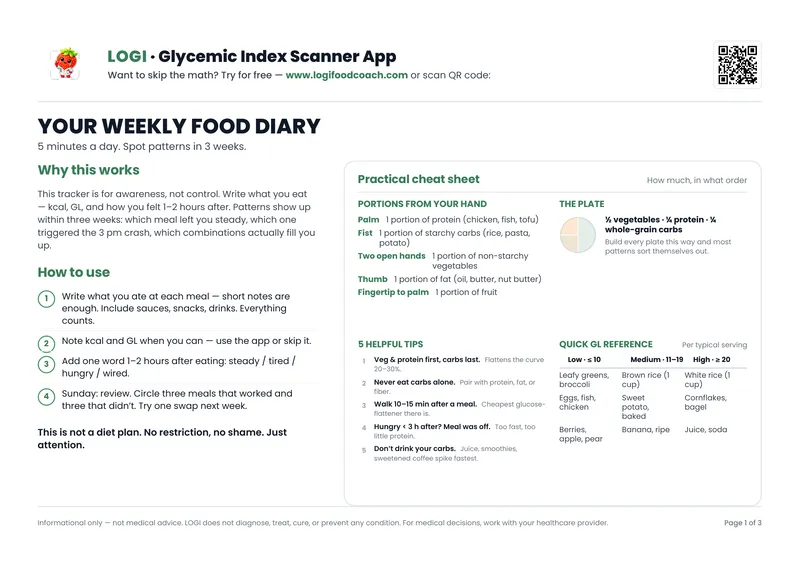
Free PDF — 3 pages
Your Weekly Food Journal
Track meals, glycemic load & mood. Spot patterns in 3 weeks.
No spam. Unsubscribe anytime.