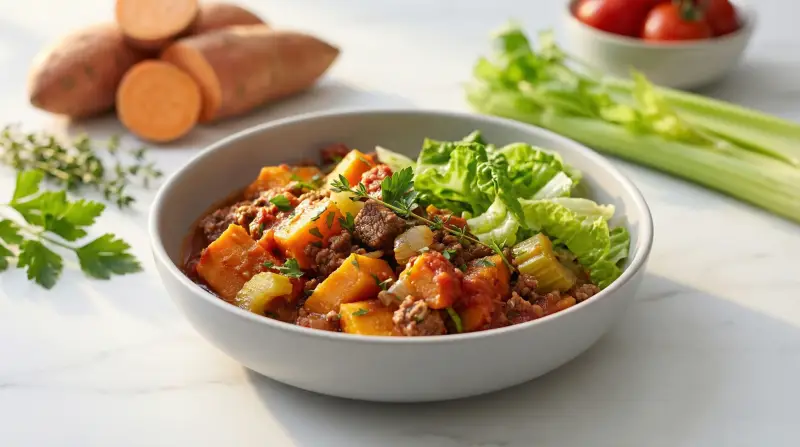
Lean Beef and Sweet Potato Comfort Stew
A nourishing one-pot stew combining protein-rich lean beef with fiber-packed sweet potatoes—designed to keep blood sugar steady while delivering maximum comfort and satisfaction.
This wholesome stew transforms humble ingredients into a blood sugar-friendly powerhouse meal. Sweet potatoes, despite their name, have a moderate glycemic index (around 63) and are packed with fiber that slows glucose absorption. When paired with lean beef's protein and the abundant vegetables in this recipe, the overall glycemic impact becomes even more favorable.
The magic happens in the layering: aromatic vegetables provide a flavor foundation while contributing additional fiber and nutrients. Lean minced beef delivers high-quality protein that helps moderate the glucose response and keeps you satisfied for hours. The tomato base adds lycopene and acidity, which research suggests may help improve insulin sensitivity.
For optimal blood sugar management, serve this stew over a bed of steamed Savoy cabbage rather than with bread or rice. The cabbage adds cruciferous vegetables to your plate, and eating it first creates a fiber barrier that further slows carbohydrate absorption. This meal works beautifully for lunch or dinner, and the leftovers actually improve overnight as flavors meld. Consider pairing with a side salad dressed in vinegar-based dressing—the acetic acid can help blunt post-meal glucose spikes by up to 20%. Each serving provides approximately 350g of stew, carefully portioned to maintain the moderate glycemic load while delivering satisfying nutrition.
Blood Sugar Impact
This stew should produce a moderate, gradual rise in blood sugar due to its low-medium GI of 36 and moderate glycemic load of 17.4. The combination of protein from lean beef, fiber from vegetables, and complex carbohydrates from sweet potato should provide steady energy for 3-4 hours without sharp spikes.
Blood Sugar Tips
- ✓ Eat the protein and non-starchy vegetables (beef, mushrooms, celery, carrots) first before consuming the sweet potato pieces to slow glucose absorption
- ✓ Serve with a side of leafy greens or a small salad to add extra fiber and further reduce the overall glycemic impact
- ✓ Take a 10-15 minute walk after eating to help muscles absorb glucose and blunt any post-meal blood sugar rise
🥗 Ingredients
- 1 tbsp sunflower oil
- 1 pcs large onion, chopped
- 1 pcs large carrot, chopped
- 1 pcs celery stick, sliced
- 500 g lean minced beef
- 1 tbsp tomato purée
- 1 tbsp mushroom ketchup
- 400 g canned chopped tomatoes
- 450 g sweet potato, peeled and cut into large chunks
- 4 pcs fresh thyme sprigs
- 1 pcs bay leaf
- 15 g fresh parsley, chopped
- 300 g Savoy cabbage, for serving
- 1 tbsp sunflower oil
- 1 pcs large onion, chopped
- 1 pcs large carrot, chopped
- 1 pcs celery stick, sliced
- 1.1 lb lean minced beef
- 1 tbsp tomato purée
- 1 tbsp mushroom ketchup
- 14.1 oz canned chopped tomatoes
- 15.9 oz sweet potato, peeled and cut into large chunks
- 4 pcs fresh thyme sprigs
- 1 pcs bay leaf
- 0.5 oz fresh parsley, chopped
- 10.6 oz Savoy cabbage, for serving
👨🍳 Instructions
- 1
Warm the sunflower oil in a large, heavy-bottomed pot or Dutch oven over medium heat. Once shimmering, add the chopped onion, carrot, and celery to the pot.
- 2
Cook the vegetables gently for about 10 minutes, stirring occasionally, until they soften and the onion becomes translucent. This sweating process builds the flavor foundation for your stew.
- 3
Increase the heat to medium-high and add the lean minced beef to the pot. Break it apart with a wooden spoon and cook for 5-7 minutes until the meat is browned throughout with no pink remaining.
- 4
Stir in the tomato purée and cook for 2-3 minutes, allowing it to caramelize slightly and deepen in color. This concentrates the tomato flavor and removes any raw taste.
- 5
Add the Worcestershire sauce, canned chopped tomatoes, sweet potato chunks, thyme sprigs, and bay leaf to the pot. Pour in 400ml of water (approximately one can's worth). Season generously with salt and freshly ground black pepper.
- 6
Bring the mixture to a vigorous boil, then immediately reduce the heat to low. Cover partially and simmer gently for 40-45 minutes, stirring every 10-15 minutes to ensure the sweet potatoes cook evenly and don't stick to the bottom.
- 7
Test the sweet potatoes with a fork—they should be tender but not falling apart. Remove and discard the bay leaf and thyme stems. Stir through the freshly chopped parsley. Taste and adjust seasoning if needed.
- 8
Serve the stew in deep bowls over a generous portion of steamed Savoy cabbage. For best blood sugar management, eat the cabbage first, then enjoy the stew. The fiber from the vegetables will help moderate glucose absorption. Each serving should be approximately 350g of stew.
📊 Nutrition Per Serving
| Per Serving | Whole Dish | |
|---|---|---|
| Calories | 527 | 2108 |
| Carbs | 42g | 166g |
| Sugars | 14g | 56g |
| Natural Sugars | 14g | 56g |
| Protein | 28g | 113g |
| Fat | 29g | 116g |
| Saturated Fat | 11g | 42g |
| Unsaturated Fat | 16g | 64g |
| Fiber | 10g | 38g |
| Soluble Fiber | 1g | 4g |
| Insoluble Fiber | 3g | 10g |
| Sodium | 429mg | 1716mg |
Predicted Glucose Response
What if you...
Estimated model — individual responses vary. Not medical advice.
🔄 Lower GI Swaps
These vegetables have a lower glycemic index than sweet potato (GI 63). Butternut squash has a GI of 51, while turnips and celeriac are even lower at GI 30-35, resulting in a gentler blood sugar response.
Carrots have a moderate GI of 35-40 when cooked. Zucchini, green beans, and bell peppers have minimal impact on blood sugar with GI values under 15, significantly reducing the overall glycemic load of the stew.
While onions have a moderate GI of 10-15, using leek greens, scallion tops, or fennel provides similar aromatic flavor with even lower carbohydrate content and virtually no glycemic impact.
Fresh tomatoes have a slightly lower glycemic load than canned versions and contain no added sugars or thickeners that can increase GL. Fresh tomatoes maintain a GI around 15 with better blood sugar stability.
Concentrated tomato paste can have a higher sugar density. Using sun-dried tomato paste or roasted red pepper alternatives provides rich umami flavor with lower carbohydrate concentration per serving, minimizing blood sugar spikes.
🔬 The Science Behind This Recipe
Why This Stew Keeps Your Blood Sugar Steady
This hearty stew is a masterclass in blood sugar management, with a remarkably low glycemic index of 36 and a moderate glycemic load of 17.4 per serving. The secret lies in how its ingredients work together to slow glucose absorption. The lean beef provides high-quality protein and fat that significantly delay stomach emptying, meaning the carbohydrates from vegetables enter your bloodstream gradually rather than all at once. Sweet potatoes, despite their name, have a lower GI than regular potatoes (around 44-61 depending on preparation) because they contain more fiber and a different starch structure that resists rapid breakdown. When combined with protein and the healthy fats from sunflower oil, their impact on blood sugar becomes even more gentle.
The supporting vegetables—onions, carrots, and celery—add layers of blood sugar protection. These aromatic vegetables contribute soluble fiber that forms a gel-like substance in your digestive tract, further slowing carbohydrate absorption. Carrots, while slightly sweet, have a low glycemic load when eaten in normal portions as part of a mixed meal. The key concept here is that glycemic load matters more than glycemic index alone—it accounts for the actual amount of carbohydrates you're eating, not just how quickly they're absorbed.
For optimal blood sugar control, enjoy this stew with a simple side salad eaten first. Starting your meal with non-starchy vegetables primes your digestive system and can reduce the overall glucose response by up to 30%. A 10-15 minute walk after eating can also help your muscles absorb glucose more efficiently, keeping blood sugar levels stable throughout the afternoon.
Related recipes
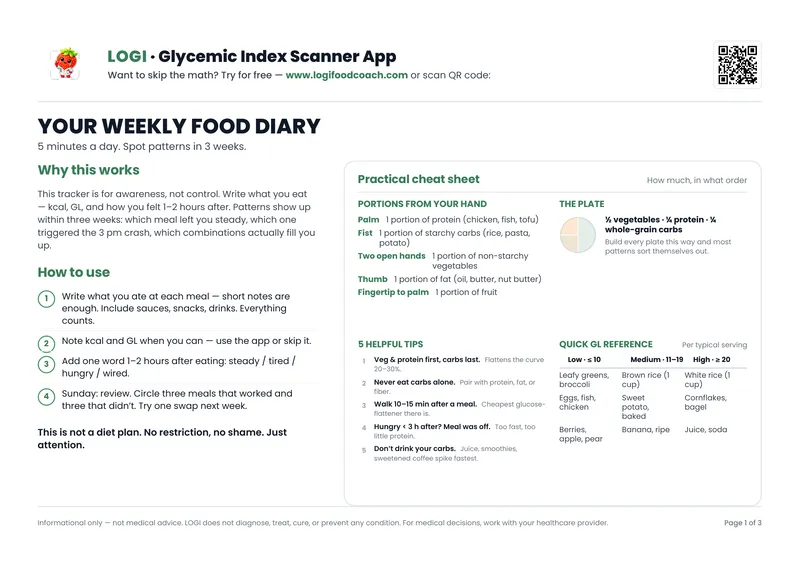
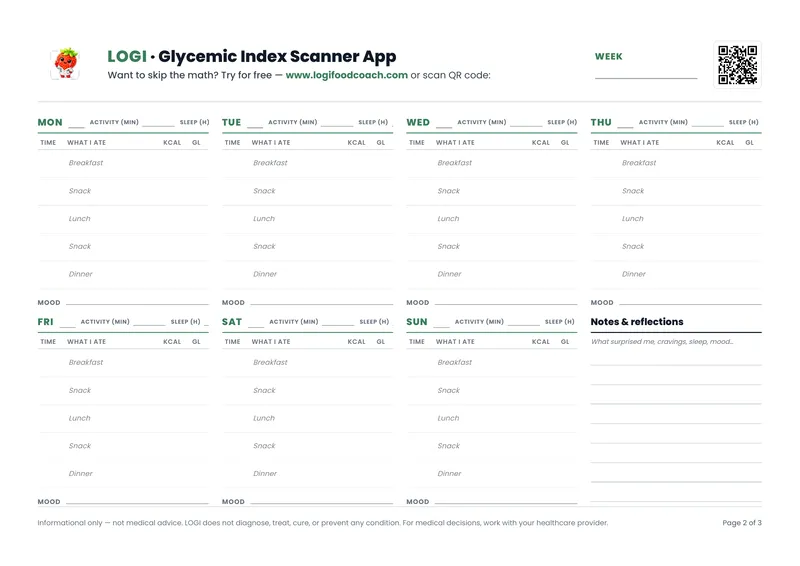
Free PDF — 3 pages
Your Weekly Food Journal
Track meals, glycemic load & mood. Spot patterns in 3 weeks.
No spam. Unsubscribe anytime.