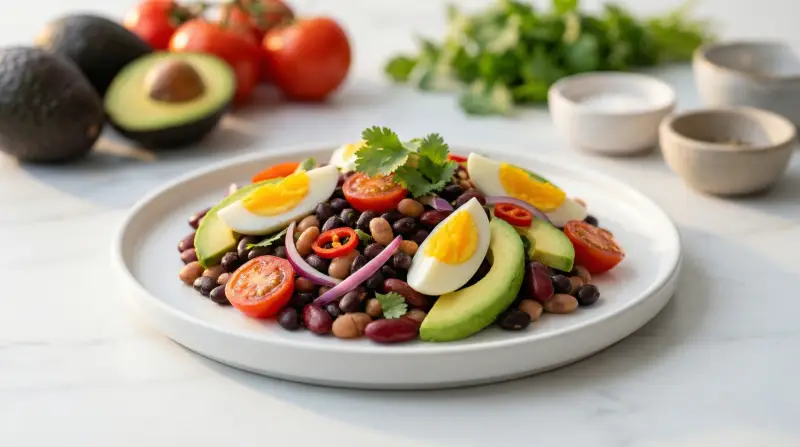
Low-Glycemic Mexican Bean and Egg Salad Bowl
A protein-packed Mexican-inspired salad featuring fiber-rich beans, creamy avocado, and perfectly soft-boiled eggs that keeps blood sugar stable for hours.
This vibrant Mexican-inspired salad is a masterclass in blood sugar management, combining three powerful glycemic allies: protein-rich eggs, fiber-dense beans, and healthy fats from avocado. The combination of pinto and kidney beans provides both soluble and insoluble fiber, which slows glucose absorption and promotes steady energy levels throughout your day.
What makes this recipe particularly effective for glycemic control is the strategic pairing of macronutrients. The eggs deliver high-quality protein with virtually zero carbohydrates, while the avocados contribute monounsaturated fats that further moderate the glycemic response. The beans, despite containing carbohydrates, have a low glycemic index (around 28-35) due to their resistant starch and fiber content. Fresh vegetables like tomatoes, red onion, and cilantro add minimal carbohydrates while providing antioxidants and additional fiber.
For optimal blood sugar management, eat the vegetables and protein first before consuming any accompanying tortillas. The cumin in the dressing isn't just for flavor—studies suggest this spice may help improve insulin sensitivity. This complete meal provides sustained energy without the blood sugar spike you'd experience from traditional grain-heavy salads, making it perfect for lunch or a light dinner.
Blood Sugar Impact
This meal will have a low to moderate blood sugar impact with a gradual, sustained rise due to the fiber-rich beans, healthy fats from avocado and egg, and low overall glycemic load. Expect stable energy for 3-4 hours without significant spikes or crashes.
Blood Sugar Tips
- ✓ Eat the avocado and egg first to leverage their healthy fats and protein for slowing carbohydrate absorption from the beans
- ✓ Consider a 10-15 minute walk after eating to help muscles absorb glucose and further blunt any blood sugar rise
- ✓ If using store-bought salad dressing, choose one without added sugars to maintain the meal's low glycemic properties
🥗 Ingredients
- 4 pcs large eggs
- 2 pcs ripe avocados, peeled and pitted
- 400 g canned pinto beans, rinsed and drained
- 400 g canned kidney beans, rinsed and drained
- 1 pcs small red onion, thinly sliced
- 30 g fresh cilantro leaves, roughly chopped
- 250 g cherry tomatoes, halved
- 3 tbsp lime and cilantro dressing
- 1 pcs fresh red chili, deseeded and finely sliced
- 0.5 tsp ground cumin
- 4 pcs large eggs
- 2 pcs ripe avocados, peeled and pitted
- 14.1 oz canned pinto beans, rinsed and drained
- 14.1 oz canned kidney beans, rinsed and drained
- 1 pcs small red onion, thinly sliced
- 1.1 oz fresh cilantro leaves, roughly chopped
- 8.8 oz cherry tomatoes, halved
- 3 tbsp lime and cilantro dressing
- 1 pcs fresh red chili, deseeded and finely sliced
- 0.5 tsp ground cumin
👨🍳 Instructions
- 1
Bring a medium pot of water to a rolling boil over high heat. Carefully lower the eggs into the boiling water using a slotted spoon, then reduce heat to maintain a gentle boil. Set a timer for exactly 6 minutes 30 seconds for soft-boiled eggs with jammy yolks.
- 2
While the eggs cook, prepare an ice bath by filling a medium bowl with cold water and ice cubes. When the timer goes off, immediately transfer the eggs to the ice bath using a slotted spoon. Let them cool for at least 5 minutes to stop the cooking process.
- 3
Meanwhile, halve the avocados, remove the pits, and scoop out the flesh. Slice the avocado into bite-sized pieces and place in a large serving bowl. Add the rinsed and drained pinto beans and kidney beans to the bowl.
- 4
Add the thinly sliced red onion, halved cherry tomatoes, and roughly chopped cilantro leaves to the bowl with the beans and avocado. Gently toss the ingredients together, being careful not to mash the avocado.
- 5
In a small bowl, combine the fresh lime juice, extra virgin olive oil, finely sliced red chili, ground cumin, sea salt, and freshly ground black pepper. Whisk together until the spices are evenly distributed and the dressing is well emulsified.
- 6
Once the eggs have cooled completely, gently tap them on a hard surface and peel away the shells under cool running water. Pat the eggs dry with a paper towel, then carefully cut each egg into quarters lengthwise.
- 7
Drizzle the spiced lime dressing over the bean and vegetable mixture, then gently toss everything together until evenly coated. Taste and adjust seasoning with additional salt or lime juice if needed.
- 8
Divide the salad among four serving bowls or plates. Arrange the soft-boiled egg quarters on top of each portion, nestling them into the salad. Serve immediately while the eggs are still slightly warm for the best flavor and texture. For optimal blood sugar control, eat the vegetables and protein first before adding any tortillas or bread on the side.
📊 Nutrition Per Serving
| Per Serving | Whole Dish | |
|---|---|---|
| Calories | 577 | 2307 |
| Carbs | 66g | 262g |
| Sugars | 6g | 22g |
| Added Sugars | 1g | 3g |
| Natural Sugars | 5g | 20g |
| Protein | 27g | 110g |
| Fat | 26g | 105g |
| Saturated Fat | 5g | 19g |
| Unsaturated Fat | 22g | 86g |
| Fiber | 24g | 94g |
| Soluble Fiber | 2g | 10g |
| Insoluble Fiber | 6g | 22g |
| Sodium | 204mg | 818mg |
Predicted Glucose Response
What if you...
Estimated model — individual responses vary. Not medical advice.
🔄 Lower GI Swaps
Black soybeans have a GI of 15 compared to pinto beans' GI of 39, while lupini beans and edamame are also significantly lower on the glycemic index, resulting in a much smaller blood sugar spike
Black soybeans have half the glycemic impact of kidney beans, while lentils (GI 32) and chickpeas (GI 28) provide lower glycemic alternatives that release glucose more slowly into the bloodstream
While tomatoes are relatively low-GI, cucumbers, bell peppers, and radishes are virtually zero glycemic load vegetables that add crunch and freshness without any blood sugar impact
Vinegar and lemon juice have been shown to lower the glycemic response of meals, while healthy fats from olive oil, avocado oil, or tahini slow glucose absorption without adding sugars found in many commercial dressings
🔬 The Science Behind This Recipe
Why This Bowl Keeps Your Blood Sugar Steady
This Mexican-inspired bowl is a masterclass in blood sugar management, with a remarkably low glycemic index of 29 and a glycemic load of just 18.5 per serving. The secret lies in how these ingredients work together to slow down glucose absorption. Eggs provide high-quality protein that stabilizes blood sugar by slowing carbohydrate digestion, while avocado contributes heart-healthy monounsaturated fats that further moderate the glucose response. This protein-fat combination creates a "speed bump" effect, preventing the rapid blood sugar spikes you'd get from eating carbohydrates alone.
The beans deserve special attention for their blood sugar benefits. Both pinto and kidney beans are packed with soluble fiber and resistant starch, which your body digests slowly and incompletely. This means the carbohydrates in beans release glucose gradually into your bloodstream rather than all at once. The fiber also feeds beneficial gut bacteria that produce compounds helping regulate metabolism. Even better, beans contain protein alongside their carbs, creating a naturally balanced food that keeps you satisfied longer while maintaining steady energy levels.
To maximize the blood sugar benefits of this bowl, try eating your ingredients in a strategic order: start with the avocado and a few bites of egg, then move to the beans, saving any tortilla chips or rice for last. This "food sequencing" technique can reduce glucose spikes by up to 73% according to recent research. A 10-15 minute walk after your meal will further help your muscles absorb glucose, keeping levels even more stable. Remember, the generous portion size here keeps the glycemic load moderate—it's not just what you eat, but how much that matters for blood sugar control.
Related recipes
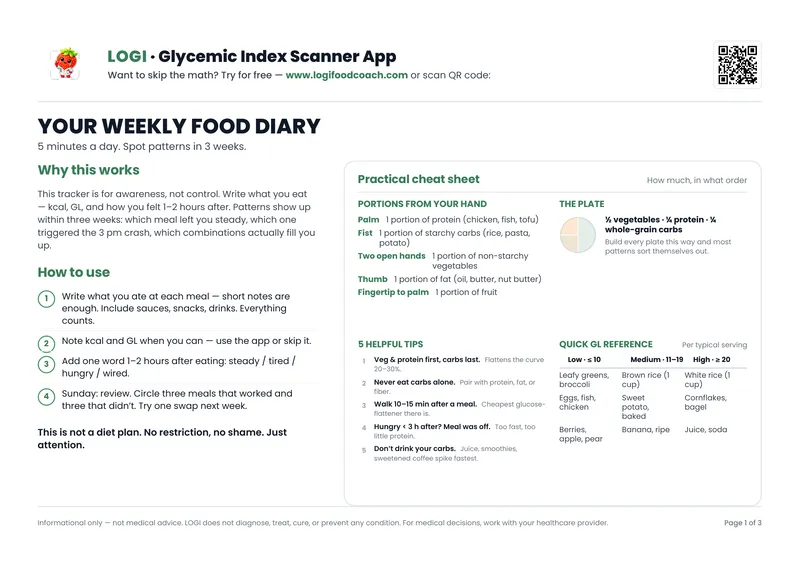
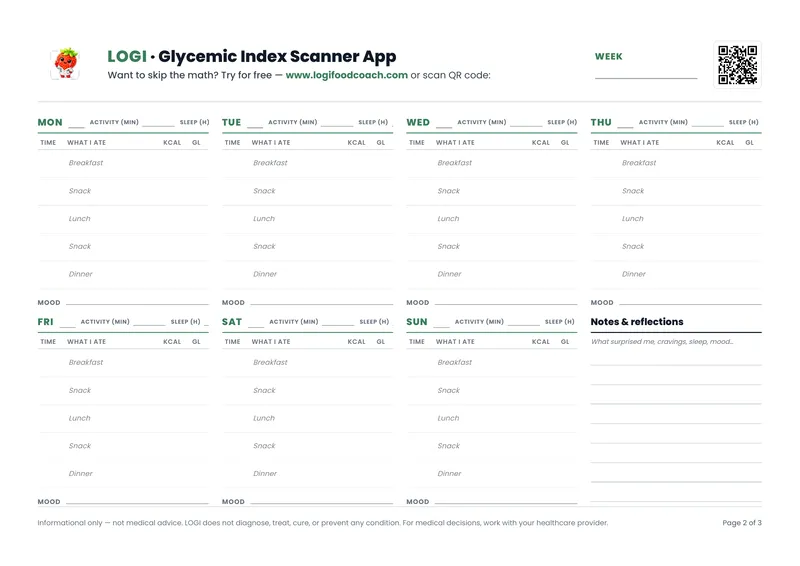
Free PDF — 3 pages
Your Weekly Food Journal
Track meals, glycemic load & mood. Spot patterns in 3 weeks.
No spam. Unsubscribe anytime.