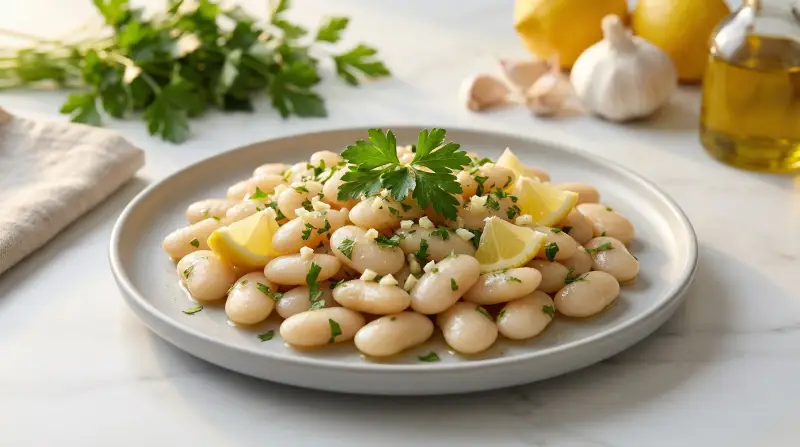
Warm Garlic Butter Beans with Fresh Lemon
A Mediterranean-inspired side dish featuring creamy butter beans in fragrant garlic oil with bright lemon—ready in just 10 minutes for stable blood sugar.
This simple yet elegant warm salad showcases butter beans at their finest, making it an ideal choice for anyone managing their blood sugar levels. Butter beans have a low glycemic index of around 29-35, meaning they release glucose slowly into your bloodstream, providing sustained energy without the spike. Their high fiber and protein content further slows digestion, making this dish particularly beneficial when paired with lean proteins or enjoyed as part of a balanced meal. The combination of extra virgin olive oil and fresh lemon juice not only enhances flavor but also supports glycemic control. Healthy fats from olive oil slow carbohydrate absorption, while the acidity of lemon juice has been shown to lower the glycemic response of meals. Fresh garlic adds aromatic depth while offering its own metabolic benefits, including improved insulin sensitivity. This versatile dish works beautifully as a warm side for grilled fish or chicken, or serve it at room temperature alongside a crisp green salad. For optimal blood sugar management, enjoy this as part of a meal where you eat your vegetables and proteins first, saving any higher-carb components for last. The healthy fats from olive oil combined with the beans' natural fiber create an ideal combination for steady glucose levels. Each serving provides approximately 15g of complex carbohydrates, balanced with 7g of plant-based protein and 6g of fiber—a winning combination for steady glucose levels throughout your day. One serving equals approximately 200g of prepared beans, roughly one cup.
Blood Sugar Impact
Low to moderate impact with gradual, sustained energy release over 3-4 hours. The combination of fiber-rich beans, healthy fats from olive oil, and low GI of 29 will result in a gentle, steady rise in blood sugar without sharp spikes.
Blood Sugar Tips
- ✓ Add a source of lean protein like grilled chicken or fish to further slow digestion and stabilize blood sugar response
- ✓ Eat this dish alongside or after a serving of non-starchy vegetables like leafy greens or roasted broccoli to add more fiber
- ✓ Take a 10-15 minute walk after eating to help muscles absorb glucose and prevent any post-meal blood sugar elevation
🥗 Ingredients
- 2 tbsp extra virgin olive oil
- 1 pcs garlic clove, crushed
- 800 g canned butter beans, drained and rinsed
- 1 pcs fresh lemon, zest and juice
- 15 g fresh flat-leaf parsley, roughly chopped
- 2 tbsp extra virgin olive oil
- 1 pcs garlic clove, crushed
- 1.8 lb canned butter beans, drained and rinsed
- 1 pcs fresh lemon, zest and juice
- 0.5 oz fresh flat-leaf parsley, roughly chopped
👨🍳 Instructions
- 1
Drain the canned butter beans thoroughly in a colander and rinse them under cold running water to remove excess sodium. Set aside to drain completely while you prepare the other ingredients.
- 2
Peel and crush the garlic clove using the flat side of a knife or a garlic press. Zest the lemon using a microplane or fine grater, being careful to only remove the bright yellow outer layer. Cut the lemon in half and juice it, removing any seeds.
- 3
Rinse the parsley under cold water, pat dry with paper towels, and roughly chop the leaves, discarding the thick stems. You should have about 3-4 tablespoons of chopped parsley.
- 4
Heat the olive oil in a large frying pan or skillet over medium heat. Add the crushed garlic and cook gently for 60-90 seconds, stirring frequently, until fragrant and just beginning to turn golden. Be careful not to burn the garlic as it will become bitter.
- 5
Add the drained butter beans to the pan with the garlic oil. Stir gently to coat all the beans in the aromatic oil and warm them through for 2-3 minutes, stirring occasionally. The beans should be heated through but not mushy.
- 6
Remove the pan from the heat. Immediately stir in the lemon zest, lemon juice, and chopped parsley. Season generously with freshly ground black pepper and a pinch of sea salt to taste, keeping in mind that canned beans already contain some sodium.
- 7
Transfer the warm butter bean salad to a serving dish and serve immediately while still warm, or allow to cool to room temperature. This dish pairs beautifully with grilled fish, roasted chicken, or as part of a Mediterranean mezze spread. Leftovers can be refrigerated in an airtight container for up to 3 days and enjoyed cold or gently reheated.
📊 Nutrition Per Serving
| Per Serving | Whole Dish | |
|---|---|---|
| Calories | 297 | 1187 |
| Carbs | 42g | 169g |
| Sugars | 6g | 25g |
| Natural Sugars | 6g | 25g |
| Protein | 16g | 64g |
| Fat | 8g | 32g |
| Saturated Fat | 1g | 5g |
| Unsaturated Fat | 7g | 28g |
| Fiber | 15g | 58g |
| Soluble Fiber | 0g | 1g |
| Insoluble Fiber | 0g | 2g |
| Sodium | 7mg | 27mg |
Predicted Glucose Response
What if you...
Estimated model — individual responses vary. Not medical advice.
🔬 The Science Behind This Recipe
Butter beans are an exceptional choice for blood sugar management with their low glycemic index of 29-35, which means they cause only a gentle, gradual rise in blood glucose levels. This low GI is due to their high resistant starch content and substantial fiber—about 6g per serving—which slows the breakdown of carbohydrates during digestion. The beans also provide 7g of plant-based protein per serving, further moderating the glycemic response by slowing gastric emptying. The extra virgin olive oil in this recipe contributes healthy monounsaturated fats that delay carbohydrate absorption and improve insulin sensitivity. Research shows that adding acidic ingredients like lemon juice to a meal can reduce the glycemic impact by up to 30% by slowing stomach emptying and starch digestion. Fresh garlic contains compounds that may enhance insulin secretion and improve glucose metabolism. Together, these ingredients create a synergistic effect that promotes stable blood sugar levels for 3-4 hours after eating, making this dish ideal for sustained energy without spikes or crashes. The combination of complex carbohydrates, fiber, protein, and healthy fats represents the optimal macronutrient balance for glycemic control.
Related recipes

Free PDF — 3 pages
Your Weekly Food Journal
Track meals, glycemic load & mood. Spot patterns in 3 weeks.
No spam. Unsubscribe anytime.
