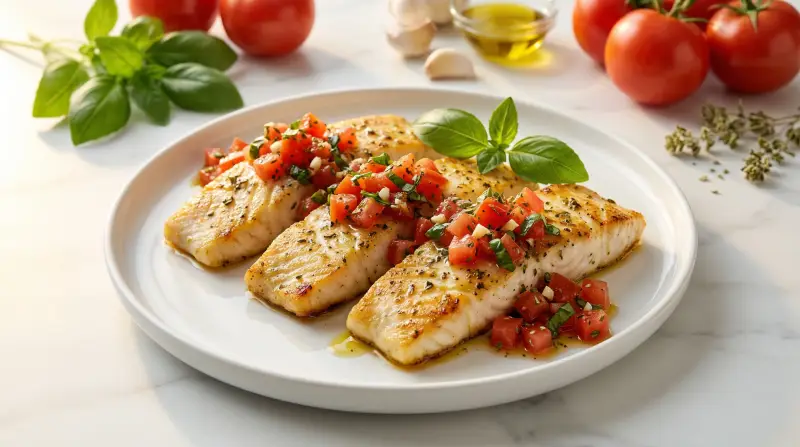
Mediterranean Baked Halibut with Fresh Tomato-Basil Salsa
Tender halibut fillets topped with vibrant tomato-basil salsa create a protein-rich, low-glycemic meal that supports stable blood sugar levels naturally.
This Mediterranean-inspired halibut dish is a perfect example of low-glycemic eating that doesn't compromise on flavor. Halibut is an exceptional choice for blood sugar management—it's a lean protein that provides zero carbohydrates while delivering omega-3 fatty acids that support insulin sensitivity. The fresh tomato-basil salsa adds bright, garden-fresh flavor with minimal glycemic impact, as tomatoes have a low GI of approximately 38.
What makes this recipe particularly beneficial for glucose control is its high protein-to-carbohydrate ratio. Each serving delivers roughly 24 grams of protein with only 3-4 grams of carbohydrates from the tomatoes and herbs. This macronutrient balance helps prevent blood sugar spikes and promotes sustained energy. The extra-virgin olive oil provides healthy monounsaturated fats that further slow digestion and glucose absorption.
For optimal blood sugar management, pair this dish with non-starchy vegetables like roasted asparagus or sautéed spinach, and consider adding a small portion of quinoa or cauliflower rice if desired. The meal is naturally gluten-free, heart-healthy, and anti-inflammatory—making it ideal for anyone focused on metabolic health. Best enjoyed as a lunch or dinner entrée, this recipe proves that eating for stable blood sugar can be both delicious and satisfying.
Blood Sugar Impact
Minimal blood sugar impact expected. This meal combines lean protein with low-glycemic vegetables and healthy fats, resulting in stable, sustained energy for 3-4 hours with virtually no spike.
Blood Sugar Tips
- ✓ Eat the tomato-basil salsa first to benefit from the fiber and allow the vinegar/acid to help moderate any glucose response
- ✓ Pair this meal with a leafy green salad dressed with extra olive oil to further slow digestion and enhance satiety
- ✓ Take a 10-15 minute walk after eating to help muscles absorb any glucose and maintain steady blood sugar levels
🥗 Ingredients
- 2 pcs 2 medium tomatoes, diced
- 2 tbsp 2 tablespoons fresh basil, chopped
- 1 tsp 1 teaspoon fresh oregano, chopped
- 1 tbsp 1 tablespoon minced garlic
- 2 tsp 2 teaspoons extra-virgin olive oil
- 16 oz 4 halibut fillets, 4 ounces each
- 2 pcs 2 medium tomatoes, diced
- 2 tbsp 2 tablespoons fresh basil, chopped
- 1 tsp 1 teaspoon fresh oregano, chopped
- 1 tbsp 1 tablespoon minced garlic
- 2 tsp 2 teaspoons extra-virgin olive oil
- 16 oz 4 halibut fillets, 4 ounces each
👨🍳 Instructions
- 1
Preheat your oven to 350°F (175°C). Prepare a 9x13-inch baking dish by lightly coating it with cooking spray or brushing with a small amount of olive oil to prevent sticking.
- 2
While the oven heats, prepare the fresh salsa by combining the diced tomatoes, chopped basil, chopped oregano, and minced garlic in a medium mixing bowl.
- 3
Drizzle the extra-virgin olive oil and fresh lemon juice over the tomato mixture, then season with sea salt and black pepper. Stir gently until all ingredients are evenly combined. The oil will help carry the flavors and create a light coating for the fish.
- 4
Arrange the four halibut fillets in a single layer in the prepared baking dish, ensuring they have space between them for even cooking. Pat the fish dry with paper towels first if needed for better browning.
- 5
Spoon the tomato-basil salsa generously over each halibut fillet, distributing it evenly so every piece is well-covered with the aromatic mixture.
- 6
Place the baking dish in the preheated oven and bake for 10-15 minutes, depending on the thickness of your fillets. The fish is done when it flakes easily with a fork and appears opaque throughout.
- 7
Remove from the oven and let rest for 1-2 minutes. Transfer each fillet to individual serving plates, spooning any remaining salsa and juices from the pan over the top.
- 8
Serve immediately while hot, ideally with a side of leafy greens or roasted non-starchy vegetables to create a complete low-glycemic meal that supports stable blood sugar levels.
📊 Nutrition Per Serving
| Per Serving | Whole Dish | |
|---|---|---|
| Calories | 139 | 555 |
| Carbs | 3g | 13g |
| Sugars | 2g | 6g |
| Natural Sugars | 2g | 6g |
| Protein | 24g | 95g |
| Fat | 4g | 16g |
| Saturated Fat | 1g | 3g |
| Unsaturated Fat | 3g | 13g |
| Fiber | 1g | 4g |
| Soluble Fiber | 0g | 1g |
| Insoluble Fiber | 1g | 2g |
| Sodium | 65mg | 260mg |
Predicted Glucose Response
What if you...
Estimated model — individual responses vary. Not medical advice.
🔄 Lower GI Swaps
Cherry tomatoes have a lower glycemic index (15) compared to regular tomatoes (30), while bell peppers and zucchini have even lower GI values (15 and 15 respectively) and add bulk without raising blood sugar
While olive oil is already excellent, avocado and macadamia nut oils have higher monounsaturated fat content which can further slow digestion and minimize any blood sugar response from the meal
Raw fresh garlic has virtually no glycemic impact (GI near 0), and roasting garlic concentrates flavors while maintaining its negligible effect on blood sugar, allowing you to use less while getting more taste
Fresh herbs have zero glycemic load and adding variety like parsley or cilantro provides additional antioxidants and phytonutrients that may support healthy insulin function without any blood sugar impact
🔬 The Science Behind This Recipe
Why This Recipe Supports Stable Blood Sugar
This Mediterranean halibut dish is exceptionally blood sugar-friendly, with a glycemic load of just 0.8 and an estimated GI of 27—both remarkably low values. The secret lies in what's *not* here: refined carbohydrates. Halibut is pure protein and healthy omega-3 fats, which have virtually no impact on blood glucose. When you eat protein-rich foods like fish, your body breaks them down slowly into amino acids rather than glucose, providing steady energy without the spike-and-crash cycle. The healthy fats from olive oil further slow digestion, creating an even more gradual release of any nutrients into your bloodstream.
The fresh tomato-basil salsa adds flavor and nutrients while contributing minimal carbohydrates—tomatoes contain only about 4 grams of carbs per medium fruit, mostly from natural sugars balanced by fiber and water content. The fiber in tomatoes, combined with the fat from olive oil, creates a winning combination that moderates how quickly any sugars enter your system. Garlic and herbs like basil and oregano are essentially "free foods" for blood sugar management, adding antioxidants and anti-inflammatory compounds without measurable glucose impact.
Practical tip: Pair this dish with a large serving of non-starchy vegetables like roasted asparagus or a leafy green salad dressed with more olive oil. This strategy increases fiber intake even further and creates an ideal plate composition—half vegetables, a quarter protein, and minimal starchy carbs. Eating your vegetables first, then the protein, helps prime your digestive system to process nutrients more gradually, minimizing any potential blood sugar elevation.
Related recipes
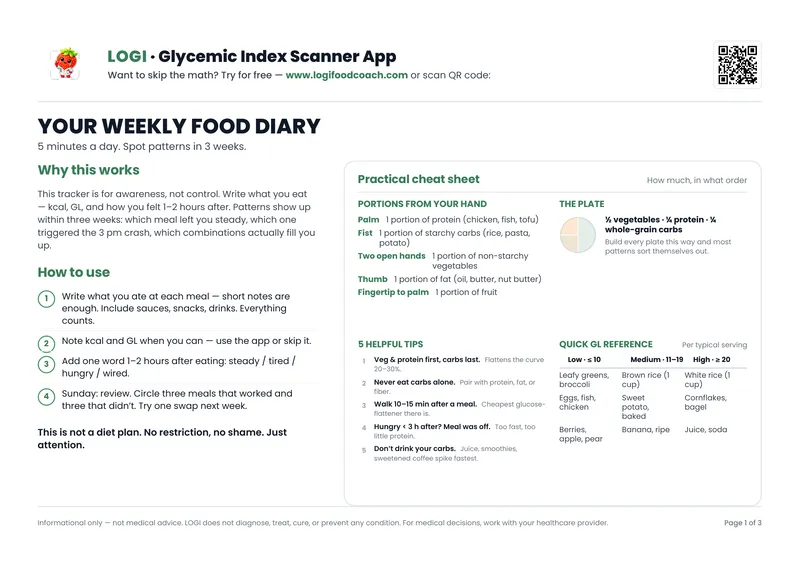
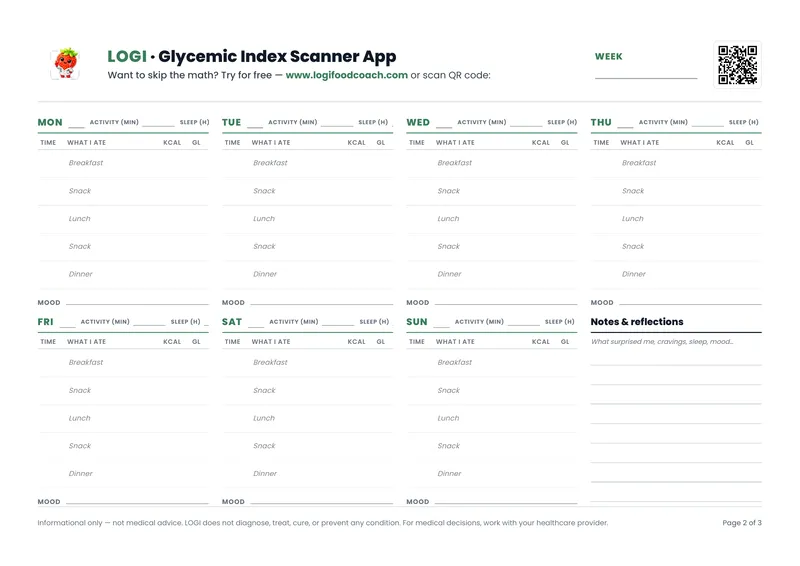
Free PDF — 3 pages
Your Weekly Food Journal
Track meals, glycemic load & mood. Spot patterns in 3 weeks.
No spam. Unsubscribe anytime.