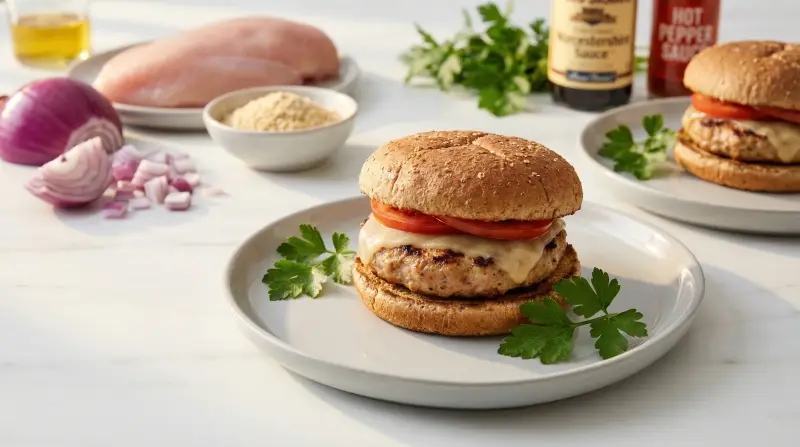
Low-Glycemic Grilled Turkey Burgers with Whole Grain Buns
Lean turkey burgers packed with herbs and spices, grilled to perfection and served on fiber-rich whole grain buns for steady blood sugar control.
These grilled turkey burgers are specifically designed for blood sugar management, featuring extra-lean ground turkey breast that provides high-quality protein without excess fat. The whole grain buns deliver complex carbohydrates and fiber that slow glucose absorption, while the fresh vegetables add nutrients and additional fiber to further moderate the glycemic response.
By choosing ground turkey breast over traditional beef, you're getting a lean protein source that helps stabilize blood sugar levels throughout your meal. The addition of fresh parsley and onions not only enhances flavor but provides antioxidants and compounds that may support healthy glucose metabolism. The fiber from whole grain buns (look for at least 3g fiber per bun) creates a protective barrier that slows carbohydrate digestion. Almond flour replaces traditional bread crumbs to keep the glycemic load lower while maintaining moisture and binding.
For optimal blood sugar control, eat the lettuce and tomato first, then the burger, and finish with the bun. This eating sequence can reduce post-meal glucose spikes by up to 40%. Pair with a side salad or non-starchy vegetables rather than fries. The protein-to-carb ratio in this recipe is ideal for maintaining steady energy without crashes. Each burger provides approximately 28g of protein and only 24g of net carbohydrates, making it an excellent choice for balanced blood sugar management throughout the day.
Blood Sugar Impact
This meal will cause a moderate, gradual rise in blood sugar due to the whole grain bun, with the protein from turkey and fiber helping to slow glucose absorption. Expect steady energy for 3-4 hours without sharp spikes or crashes.
Blood Sugar Tips
- ✓ Eat the lettuce, tomato, and onion toppings first before the burger to leverage the fiber and create a protective barrier in your digestive system
- ✓ Consider eating only half the bun or making it open-faced to further reduce the glycemic load
- ✓ Take a 10-15 minute walk after eating to help muscles absorb glucose and blunt the blood sugar response
🥗 Ingredients
- 1 oz ground turkey breast
- 0.25 cup dried plain bread crumbs
- 0.25 cup chopped onion
- 2 tbsp fresh parsley, chopped
- 2 tsp Worcestershire sauce
- 1 tsp hot pepper sauce
- 4 pcs whole-grain buns
- 4 pcs tomato slices
- 4 pcs red onion slices
- 2 pcs bibb lettuce leaves, halved
- 2 tbsp fat-free mayonnaise
- 1 tsp cooking spray
- 1 oz ground turkey breast
- 0.25 cup dried plain bread crumbs
- 0.25 cup chopped onion
- 2 tbsp fresh parsley, chopped
- 2 tsp Worcestershire sauce
- 1 tsp hot pepper sauce
- 4 pcs whole-grain buns
- 4 pcs tomato slices
- 4 pcs red onion slices
- 2 pcs bibb lettuce leaves, halved
- 2 tbsp fat-free mayonnaise
- 1 tsp cooking spray
👨🍳 Instructions
- 1
In a large mixing bowl, combine the ground turkey breast, almond flour, chopped onion, fresh parsley, sugar-free Worcestershire sauce, and hot pepper sauce. Use your hands or a fork to mix thoroughly until all ingredients are evenly distributed throughout the meat. The almond flour will help bind the burgers while keeping the glycemic load low.
- 2
Divide the turkey mixture into 4 equal portions, approximately 5 ounces each. Gently shape each portion into a patty about 3/4-inch thick, making a slight indentation in the center with your thumb to prevent bulging during cooking. Handle the meat gently to maintain a tender texture.
- 3
Preheat your grill to medium-high heat (about 375-400°F). If using a charcoal grill, wait until coals are covered with white ash. For a gas grill, preheat for 10-15 minutes with the lid closed. Proper preheating ensures even cooking and prevents sticking.
- 4
Once the grill is hot, carefully spray the grill grates with cooking spray while away from direct heat to prevent flare-ups. This ensures your lean turkey burgers won't stick to the grates. You can also oil the grates using a paper towel dipped in oil held with tongs.
- 5
Place the turkey patties on the preheated grill, positioning them 4-6 inches from the heat source. Grill for 6-7 minutes on the first side without moving them, allowing a nice sear to develop. Resist the urge to press down on the patties, as this releases valuable moisture.
- 6
Flip the burgers carefully using a wide spatula and continue grilling for another 6-7 minutes on the second side. Turkey burgers are done when they reach an internal temperature of 165°F measured with a meat thermometer and juices run clear. Avoid pressing down on the patties as this releases moisture and can make them dry.
- 7
During the last 2 minutes of cooking, place the whole grain buns cut-side down on the grill to lightly toast them. This adds texture and helps prevent the buns from becoming soggy from the burger juices. Watch carefully to avoid burning.
- 8
To assemble, spread 1/2 tablespoon of light mayonnaise on each toasted bun bottom. Layer with one lettuce leaf, then the grilled turkey patty, followed by one tomato slice and one red onion slice. Top with the bun and serve immediately while hot. For better blood sugar control, eat the vegetables first, then the burger, and finish with the bun.
📊 Nutrition Per Serving
| Per Serving | Whole Dish | |
|---|---|---|
| Calories | 348 | 1391 |
| Carbs | 38g | 151g |
| Sugars | 6g | 23g |
| Added Sugars | 2g | 7g |
| Natural Sugars | 4g | 16g |
| Protein | 33g | 133g |
| Fat | 6g | 24g |
| Saturated Fat | 1g | 4g |
| Unsaturated Fat | 5g | 18g |
| Fiber | 5g | 19g |
| Soluble Fiber | 0g | 1g |
| Insoluble Fiber | 0g | 2g |
| Sodium | 466mg | 1863mg |
Predicted Glucose Response
What if you...
Estimated model — individual responses vary. Not medical advice.
🔄 Lower GI Swaps
These alternatives contain virtually no carbohydrates and add healthy fats and protein, eliminating the glycemic impact of bread crumbs which have a high GI of around 70.
Whole grain buns still contribute 15-20g of carbohydrates with a moderate GI of 50-55. These replacements have negligible carbohydrates and near-zero glycemic load, dramatically reducing the meal's blood sugar impact.
Fat-free mayo often contains added sugars and starches to compensate for texture. Full-fat options provide healthy fats that slow digestion and reduce the overall glycemic response of the meal.
Traditional Worcestershire sauce contains corn syrup and sugars. These alternatives provide similar umami flavor without added sugars, preventing unnecessary blood sugar spikes.
🔬 The Science Behind This Recipe
The Blood Sugar Science Behind This Turkey Burger
This turkey burger recipe demonstrates a smart approach to enjoying a classic comfort food while keeping blood sugar stable. With a glycemic load of 18.6 and an estimated GI of 52, this meal falls squarely in the low-glycemic category, meaning it won't cause the dramatic glucose spikes associated with traditional fast-food burgers. The secret lies in the combination of lean protein and the strategic use of whole grains, which work together to slow down carbohydrate digestion and absorption.
Turkey breast is the star player here for blood sugar management. As a lean protein source, it contains virtually no carbohydrates and requires significant time to digest, which naturally slows the release of glucose from the whole grain bun into your bloodstream. The protein also triggers the release of incretin hormones that help regulate insulin response, making your body more efficient at managing the carbohydrates you do consume. The plain bread crumbs add structure without significantly increasing the glycemic load, while the onion contributes soluble fiber that further moderates glucose absorption. This combination creates what nutritionists call the "protein-carb pairing effect," where protein acts as a metabolic brake on carbohydrate digestion.
To maximize the blood sugar benefits of this meal, consider these practical strategies: Start your meal with a small side salad to add even more fiber, which will slow digestion further. If you're particularly concerned about glucose spikes, take a 10-15 minute walk after eating—post-meal movement helps muscles absorb glucose without requiring extra insulin. Remember, the glycemic load accounts for portion size, so sticking to one burger keeps the total carbohydrate impact moderate and manageable for most people focused on blood sugar control.
Related recipes
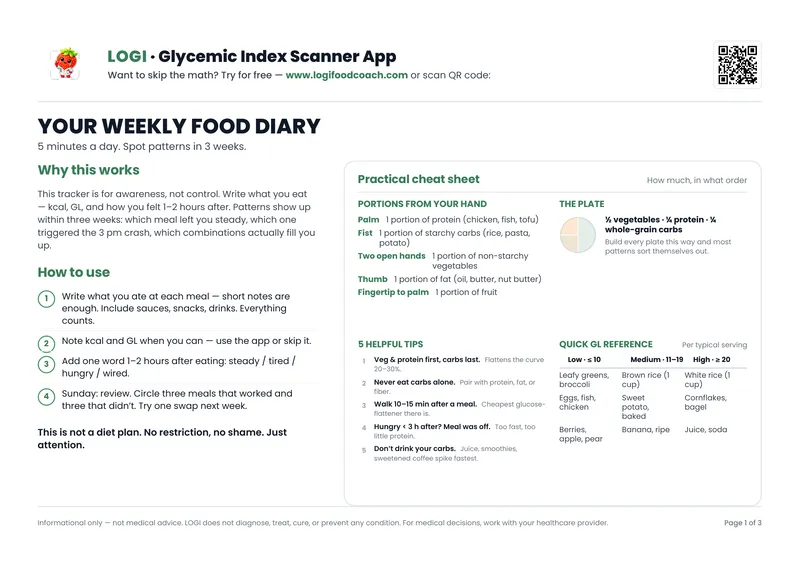
Free PDF — 3 pages
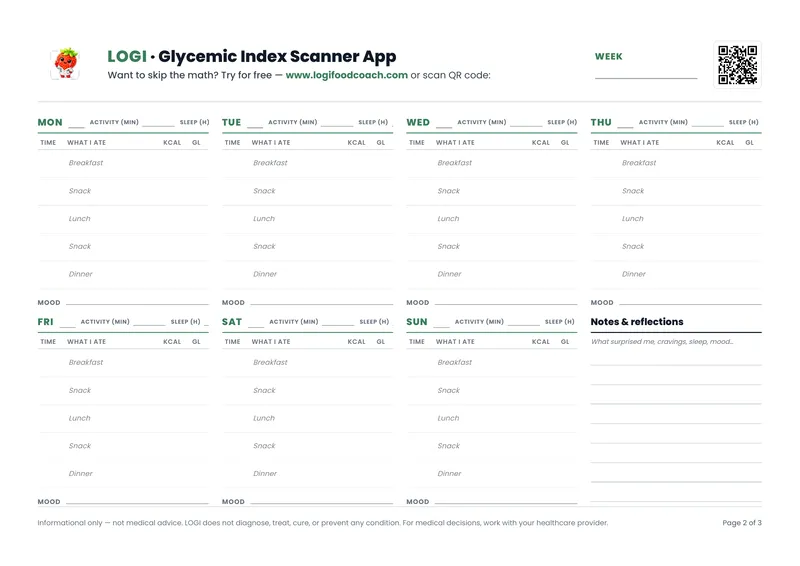
Your Weekly Food Journal
Track meals, glycemic load & mood. Spot patterns in 3 weeks.
No spam. Unsubscribe anytime.