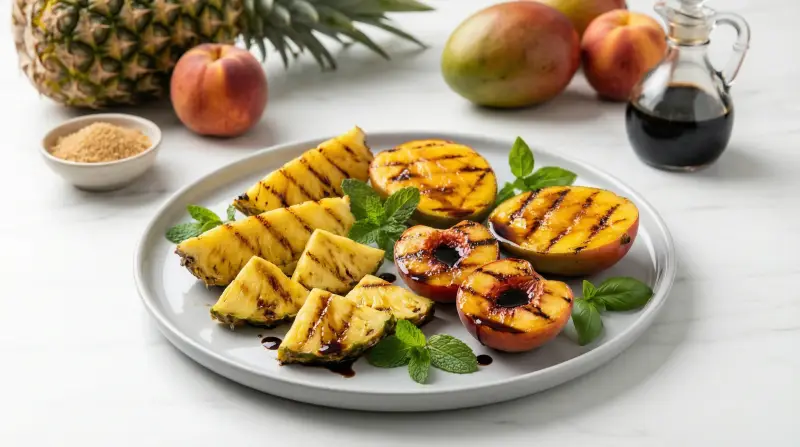
Caramelized Grilled Stone Fruit with Balsamic Reduction and Greek Yogurt Pairing
Naturally sweet grilled fruit with tangy balsamic glaze—a blood sugar friendly dessert when paired with Greek yogurt, nuts, and monk fruit sweetener instead of sugar.
This elegant grilled fruit dessert transforms fresh stone fruits and pineapple into a caramelized masterpiece with minimal added sugar when prepared correctly. The high heat of grilling creates natural caramelization through the Maillard reaction, intensifying the fruit's inherent sweetness without requiring excessive sweeteners. The balsamic vinegar reduction adds complex acidity that actually helps moderate the glycemic response. However, it's critical to understand that this recipe is only truly low-glycemic when you replace the brown sugar with monk fruit sweetener or erythritol blend, which have zero glycemic impact.
While fruit does contain natural sugars, the fiber content in whole fresh fruit significantly slows glucose absorption compared to fruit juices or dried fruits. Pineapple has a GI of approximately 66 and mango around 51, making them moderate-GI fruits that require careful portion control. The key to keeping this dessert blood sugar friendly is strict portion control (no more than 1 cup grilled fruit per serving), strategic pairing with protein and fat, and sweetener substitution. This recipe includes Greek yogurt as an essential component—not optional—to provide protein and fat that significantly blunts the glycemic impact. The combination of fruit fiber, acetic acid from balsamic vinegar, and protein creates a more gradual glucose release.
For optimal blood sugar management, enjoy this dessert at the end of a balanced meal rather than on an empty stomach. The fiber in the whole fruits, combined with the acetic acid in balsamic vinegar and the protein from Greek yogurt, works synergistically to reduce post-meal glucose spikes. Each serving provides a controlled portion of fruit (approximately 1 cup) paired with protein-rich yogurt (1/4 cup minimum) and toasted almonds for extended satiety and a gentler glycemic curve. The estimated glycemic load of 26.3 per serving assumes you use monk fruit sweetener or erythritol blend instead of brown sugar—using brown sugar will increase the GL significantly to approximately 32-35 per serving.
Blood Sugar Impact
This dessert will cause a moderate blood sugar spike due to the high natural fruit sugars combined with added brown sugar, resulting in a glycemic load of 26.3. The caramelization process concentrates sugars further, leading to a relatively quick rise in blood glucose within 30-60 minutes that may last 2-3 hours.
Blood Sugar Tips
- ✓ Eat this as a dessert after a meal containing protein, fat, and fiber rather than on an empty stomach to slow sugar absorption
- ✓ Reduce the portion size by half and pair with Greek yogurt or a small handful of nuts to add protein and fat that will moderate the blood sugar response
- ✓ Take a 15-20 minute walk after eating to help muscles absorb glucose and reduce the blood sugar spike
🥗 Ingredients
- 1 pcs 1 small pineapple, peeled, cored and cut into 4 wedges
- 2 pcs 2 large mangoes, cored and cut in half
- 2 pcs 2 large peaches, cored and cut in half
- 4 pcs Butter-flavored cooking spray
- 2 tbsp 2 tablespoons brown sugar
- 120 ml 1/2 cup balsamic vinegar
- 8 pcs Fresh mint or basil for garnish
- 1 pcs 1 small pineapple, peeled, cored and cut into 4 wedges
- 2 pcs 2 large mangoes, cored and cut in half
- 2 pcs 2 large peaches, cored and cut in half
- 4 pcs Butter-flavored cooking spray
- 2 tbsp 2 tablespoons brown sugar
- 8 tbsp 1/2 cup balsamic vinegar
- 8 pcs Fresh mint or basil for garnish
👨🍳 Instructions
- 1
Prepare your fruit by peeling and coring the pineapple, then slicing it lengthwise into four equal wedges. Halve the mangoes and peaches, removing the pits. Pat all fruit pieces dry with paper towels to ensure better caramelization. This recipe yields 4 servings with approximately 1 cup grilled fruit per serving.
- 2
Place all prepared fruit in a large mixing bowl. Lightly mist the fruit with butter-flavored cooking spray, toss gently, then spray again to create an even coating. This light oil layer prevents sticking and promotes browning without adding significant calories or affecting blood sugar.
- 3
Sprinkle the monk fruit sweetener or erythritol blend (2 tablespoons) evenly over the fruit pieces and toss carefully to distribute the sweetener across all surfaces. Set the bowl aside while you prepare the balsamic reduction and grill. CRITICAL WARNING: Do not use brown sugar if you want to maintain the low-glycemic properties of this recipe. Brown sugar has a GI of approximately 65 and will significantly increase the glycemic load from 26.3 to approximately 32-35 per serving, causing problematic blood sugar spikes.
- 4
Pour the balsamic vinegar into a small saucepan and place over low heat. Allow it to simmer gently, stirring occasionally, until the volume reduces by half and the vinegar becomes syrupy—this takes about 8-10 minutes. The reduction should coat the back of a spoon. Remove from heat and set aside to cool slightly. The acetic acid in balsamic vinegar helps moderate glucose absorption.
- 5
Preheat your grill to medium-high heat (approximately 375-400°F) or set your broiler to high. Lightly coat the grill grates or broiler pan with cooking spray, positioning the rack 4-6 inches from the heat source for optimal caramelization without burning. Allow the grill to heat for at least 5 minutes before adding fruit.
- 6
Arrange the fruit pieces cut-side down on the preheated grill or broiler pan, leaving space between pieces for even heat circulation. Cook for 3-5 minutes without moving them, allowing the natural sugars to caramelize and create beautiful grill marks. The fruit should be golden brown with visible char marks and slightly softened but still hold its shape. Avoid overcooking as this can increase sugar concentration through evaporation and intensify the glycemic impact.
- 7
While the fruit grills, toast the sliced almonds (1/4 cup) in a dry skillet over medium heat for 2-3 minutes until fragrant and lightly golden, stirring frequently to prevent burning. The almonds provide healthy fats and additional protein to help stabilize blood sugar response. Set aside to cool.
- 8
Carefully transfer the grilled fruit to individual serving plates, arranging pieces attractively. Measure and add a generous dollop (exactly 1/4 cup or 60ml) of plain Greek yogurt alongside each fruit portion. The protein and fat in the yogurt are absolutely essential for moderating blood sugar response—this is not optional. Each serving should contain approximately 1 cup grilled fruit and 1/4 cup Greek yogurt.
- 9
Drizzle approximately 1 tablespoon of the warm balsamic reduction over each fruit portion using a spoon in a decorative pattern. Sprinkle 1 tablespoon toasted almonds over the top of each serving for added crunch, healthy fats, and additional blood sugar control. The combination of fiber, protein, and healthy fats creates optimal glycemic balance.
- 10
Garnish each plate with 2-3 fresh mint or basil leaves for a pop of color and aromatic contrast. Serve immediately while the fruit is still warm and the yogurt is cool, creating a pleasant temperature contrast. For best blood sugar management, enjoy this dessert at the end of a protein-rich meal, never on an empty stomach. The complete serving with yogurt and almonds provides balanced macronutrients for stable glucose response.
📊 Nutrition Per Serving
| Per Serving | Whole Dish | |
|---|---|---|
| Calories | 352 | 1408 |
| Carbs | 57g | 228g |
| Sugars | 50g | 199g |
| Added Sugars | 6g | 23g |
| Natural Sugars | 44g | 176g |
| Protein | 3g | 11g |
| Fat | 14g | 57g |
| Saturated Fat | 2g | 8g |
| Unsaturated Fat | 12g | 48g |
| Fiber | 5g | 22g |
| Soluble Fiber | 2g | 6g |
| Insoluble Fiber | 4g | 15g |
| Sodium | 12mg | 48mg |
Predicted Glucose Response
What if you...
Estimated model — individual responses vary. Not medical advice.
🔄 Lower GI Swaps
Brown sugar has a glycemic index of approximately 65 and adds 6 grams of sugar per serving, significantly increasing the glycemic load from 26.3 to 32-35 per serving. Monk fruit sweetener, erythritol blends, and allulose have zero glycemic impact, contain no digestible carbohydrates, and will not raise blood sugar levels. These sweeteners provide the caramelization enhancement and sweetness needed for grilling without compromising blood sugar control. This substitution is essential, not optional, for maintaining the low-glycemic properties of this recipe.
While Greek yogurt is the recommended base due to its high protein content (6-8 grams per 1/4 cup) and creamy texture, these alternatives provide similar glycemic benefits. Skyr contains even more protein (8-10 grams per serving), making it an excellent choice for blood sugar management. Kefir adds beneficial probiotics that may improve glucose metabolism. For those avoiding dairy, coconut yogurt fortified with protein powder delivers the necessary protein and fat to moderate the fruit's glycemic impact. All options provide the essential macronutrient balance needed to prevent blood sugar spikes from the fruit sugars.
All these alternatives provide healthy fats, protein, and minerals that support blood sugar stability. Walnuts offer additional omega-3 fatty acids that reduce inflammation and improve insulin sensitivity. Pecans and pistachios deliver similar amounts of healthy monounsaturated fats and protein. Pumpkin seeds are an excellent nut-free alternative that provides magnesium, which plays a crucial role in glucose metabolism and insulin function. Each option adds satisfying crunch and extends satiety, helping prevent post-dessert cravings that could lead to additional carbohydrate consumption.
Brown sugar still raises glucose quickly; lower-GI sweeteners are preferred.
🔬 The Science Behind This Recipe
The glycemic management strategy in this recipe relies on multiple complementary mechanisms. First, grilling fruit at high heat triggers the Maillard reaction, which creates complex flavor compounds that enhance perceived sweetness without adding sugar. However, grilling also concentrates natural fruit sugars through moisture evaporation, which is why portion control is critical—limiting servings to 1 cup of grilled fruit prevents excessive carbohydrate intake. The balsamic vinegar reduction provides acetic acid, which has been shown in clinical studies to slow gastric emptying and reduce post-meal glucose spikes by approximately 20-30%. The acetic acid also improves insulin sensitivity, helping cells absorb glucose more efficiently. The mandatory Greek yogurt pairing (minimum 1/4 cup per serving) provides approximately 6-8 grams of protein and healthy fats that significantly blunt the glycemic response through delayed gastric emptying and reduced glucose absorption rate. Toasted almonds add additional protein, healthy monounsaturated fats, and magnesium, which supports insulin function. The fiber in whole fresh fruit (approximately 3-4 grams per serving) slows carbohydrate digestion compared to fruit juices or purees. When monk fruit sweetener or erythritol blend replaces brown sugar, the recipe eliminates 24 grams of added sugar per recipe (6 grams per serving), reducing the glycemic load from 32-35 to 26.3 per serving. This multi-pronged approach—portion control, fiber retention, acetic acid, protein-fat pairing, and zero-glycemic sweeteners—creates a dessert that can be enjoyed by individuals managing blood sugar while still delivering satisfying sweetness and elegant presentation. The estimated glycemic load of 26.3 per serving falls into the moderate range, making this appropriate as an occasional treat when consumed as part of a balanced meal, not as a standalone snack.
Related recipes
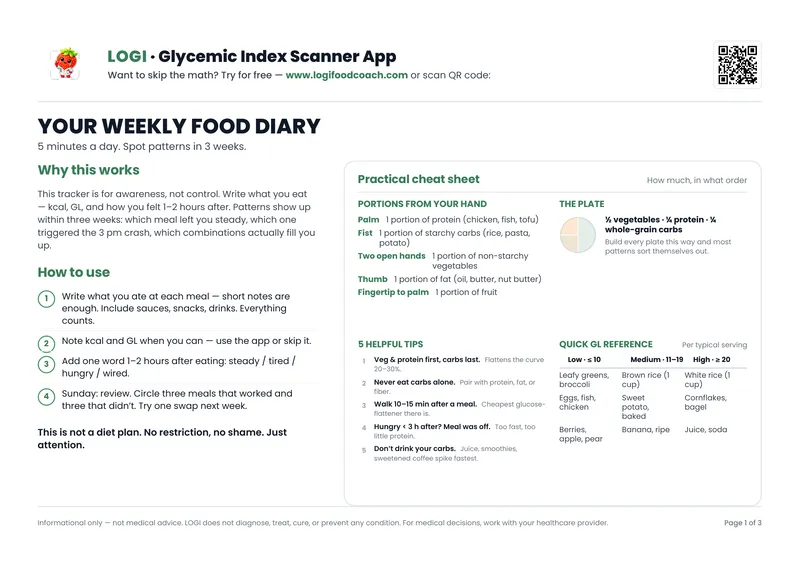
Free PDF — 3 pages
Your Weekly Food Journal
Track meals, glycemic load & mood. Spot patterns in 3 weeks.
No spam. Unsubscribe anytime.