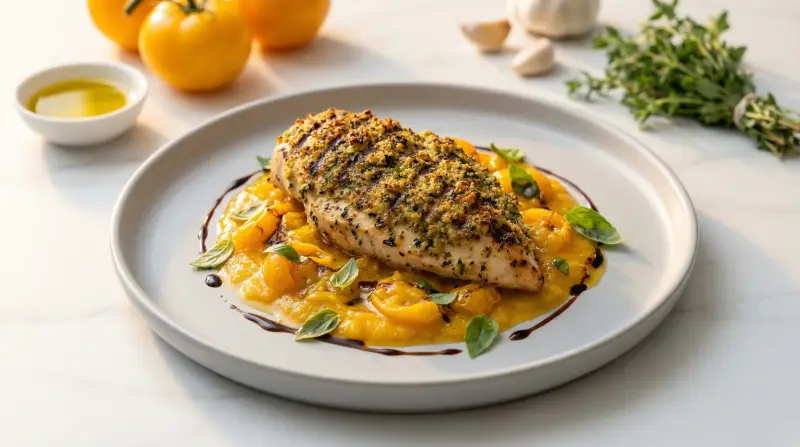
Herb-Crusted Grilled Chicken with Smoky Yellow Tomato Sauce
Tender grilled chicken coated in fresh herbs, topped with a vibrant roasted yellow tomato sauce that's naturally low in sugar and rich in antioxidants.
This Mediterranean-inspired dish showcases the natural sweetness of yellow tomatoes, which have a lower acidity and gentler impact on blood sugar compared to red varieties. The combination of lean chicken breast and herb-infused olive oil provides sustained energy without glucose spikes, making it an ideal choice for balanced blood sugar management.
The smoky roasted tomato sauce delivers complex flavors without added sugars, while fresh herbs like basil, thyme, and parsley contribute anti-inflammatory compounds that support metabolic health. Yellow tomatoes are rich in lycopene and vitamin C, with a glycemic load near zero, making them perfect for a low-GI eating plan.
For optimal blood sugar control, pair this dish with a generous serving of non-starchy vegetables or a mixed green salad dressed with extra virgin olive oil. The healthy fats from olive oil help slow glucose absorption, while the high protein content from chicken promotes satiety and stable energy levels throughout your meal. Each serving provides approximately 5 ounces of lean protein with minimal carbohydrates, ensuring stable blood glucose for hours after eating.
Blood Sugar Impact
Minimal blood sugar impact expected. This protein-rich meal with fresh herbs and tomatoes has an extremely low glycemic load of 0.8, which should result in stable, sustained energy for 4-5 hours without significant glucose spikes.
Blood Sugar Tips
- ✓ Eat the chicken and vegetables together to maximize protein's blood sugar stabilizing effect
- ✓ Consider adding a small portion of fiber-rich vegetables like broccoli or leafy greens on the side to further slow digestion
- ✓ A brief 10-15 minute walk after eating will help muscles absorb any glucose released, though the impact will already be minimal with this meal
🥗 Ingredients
- 4 pcs yellow tomatoes, peeled, halved and seeded
- 1.5 tbsp extra-virgin olive oil
- 2 pcs garlic cloves, minced
- 1 tbsp balsamic vinegar
- 3 tbsp fresh basil, chopped
- 0.25 tsp freshly ground black pepper
- 20 oz skinless, boneless chicken breast halves
- 0.25 tsp salt
- 2 tbsp fresh flat-leaf parsley, chopped
- 1 tbsp fresh thyme, chopped
- 4 pcs yellow tomatoes, peeled, halved and seeded
- 1.5 tbsp extra-virgin olive oil
- 2 pcs garlic cloves, minced
- 1 tbsp balsamic vinegar
- 3 tbsp fresh basil, chopped
- 0.25 tsp freshly ground black pepper
- 20 oz skinless, boneless chicken breast halves
- 0.25 tsp salt
- 2 tbsp fresh flat-leaf parsley, chopped
- 1 tbsp fresh thyme, chopped
👨🍳 Instructions
- 1
Preheat your grill to high heat or set your oven broiler to high. Lightly oil the grill grates or line a broiler pan with aluminum foil and spray with cooking oil. Position the cooking surface 4 to 6 inches from the heat source for optimal charring.
- 2
Place the halved yellow tomatoes cut-side down on the grill or cut-side up under the broiler. Cook until the skins begin to char and blister, approximately 5 minutes. The roasting process concentrates the tomatoes' natural sugars slightly, but the overall glycemic impact remains minimal due to the high water and fiber content. Transfer the tomatoes to a heat-safe bowl, cover tightly with plastic wrap, and allow them to steam for 10 minutes until the skins loosen and peel easily.
- 3
While the tomatoes steam, heat the olive oil in a small skillet over medium heat. Add the minced garlic and sauté gently until fragrant and softened, about 1 minute, being careful not to brown. Remove from heat and set aside to cool slightly.
- 4
Remove the skins from the steamed tomatoes and transfer the flesh to a blender or food processor. Add the sautéed garlic with its oil, balsamic vinegar, 1 tablespoon of the chopped basil, and 1/8 teaspoon black pepper. Pulse until the sauce reaches your desired consistency—smooth or slightly chunky. Taste and adjust seasoning if needed. The finished sauce will have approximately 0.75g of sugar per serving from the balsamic vinegar, contributing minimally to blood sugar response.
- 5
Pat the chicken breasts dry with paper towels and season both sides with the salt and remaining 1/8 teaspoon black pepper. In a shallow dish, combine the chopped parsley, thyme, and remaining 2 tablespoons of basil, mixing well to create an herb coating.
- 6
Press each chicken breast firmly into the herb mixture, coating all surfaces evenly and generously. The herbs will create a flavorful crust that helps seal in moisture during cooking while adding zero carbohydrates or glycemic load.
- 7
Place the herb-crusted chicken breasts on the preheated grill or under the broiler. Cook for 4 minutes on the first side until golden and marked, then flip carefully and cook for another 4 minutes until the internal temperature reaches 165°F and the juices run clear. Remove from heat and let rest for 3 minutes to allow juices to redistribute.
- 8
Transfer each chicken breast to a warmed dinner plate. Spoon the warm yellow tomato sauce generously over the top of each portion, using approximately 1/4 cup sauce per serving. Serve immediately with a side of leafy greens or roasted non-starchy vegetables like broccoli, zucchini, or cauliflower for optimal blood sugar balance and sustained energy.
📊 Nutrition Per Serving
| Per Serving | Whole Dish | |
|---|---|---|
| Calories | 230 | 918 |
| Carbs | 6g | 22g |
| Sugars | 4g | 15g |
| Natural Sugars | 4g | 15g |
| Protein | 34g | 137g |
| Fat | 8g | 31g |
| Saturated Fat | 1g | 5g |
| Unsaturated Fat | 6g | 25g |
| Fiber | 2g | 6g |
| Soluble Fiber | 0g | 0g |
| Insoluble Fiber | 0g | 1g |
| Sodium | 218mg | 872mg |
Predicted Glucose Response
What if you...
Estimated model — individual responses vary. Not medical advice.
🔄 Lower GI Swaps
Red wine vinegar and apple cider vinegar have virtually no sugar content compared to balsamic vinegar, which contains natural sugars that can raise blood glucose. Lemon juice adds acidity with minimal impact on blood sugar.
Red bell peppers have a lower glycemic index than tomatoes and provide sweetness without added sugars. Zucchini and eggplant have even lower carbohydrate content, resulting in minimal blood sugar impact while maintaining sauce texture.
While olive oil is already excellent, avocado oil and macadamia nut oil have higher monounsaturated fat content, which can further improve insulin sensitivity and help stabilize blood sugar levels after meals.
🔬 The Science Behind This Recipe
The Science Behind This Blood Sugar-Friendly Dish
This herb-crusted chicken with yellow tomato sauce is a masterclass in blood sugar management, with an exceptionally low glycemic load of just 0.8 per serving. The secret lies in its protein-rich foundation and strategic use of healthy fats. Chicken breast provides lean protein that slows digestion and promotes steady glucose release, while olive oil adds heart-healthy monounsaturated fats that further buffer any potential blood sugar rise. Together, these macronutrients create a satisfying meal that keeps your glucose levels stable for hours after eating.
The yellow tomatoes and balsamic vinegar contribute minimal carbohydrates while delivering maximum flavor and nutritional benefits. Yellow tomatoes contain slightly less sugar than their red counterparts and are rich in fiber, which slows the absorption of any carbohydrates present. The acetic acid in balsamic vinegar has been shown in research to improve insulin sensitivity and reduce post-meal glucose spikes by slowing stomach emptying. This means your body processes the meal more gradually, preventing the rapid blood sugar swings that lead to energy crashes and increased hunger.
To maximize the blood sugar benefits of this dish, pair it with a large serving of non-starchy vegetables like roasted broccoli or a mixed green salad. Eating your vegetables first creates a "fiber cushion" in your digestive system that further slows glucose absorption. If you're adding any starchy sides like quinoa or sweet potato, keep portions modest and eat them last. A 10-minute walk after your meal can also help your muscles absorb glucose more efficiently, keeping blood sugar levels even more stable.
Related recipes

Free PDF — 3 pages
Your Weekly Food Journal
Track meals, glycemic load & mood. Spot patterns in 3 weeks.
No spam. Unsubscribe anytime.
