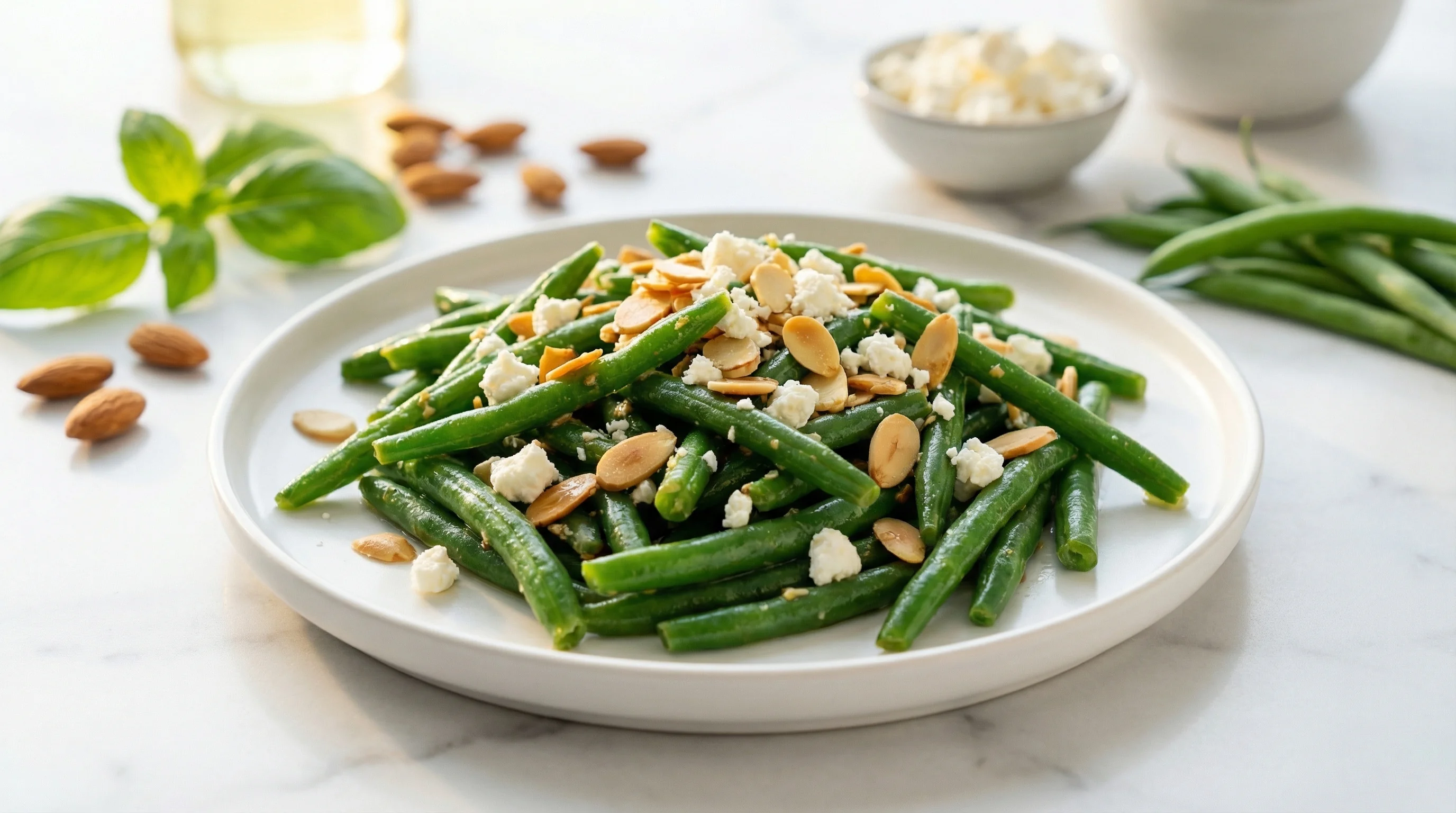
Mediterranean Green Bean Salad with Toasted Almonds and Feta
Crisp-tender green beans meet crunchy almonds and tangy feta in this vibrant Mediterranean salad—a blood sugar-friendly side that's as nutritious as it is delicious.
This Mediterranean-inspired green bean salad is a masterclass in blood sugar balance. Green beans are an exceptional low-glycemic vegetable with a GI of just 15, meaning they release glucose slowly into your bloodstream while providing substantial fiber to further moderate absorption. The addition of healthy fats from extra-virgin olive oil and almonds creates the perfect macronutrient balance, slowing digestion and preventing glucose spikes.
Toasted almonds contribute heart-healthy monounsaturated fats, plant-based protein, and magnesium—a mineral that plays a crucial role in insulin sensitivity. The feta cheese adds satisfying protein and calcium without any carbohydrates, making this dish ideal for stable energy levels. Fresh lemon juice and Dijon mustard provide bright acidity that not only enhances flavor but may also help moderate the glycemic response of your entire meal.
This salad exemplifies the Mediterranean approach to eating: whole foods, healthy fats, and plenty of vegetables. Serve it as a side dish alongside grilled fish or chicken, or enjoy it as a light lunch. For optimal blood sugar management, eat this salad at the beginning of your meal—the fiber and healthy fats will help slow the absorption of any higher-glycemic foods that follow. The combination of textures and flavors makes healthy eating feel like a celebration rather than a restriction.
Blood Sugar Impact
Minimal blood sugar impact expected due to the very low glycemic load of 1.4 and GI of 20. This meal should provide stable energy for 3-4 hours without causing significant glucose spikes, thanks to the high fiber from green beans and healthy fats from almonds and olive oil.
Blood Sugar Tips
- ✓ Eat this salad as a first course before any higher-carb foods to leverage the fiber and fat for blood sugar buffering
- ✓ Add a protein source like grilled chicken or chickpeas to further slow digestion and extend satiety
- ✓ Enjoy at room temperature rather than cold, as this can improve digestive comfort and nutrient absorption without affecting blood sugar response
🥗 Ingredients
- 0.33 cup sliced almonds
- 1 pcs green beans, trimmed and cut into 2-3 inch pieces
- 0.25 cup water
- 0.5 tsp fine sea salt, divided
- 2 tbsp extra-virgin olive oil
- 1 tbsp fresh lemon juice
- 2 tsp Dijon mustard
- 1 pcs garlic clove, small to medium
- 0.25 tsp freshly ground black pepper
- 0.13 tsp red pepper flakes
- 0.25 cup crumbled feta cheese, divided
- 4 pcs fresh basil leaves, large
- 0.5 tsp lemon zest
- 0.33 cup sliced almonds
- 1 pcs green beans, trimmed and cut into 2-3 inch pieces
- 0.25 cup water
- 0.5 tsp fine sea salt, divided
- 2 tbsp extra-virgin olive oil
- 1 tbsp fresh lemon juice
- 2 tsp Dijon mustard
- 1 pcs garlic clove, small to medium
- 0.25 tsp freshly ground black pepper
- 0.13 tsp red pepper flakes
- 0.25 cup crumbled feta cheese, divided
- 4 pcs fresh basil leaves, large
- 0.5 tsp lemon zest
👨🍳 Instructions
- 1
Place a large skillet over medium heat and add the sliced almonds. Toast them while stirring constantly to prevent burning, about 3 minutes. Lower the heat to medium-low and continue stirring until the almonds become fragrant and develop golden edges, another 1 to 3 minutes. Immediately transfer the toasted almonds to a small bowl and set aside to cool.
- 2
Return the same skillet to medium-low heat. Add the trimmed and cut green beans along with the water and half of the salt (about 1/4 teaspoon). Cover the skillet with a lid and let the beans steam, stirring occasionally, until they become crisp-tender, approximately 7 to 10 minutes.
- 3
Remove the lid from the skillet and increase the heat to medium-high. Continue cooking the green beans, stirring frequently, until all the water has evaporated and the beans are perfectly tender with a slight bite, about 2 to 5 minutes. Remove from heat and set the skillet aside.
- 4
While the green beans are cooking, prepare the lemon-Dijon dressing. In a small bowl, whisk together the extra-virgin olive oil, fresh lemon juice, Dijon mustard, minced or pressed garlic, black pepper, red pepper flakes, and the remaining 1/4 teaspoon of salt until well combined and emulsified.
- 5
Once the green beans are cooked, give the dressing another quick whisk to recombine, then pour it directly over the warm green beans in the skillet. Add the toasted almonds and half of the crumbled feta cheese, reserving the rest for garnish. Toss everything together gently but thoroughly until the beans are evenly coated.
- 6
Taste the salad and adjust the seasoning as needed—add more lemon juice for brightness or additional black pepper for depth. The warm beans will absorb the flavors beautifully.
- 7
Transfer the dressed green bean salad to a serving bowl or platter. Garnish with the remaining crumbled feta cheese and the torn or chopped fresh basil leaves. Use a microplane or fine grater to add a light dusting of fresh lemon zest over the top. Serve immediately while still slightly warm, or allow to cool to room temperature for a refreshing side dish.
📊 Nutrition Per Serving
| Per Serving | Whole Dish | |
|---|---|---|
| Calories | 660 | 2638 |
| Carbs | 54g | 218g |
| Sugars | 8g | 34g |
| Added Sugars | 0g | 1g |
| Natural Sugars | 8g | 33g |
| Protein | 19g | 76g |
| Fat | 49g | 198g |
| Saturated Fat | 17g | 69g |
| Unsaturated Fat | 32g | 128g |
| Fiber | 22g | 87g |
| Soluble Fiber | 7g | 26g |
| Insoluble Fiber | 15g | 61g |
| Sodium | 10025mg | 40100mg |
Predicted Glucose Response
What if you...
Estimated model — individual responses vary. Not medical advice.
🔄 Lower GI Swaps
These alternatives have slightly higher protein and fat content, which can further slow glucose absorption and provide a more sustained energy release without spiking blood sugar.
While almonds are already excellent, walnuts and pecans have even higher omega-3 content and slightly lower carbohydrate ratios, resulting in virtually zero glycemic impact and better blood sugar stability.
Whole grain and stone-ground mustards contain intact mustard seeds with additional fiber and protein, which can help moderate any minimal glucose response even further than smooth dijon.
While olive oil is already ideal, avocado and macadamia oils have slightly higher monounsaturated fat content and have been shown in studies to improve insulin sensitivity and post-meal glucose control.
🔬 The Science Behind This Recipe
Why This Recipe Works for Blood Sugar Balance
This Mediterranean Green Bean Salad is a masterclass in blood sugar management, with an exceptionally low glycemic load of just 1.4 per serving. Green beans are the star here—they're non-starchy vegetables packed with fiber (about 3-4 grams per cup) that slows down digestion and prevents rapid glucose absorption. Unlike starchy vegetables such as potatoes or corn, green beans contain minimal carbohydrates while delivering maximum nutrients, making them virtually neutral for blood sugar levels. The fiber acts like a protective buffer in your digestive system, creating a gel-like substance that moderates how quickly sugar enters your bloodstream.
The addition of almonds and olive oil transforms this salad into a metabolic powerhouse. Almonds provide healthy fats, protein, and additional fiber—a trifecta that dramatically slows carbohydrate absorption. When you eat fat and protein alongside any carbs, your stomach empties more slowly, leading to a gentler, more gradual rise in blood glucose rather than a sharp spike. Olive oil's monounsaturated fats have the same buffering effect. Meanwhile, feta cheese adds protein and fat while contributing minimal carbohydrates, further stabilizing the meal's overall glycemic impact.
Here's a practical tip: this salad works beautifully as a "first course" strategy. Eating your vegetables and protein before any higher-carb foods at a meal can reduce post-meal glucose spikes by up to 73% according to some studies. The fiber and fat from this salad prime your digestive system to handle subsequent carbohydrates more efficiently. With a GI of just 20, this dish proves that eating for stable blood sugar doesn't mean sacrificing flavor—it means choosing ingredients that work with your body's natural metabolic processes.