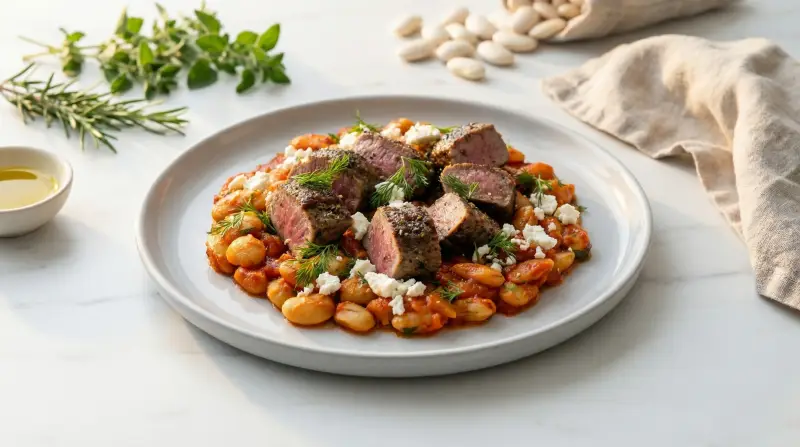
Mediterranean Butter Beans with Herb-Crusted Lamb
Tender seared lamb paired with creamy butter beans braised in aromatic tomato broth—a protein-rich, low-GI Greek feast that keeps blood sugar steady.
This Mediterranean-inspired dish combines the blood sugar benefits of protein-rich lamb with fiber-packed butter beans for a satisfying meal that won't spike glucose levels. The butter beans, with their low glycemic index of around 30, provide sustained energy while their high fiber content slows digestion and promotes stable blood sugar.
The recipe features lean lamb fillet, an excellent source of complete protein that helps moderate the glycemic response of the entire meal. Garlic and onions add depth while contributing beneficial compounds that may support insulin sensitivity. The tomato-based braising liquid, enriched with chicken stock and finished with tangy red wine vinegar, creates a rich sauce without added sugars.
For optimal blood sugar management, start your meal with the beans and vegetables first, then enjoy the lamb. This eating sequence can reduce post-meal glucose spikes by up to 40%. The addition of feta cheese provides healthy fats and protein that further slow carbohydrate absorption. Fresh dill not only adds authentic Greek flavor but also contains compounds that may help regulate blood sugar. This complete meal delivers approximately 35-40g of protein per serving with a low overall glycemic load, making it ideal for lunch or dinner when paired with a simple green salad.
Blood Sugar Impact
This meal will have a low to moderate blood sugar impact due to its low GI of 29 and moderate glycemic load of 15.5. The combination of protein from lamb, fiber from butter beans, and healthy fats from olive oil and feta will promote steady glucose release and sustained energy for 3-4 hours.
Blood Sugar Tips
- ✓ Eat the lamb and vegetables first before the butter beans to slow carbohydrate absorption through the protein and fat priority method
- ✓ Pair this meal with a 10-15 minute walk after eating to help muscles absorb glucose and blunt any blood sugar rise
- ✓ Add a side of leafy greens or a small salad with vinegar-based dressing before the meal to further slow digestion and improve glucose response
🥗 Ingredients
- 500 g lamb fillet, trimmed
- 1.5 tbsp extra virgin olive oil
- 3 pcs garlic cloves, crushed
- 1 pcs large onion, finely chopped
- 2 tbsp tomato purée
- 15 g fresh dill, mostly chopped with some reserved
- 1 tbsp red wine vinegar
- 500 ml low-sodium chicken stock
- 800 g butter beans (gigante beans), drained and rinsed
- 2 tbsp feta cheese, crumbled
- 1.1 lb lamb fillet, trimmed
- 1.5 tbsp extra virgin olive oil
- 3 pcs garlic cloves, crushed
- 1 pcs large onion, finely chopped
- 2 tbsp tomato purée
- 0.5 oz fresh dill, mostly chopped with some reserved
- 1 tbsp red wine vinegar
- 2.1 cups low-sodium chicken stock
- 1.8 lb butter beans (gigante beans), drained and rinsed
- 2 tbsp feta cheese, crumbled
👨🍳 Instructions
- 1
Pat the lamb fillet dry with paper towels. In a small bowl, combine half tablespoon of olive oil with one crushed garlic clove. Rub this mixture all over the lamb, then season generously with salt and freshly ground black pepper. Set aside at room temperature to marinate while you prepare the bean mixture, or cover and refrigerate for up to 2 hours for deeper flavor penetration.
- 2
Heat the remaining tablespoon of olive oil in a large, deep skillet or sauté pan over medium heat. Add the chopped onion and remaining two crushed garlic cloves, season lightly with salt, and cook for 7-8 minutes, stirring occasionally, until the onion becomes soft and translucent without browning.
- 3
Stir in the tomato purée and cook for 1 minute to caramelize slightly. Add the chopped dill (reserving some whole leaves for garnish), red wine vinegar, and chicken stock. Stir well to combine, then add the drained butter beans. Season with salt and pepper to taste.
- 4
Bring the bean mixture to a gentle simmer, then reduce heat to medium-low. Cook uncovered for 15 minutes, stirring occasionally, until the liquid has reduced by about two-thirds and the beans are tender and creamy. The mixture should be saucy but not soupy.
- 5
While the beans simmer, heat a heavy-bottomed frying pan or cast-iron skillet over high heat until very hot. Add the marinated lamb fillet and sear without moving for 2 minutes until a golden crust forms. Turn and sear all sides for about 5 minutes total cooking time for medium-rare, or longer if you prefer more well-done meat.
- 6
Transfer the seared lamb to a cutting board, tent loosely with aluminum foil, and let rest for 5 minutes. This resting period allows the juices to redistribute throughout the meat, ensuring maximum tenderness.
- 7
Slice the rested lamb against the grain into thick medallions, about 1-2 cm wide. Divide the warm butter bean mixture among four shallow bowls or plates. Arrange the sliced lamb on top of or alongside the beans.
- 8
Finish each serving by scattering crumbled feta cheese over the top and garnishing with the reserved fresh dill leaves. Serve immediately while hot, optionally with a side of leafy greens or a simple cucumber salad for added fiber and nutrients.
📊 Nutrition Per Serving
| Per Serving | Whole Dish | |
|---|---|---|
| Calories | 584 | 2336 |
| Carbs | 50g | 200g |
| Sugars | 10g | 38g |
| Natural Sugars | 10g | 38g |
| Protein | 45g | 181g |
| Fat | 24g | 96g |
| Saturated Fat | 9g | 35g |
| Unsaturated Fat | 15g | 62g |
| Fiber | 15g | 61g |
| Soluble Fiber | 0g | 1g |
| Insoluble Fiber | 1g | 3g |
| Sodium | 586mg | 2345mg |
Predicted Glucose Response
What if you...
Estimated model — individual responses vary. Not medical advice.
🔄 Lower GI Swaps
Cannellini beans have a lower glycemic index (31 vs 36) than butter beans, while black soybeans have an exceptionally low GI of around 15, and lupini beans are very low in net carbs, all resulting in less blood sugar impact.
These vegetables have lower carbohydrate content than onions, with celery and fennel providing similar aromatic flavor while contributing minimal impact to blood sugar levels.
Fresh tomatoes have a lower glycemic load due to higher water content and less concentrated sugars compared to tomato paste, while providing similar umami depth with less blood sugar spike.
While red wine vinegar is already low-glycemic, apple cider vinegar and lemon juice have been shown to improve insulin sensitivity and slow gastric emptying, further blunting post-meal blood sugar rises.
Bone broth contains collagen and gelatin which may help slow carbohydrate absorption, while homemade vegetable stock without added sugars or starches ensures no hidden carbohydrates that could raise the glycemic load.
🔬 The Science Behind This Recipe
Why This Recipe Works for Blood Sugar Balance
This Mediterranean lamb dish is a masterclass in blood sugar-friendly eating, with its impressively low glycemic index of 29 and moderate glycemic load of 15.5. The star player here is the combination of protein-rich lamb and healthy fats from olive oil, which work together to dramatically slow down how quickly your body processes carbohydrates. When you eat protein and fat alongside carbs, your stomach empties more slowly, meaning glucose enters your bloodstream at a gentle, steady pace rather than flooding in all at once. The butter beans, while containing carbohydrates, are packed with soluble fiber that forms a gel-like substance in your digestive tract, further slowing sugar absorption and keeping you satisfied for hours.
The aromatic vegetables—garlic and onion—aren't just flavor enhancers; they contribute minimal carbohydrates while adding beneficial compounds that may support insulin sensitivity. The tomato paste provides concentrated umami flavor with a relatively small amount of natural sugars, keeping the overall glycemic load in check. Remember, glycemic load considers both the quality and quantity of carbohydrates, which is why this hearty, satisfying meal scores so favorably despite being substantial.
To maximize the blood sugar benefits, try eating your vegetables and lamb first, saving the butter beans for last—this "food sequencing" strategy can reduce glucose spikes by up to 40%. Consider taking a 10-15 minute walk after your meal to help your muscles absorb glucose more efficiently. This dish proves that managing blood sugar doesn't mean sacrificing flavor or satisfaction.
Related recipes
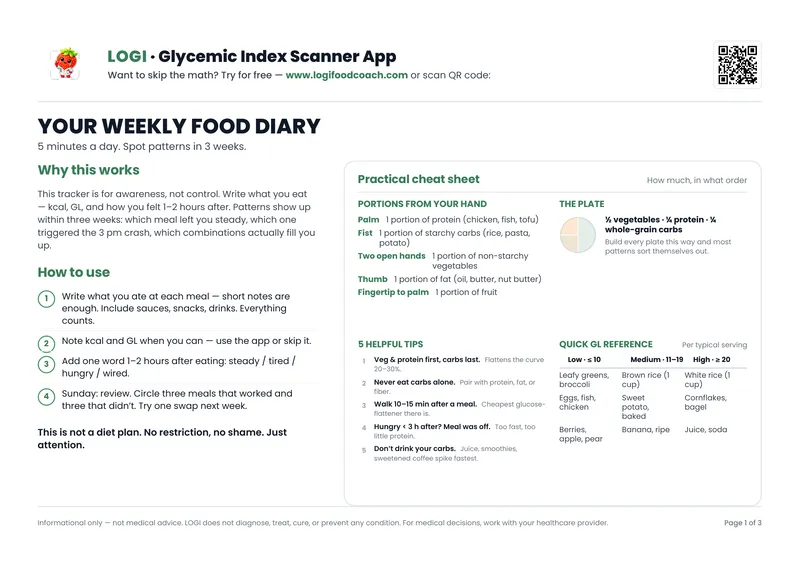
Free PDF — 3 pages
Your Weekly Food Journal
Track meals, glycemic load & mood. Spot patterns in 3 weeks.
No spam. Unsubscribe anytime.