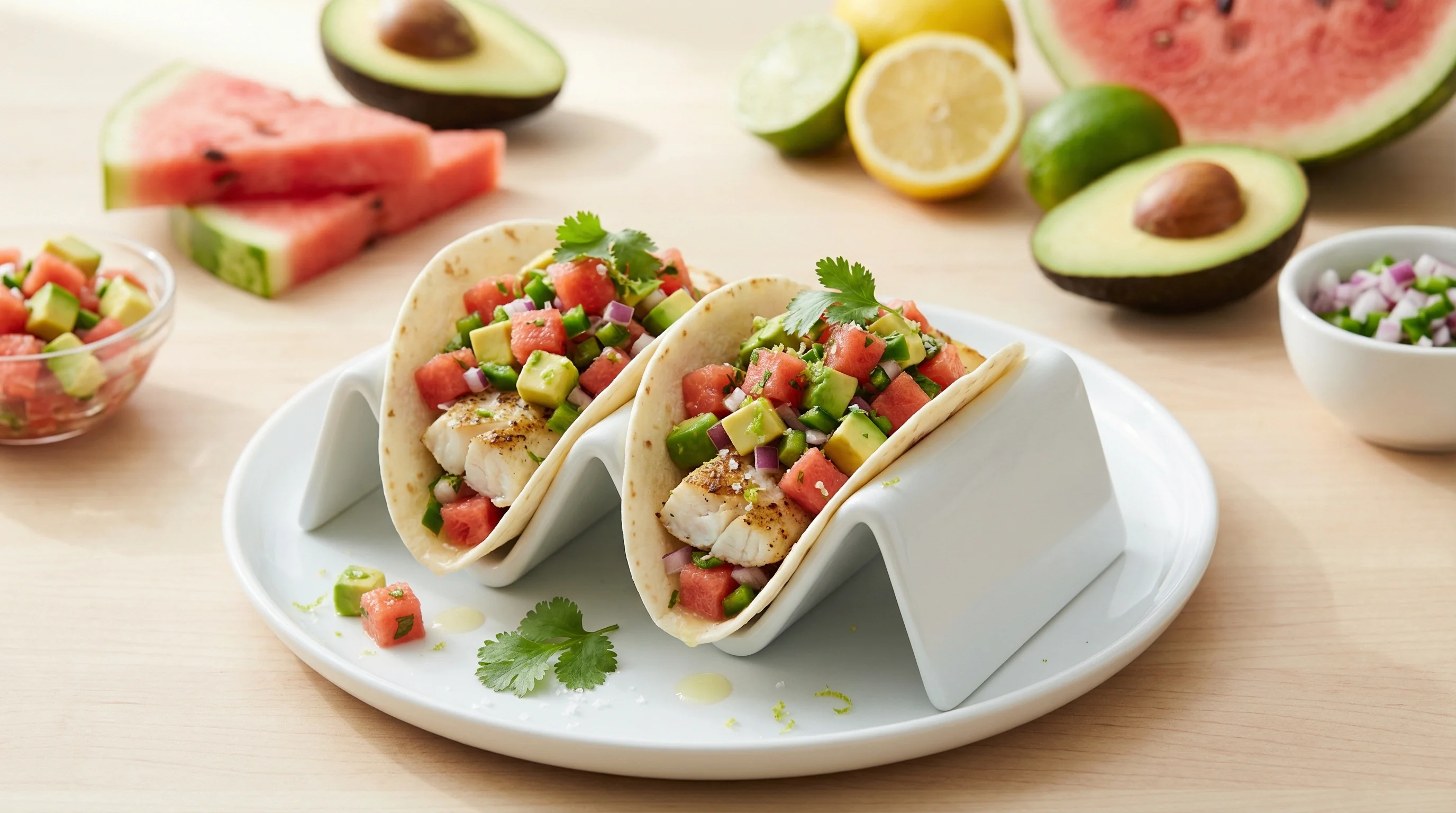
Grilled White Fish Tacos with Fresh Watermelon-Avocado Salsa
Crispy lettuce wraps filled with perfectly seasoned grilled fish and topped with a vibrant watermelon salsa—a refreshing low-GI twist on traditional tacos.
These innovative fish tacos transform a Mexican classic into a blood sugar-friendly masterpiece by swapping high-glycemic tortillas for crisp lettuce leaves. The star of this dish is the unexpected watermelon salsa, which adds natural sweetness without spiking glucose levels thanks to its high water content and fiber. Paired with protein-rich white fish and healthy fats from avocado, this meal creates the perfect macronutrient balance for stable blood sugar.
Watermelon, despite its sweet taste, has a relatively low glycemic load when consumed in moderate portions due to its high water content (92%). The addition of fiber-rich avocado and the lean protein from cod or halibut further slows glucose absorption, making this an ideal choice for glycemic management. The fresh cilantro, lime, and jalapeño not only add bold flavors but also provide antioxidants and compounds that may support metabolic health.
For optimal blood sugar control, enjoy these tacos as a complete meal with the salsa's vegetables eaten first, followed by the protein-packed fish. The romaine or butter lettuce wraps provide satisfying crunch and additional fiber without any glycemic impact. This recipe proves that eating for stable blood sugar doesn't mean sacrificing flavor or satisfaction—it's about making smart ingredient swaps that nourish your body while delighting your taste buds.
Blood Sugar Impact
Minimal blood sugar impact expected due to the very low glycemic load of 4.0 and GI of 25. This meal should provide stable energy for 3-4 hours without significant glucose spikes, as it's rich in healthy fats from avocado and olive oil, lean protein from white fish, and fiber.
Blood Sugar Tips
- ✓ Eat the fish and avocado first before the watermelon salsa to slow down sugar absorption from the fruit
- ✓ Include the full serving of salsa with healthy fats and fiber rather than eating watermelon alone
- ✓ Pair with a 10-15 minute walk after eating to help muscles utilize any glucose and maintain stable blood sugar levels
🥗 Ingredients
- 2 cup seedless watermelon, diced
- 1 pcs fresh ripe avocado, pitted and cubed
- 0.5 pcs red onion, finely chopped
- 1 pcs fresh lime, juice and zest
- 0.5 pcs fresh lemon, juice only
- 1 pcs jalapeño pepper, stemmed and diced
- 0.5 cup fresh cilantro, chopped
- 0.25 tsp sea salt, divided
- 1.5 tbsp extra virgin olive oil, divided
- 1 tbsp seasoning blend for fish
- 1 oz white flaky fish fillets (cod or halibut)
- 16 pcs romaine or butter lettuce leaves
- 2 cup seedless watermelon, diced
- 1 pcs fresh ripe avocado, pitted and cubed
- 0.5 pcs red onion, finely chopped
- 1 pcs fresh lime, juice and zest
- 0.5 pcs fresh lemon, juice only
- 1 pcs jalapeño pepper, stemmed and diced
- 0.5 cup fresh cilantro, chopped
- 0.25 tsp sea salt, divided
- 1.5 tbsp extra virgin olive oil, divided
- 1 tbsp seasoning blend for fish
- 1 oz white flaky fish fillets (cod or halibut)
- 16 pcs romaine or butter lettuce leaves
👨🍳 Instructions
- 1
Prepare the watermelon salsa by combining diced watermelon, cubed avocado, finely chopped red onion, jalapeño, and fresh cilantro in a medium mixing bowl. This colorful combination provides the perfect balance of sweetness, creaminess, and heat.
- 2
Add the juice and zest of one lime plus the juice of half a lemon to the salsa mixture. Drizzle with 1 tablespoon of extra virgin olive oil and season with 1/4 teaspoon sea salt. Gently toss all ingredients together, being careful not to mash the avocado. Set aside to allow flavors to meld while you prepare the fish.
- 3
In a small bowl, combine the ground cumin, smoked paprika, garlic powder, and black pepper to create your spice blend. Mix thoroughly and set aside.
- 4
Prepare your cooking surface by either preheating an outdoor grill to high heat or heating a large skillet over medium-high heat on the stovetop. If grilling, lightly brush the grill grates with oil to prevent sticking.
- 5
Pat the fish fillets dry with paper towels and brush both sides with the remaining 1/2 tablespoon olive oil. Season generously with your spice blend and 1/2 teaspoon sea salt, ensuring even coverage on all surfaces of the fish.
- 6
Place the seasoned fish on the preheated grill or in the heated skillet. Cook for approximately 5 minutes on the first side without moving, allowing a light crust to form. Carefully flip and cook for another 4-5 minutes until the fish is opaque throughout and flakes easily with a fork. The internal temperature should reach 145°F (63°C).
- 7
Remove the cooked fish from heat and let it rest for 5 minutes to allow juices to redistribute. Once slightly cooled but still warm, use a fork to gently break the fish into large, bite-sized chunks suitable for tacos.
- 8
Wash and thoroughly dry the lettuce leaves. For each taco, layer two lettuce leaves together to create a sturdy base that won't tear when filled. This double-layer technique ensures your tacos hold together beautifully.
- 9
Assemble the tacos by placing approximately 1/4 cup of flaked fish onto each double-layered lettuce wrap. Top generously with 2-3 tablespoons of the fresh watermelon salsa. Serve immediately while the fish is still warm and the salsa is cool and refreshing. For optimal blood sugar management, eat the vegetable-rich salsa first, followed by the protein-packed fish.
📊 Nutrition Per Serving
| Per Serving | Whole Dish | |
|---|---|---|
| Calories | 393 | 1572 |
| Carbs | 28g | 113g |
| Sugars | 6g | 24g |
| Natural Sugars | 6g | 24g |
| Protein | 8g | 34g |
| Fat | 30g | 121g |
| Saturated Fat | 11g | 42g |
| Unsaturated Fat | 20g | 78g |
| Fiber | 13g | 51g |
| Soluble Fiber | 4g | 15g |
| Insoluble Fiber | 9g | 36g |
| Sodium | 9551mg | 38205mg |
Predicted Glucose Response
What if you...
Estimated model — individual responses vary. Not medical advice.
🔄 Lower GI Swaps
Watermelon has a high glycemic index (72-80) despite low GL due to water content. Cucumber, jicama, and green papaya provide similar refreshing crunch with virtually no impact on blood sugar (GI under 15).
While red onion is moderate GI, scallions, chives, and radishes have negligible carbohydrate content and near-zero glycemic impact, keeping blood sugar even more stable.
Adding cabbage (GI 10) or incorporating seeds/nuts with lettuce adds fiber and healthy fats that further slow glucose absorption and improve satiety without raising GL.
Adding vinegar has been shown to reduce post-meal blood sugar spikes by 20-30%. Chia seeds add soluble fiber that slows carbohydrate digestion and blunts glucose response.
🔬 The Science Behind This Recipe
The Science Behind Blood Sugar-Friendly Fish Tacos
These grilled fish tacos earn their impressive glycemic load of just 4.0 through a smart combination of ingredients that work together to keep your blood sugar steady. White fish is a lean protein powerhouse that contains virtually no carbohydrates, meaning it won't spike your glucose at all. But here's the metabolic magic: protein slows down digestion and signals your body to release glucose into your bloodstream gradually rather than all at once. When you pair fish with the other components in this meal, you're creating a blood sugar buffer that helps prevent the rapid spikes and crashes that leave you tired and hungry.
The watermelon-avocado salsa is where this recipe gets really interesting from a glycemic perspective. Yes, watermelon contains natural sugars and has a high glycemic index when eaten alone—but here's what matters more: the actual amount of carbohydrates per serving is quite low, which is why the overall glycemic load stays minimal. Avocado is the metabolic hero here, packed with healthy monounsaturated fats and fiber that dramatically slow sugar absorption. When you eat watermelon with avocado, the fat content essentially puts the brakes on how quickly those fruit sugars enter your bloodstream. The red onion and citrus add additional fiber and beneficial plant compounds that support healthy glucose metabolism.
For maximum blood sugar stability, try this eating strategy: start with a few bites of the fish and avocado-rich salsa first, then add your tortilla or wrap. This "protein and fat first" approach primes your digestive system to handle carbohydrates more efficiently. A 10-15 minute walk after your meal can further help your muscles absorb glucose, keeping levels even steadier.