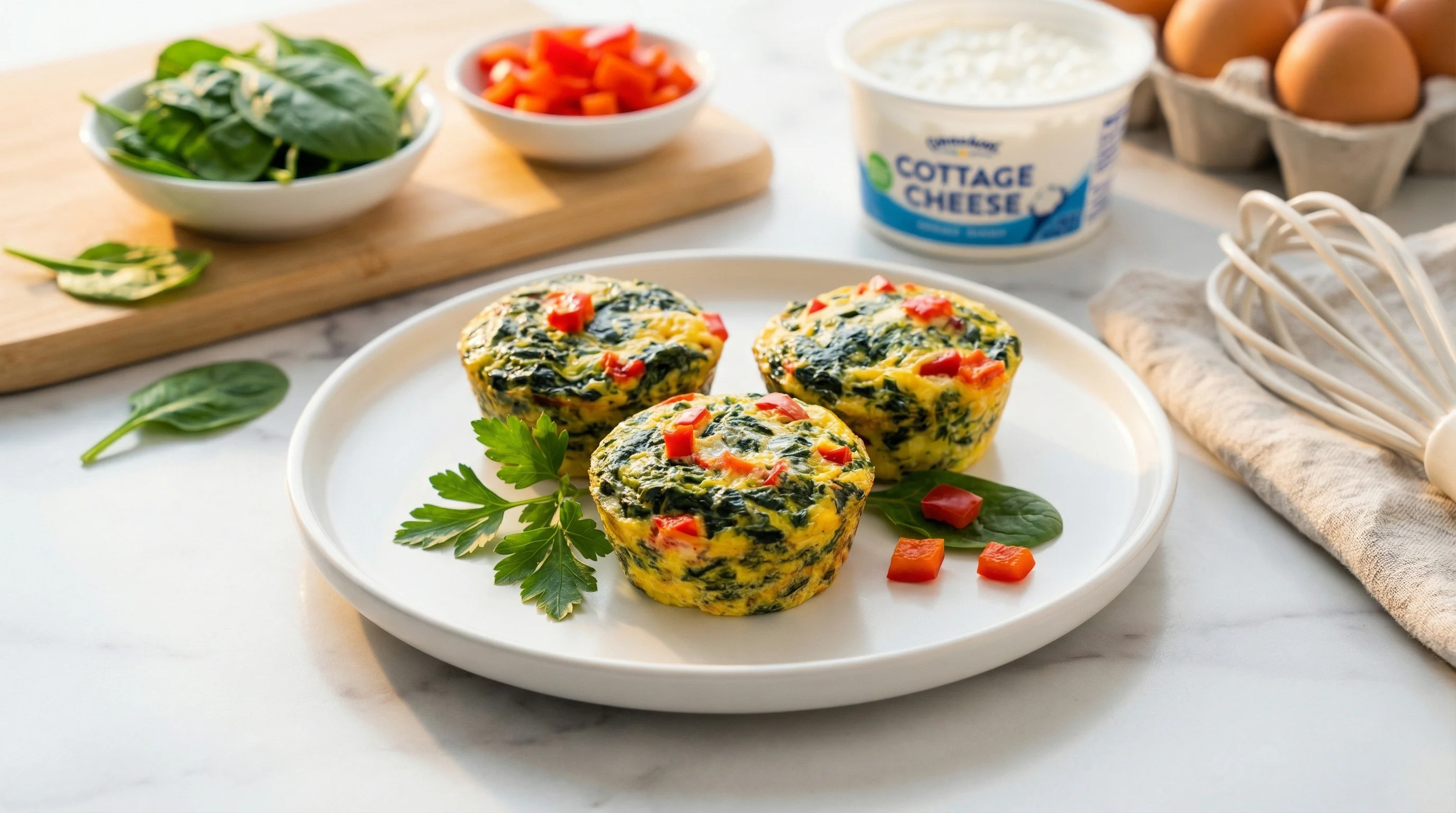
Low-Glycemic Spinach and Cottage Cheese Egg Muffins
Protein-packed egg muffins with spinach and cottage cheese deliver sustained energy without blood sugar spikes. Perfect for meal prep and on-the-go breakfasts.
These savory egg muffins are a blood sugar-friendly breakfast solution that combines high-quality protein with nutrient-dense vegetables. Each muffin delivers approximately 8 grams of protein from eggs and cottage cheese, which helps slow glucose absorption and promotes stable energy levels throughout your morning. The combination of whole eggs and cottage cheese provides a complete amino acid profile while keeping the glycemic load remarkably low.
Spinach adds fiber, magnesium, and alpha-lipoic acid—nutrients that support healthy insulin function and glucose metabolism. The cottage cheese contributes casein protein, which digests slowly and helps maintain steady blood sugar for hours after eating. Roasted red peppers provide vitamin C and antioxidants without adding significant carbohydrates. This recipe contains virtually no high-glycemic ingredients, making it an ideal choice for anyone managing blood sugar levels.
For optimal glycemic control, pair these muffins with a small handful of nuts or a few slices of avocado to add healthy fats that further slow digestion. These muffins are perfect for meal prep—make a batch on Sunday and enjoy quick, blood-sugar-stable breakfasts all week. They can be eaten cold straight from the refrigerator or gently reheated, and they freeze beautifully for up to three months.
Blood Sugar Impact
Minimal blood sugar impact expected due to the very low glycemic load (0.5) and low GI (28). The high protein content from eggs and cottage cheese, combined with fiber from spinach, will provide stable energy for 3-4 hours with virtually no spike.
Blood Sugar Tips
- ✓ Pair with a small handful of nuts or seeds to add healthy fats that further slow digestion and stabilize blood sugar
- ✓ Eat these muffins as part of breakfast with a short 10-15 minute walk afterward to enhance insulin sensitivity
- ✓ Store extras in the fridge and eat cold or reheated - the protein and fat content makes these excellent for meal prep without affecting glycemic properties
🥗 Ingredients
- 300 g frozen spinach, thawed and drained
- 6 pcs large eggs
- 0.5 tsp dried oregano
- 0.5 tsp kosher salt
- 0.25 tsp garlic powder
- 1 cup cottage cheese
- 0.25 cup grated Parmesan cheese
- 0.25 cup chopped roasted red pepper from jar, plus extra for topping
- 0.25 tsp fresh ground black pepper
- 10.6 oz frozen spinach, thawed and drained
- 6 pcs large eggs
- 0.5 tsp dried oregano
- 0.5 tsp kosher salt
- 0.25 tsp garlic powder
- 1 cup cottage cheese
- 0.25 cup grated Parmesan cheese
- 0.25 cup chopped roasted red pepper from jar, plus extra for topping
- 0.25 tsp fresh ground black pepper
👨🍳 Instructions
- 1
Preheat your oven to 375°F (190°C). Prepare a standard 12-cup muffin tin by spraying thoroughly with cooking spray or brushing with oil to prevent sticking.
- 2
Place the frozen spinach in a fine-mesh colander and run warm water over it until completely thawed, approximately 1 to 2 minutes. Using your hands, squeeze the spinach firmly to remove as much excess moisture as possible—this step is crucial to prevent watery muffins.
- 3
Crack the eggs into a large mixing bowl and whisk them thoroughly until the yolks and whites are completely combined and slightly frothy.
- 4
Add the oregano, salt, garlic powder, cottage cheese, Parmesan cheese, squeezed spinach, and chopped roasted red pepper to the whisked eggs. Stir everything together until evenly distributed. Season with several grinds of fresh black pepper according to your taste preference.
- 5
Divide the egg mixture evenly among the 12 muffin cups, filling each about three-quarters full. Sprinkle the tops with additional chopped roasted red pepper for visual appeal and extra flavor.
- 6
Bake for 22 to 24 minutes until the muffins are set in the center and developing golden edges. The centers should no longer jiggle when the pan is gently shaken.
- 7
Remove from the oven and allow to cool for 3 to 5 minutes—the muffins will deflate slightly, which is completely normal. Run a butter knife around the edge of each muffin to loosen it, then gently pop each one out. Serve immediately while warm, or let cool completely before storing in an airtight container in the refrigerator for up to 5 days. These can also be frozen for up to 3 months and thawed overnight in the refrigerator.
📊 Nutrition Per Serving
| Per Serving | Whole Dish | |
|---|---|---|
| Calories | 117 | 1400 |
| Carbs | 15g | 175g |
| Sugars | 1g | 13g |
| Natural Sugars | 1g | 13g |
| Protein | 8g | 94g |
| Fat | 4g | 50g |
| Saturated Fat | 2g | 18g |
| Unsaturated Fat | 3g | 32g |
| Fiber | 4g | 53g |
| Soluble Fiber | 1g | 16g |
| Insoluble Fiber | 3g | 37g |
| Sodium | 3415mg | 40980mg |
Predicted Glucose Response
What if you...
Estimated model — individual responses vary. Not medical advice.
🔄 Lower GI Swaps
Full-fat Greek yogurt and ricotta have virtually no carbohydrates and zero glycemic impact, while cottage cheese contains 3-4g carbs per serving that can slightly raise blood sugar
Zucchini and mushrooms have lower sugar content than roasted red peppers, and using raw bell peppers instead of roasted eliminates the concentrated sugars that develop during the roasting process
While parmesan is already low-carb, aged hard cheeses like cheddar and gruyere have even lower lactose content (virtually zero carbs) due to longer aging, ensuring absolutely no blood sugar impact
Kale and Swiss chard have slightly lower carbohydrate density than spinach and higher fiber content, resulting in an even lower glycemic load per serving
🔬 The Science Behind This Recipe
Why This Recipe Works for Blood Sugar Balance
These egg muffins are a powerhouse for glucose management, with an exceptionally low glycemic load of just 0.5 per serving and a GI of 28. The secret lies in their protein-rich, virtually carb-free composition. Eggs provide high-quality protein and healthy fats that slow digestion and prevent the rapid blood sugar spikes associated with carbohydrate-heavy breakfasts. When you eat protein first thing in the morning, it triggers a steady release of energy and helps stabilize insulin response throughout the day. The cottage cheese adds even more protein while contributing calcium and beneficial probiotics that support gut health—and emerging research suggests a healthy gut microbiome plays a role in glucose regulation.
Spinach brings impressive benefits beyond its minimal carbohydrate content. This leafy green is packed with magnesium, a mineral that helps your cells respond better to insulin, and alpha-lipoic acid, an antioxidant that may improve insulin sensitivity. The fiber in spinach also slows digestion, creating a gentle, sustained release of any glucose into your bloodstream rather than a sharp spike. Because this recipe contains virtually no carbohydrates, the concept of Glycemic Load becomes particularly relevant here—even if a food has a measurable GI, if there are almost no carbs present, the actual impact on your blood sugar is negligible.
For optimal blood sugar control, enjoy these muffins as part of a balanced breakfast. Pair them with a small portion of berries or a slice of whole-grain toast if desired, but eat the muffins first—this "protein-first" approach has been shown to reduce post-meal glucose spikes by up to 40% compared to eating carbs first.