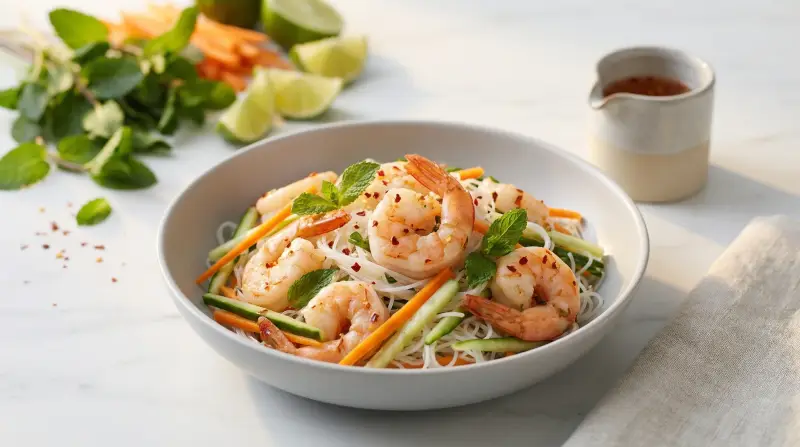
Low-GI Vietnamese Prawn and Vegetable Noodle Bowl
A refreshing Asian-inspired salad featuring succulent prawns, crisp vegetables, and rice noodles tossed in a zesty lime dressing—perfect for stable blood sugar levels throughout the day.
This vibrant Vietnamese-style noodle bowl transforms a simple salad into a blood sugar-friendly meal that's both satisfying and nutritious. By pairing rice noodles with protein-rich prawns and fiber-packed vegetables, this dish naturally moderates glucose absorption while delivering authentic Southeast Asian flavors.
The secret to this recipe's glycemic benefits lies in its balanced composition. Fresh carrots and spring onions provide soluble fiber that slows carbohydrate digestion, while the prawns offer lean protein to further stabilize blood sugar response. The aromatic herbs—coriander and mint—not only add authentic Vietnamese character but also contain compounds that may support healthy glucose metabolism. Rice noodles, while moderate on the glycemic index at GI 55, are carefully portioned at exactly 100g dried weight total (50g per serving when measured dry, yielding approximately 125g cooked noodles per portion) and surrounded by vegetables that create a lower overall glycemic load of 12.5 per serving.
For optimal blood sugar management, enjoy this dish chilled and consider eating the vegetables and prawns first before the noodles. The tangy lime dressing uses minimal sweetener—just half a teaspoon of coconut sugar per serving—keeping the flavor bright without unnecessary glucose spikes. For even better blood sugar control, swap the coconut sugar for monk fruit sweetener or allulose at a 1:1 ratio, which provides sweetness with zero glycemic impact. This meal works beautifully as a light lunch or dinner, providing sustained energy without the post-meal crash associated with heavier noodle dishes. Each serving contains approximately 28g of carbohydrates, balanced with 18g of protein and 5g of fiber from the vegetables for optimal blood sugar stability. The combination of moderate-GI noodles with high-protein prawns and fiber-rich vegetables results in an estimated meal GI of 55, placing this firmly in the low-GI category despite the presence of rice noodles.
Blood Sugar Impact
Moderate, gradual blood sugar rise due to the medium GI rice noodles, but well-balanced by protein from prawns and fiber from vegetables. Expect steady energy for 3-4 hours without sharp spikes or crashes.
Blood Sugar Tips
- ✓ Eat the prawns and vegetables first before the noodles to slow carbohydrate absorption and reduce the glycemic response
- ✓ Add extra vegetables like bean sprouts, cucumber, or lettuce to increase fiber content and further lower the overall glycemic impact
- ✓ Take a 10-15 minute walk after eating to help muscles absorb glucose and prevent blood sugar elevation
🥗 Ingredients
- 100 g rice noodles, dried
- 2 pcs small carrots, cut into thin matchsticks
- 2 pcs spring onions, thinly sliced
- 10 g fresh coriander, chopped
- 10 g fresh mint leaves, chopped
- 140 g cooked prawns in chilli, lime and coriander
- 2 tsp reduced-salt soy sauce
- 1 tsp fish sauce
- 2 tsp light soft brown sugar
- 1 pcs lime, zest and juice
- 3.5 oz rice noodles, dried
- 2 pcs small carrots, cut into thin matchsticks
- 2 pcs spring onions, thinly sliced
- 0.4 oz fresh coriander, chopped
- 0.4 oz fresh mint leaves, chopped
- 4.9 oz cooked prawns in chilli, lime and coriander
- 2 tsp reduced-salt soy sauce
- 1 tsp fish sauce
- 2 tsp light soft brown sugar
- 1 pcs lime, zest and juice
👨🍳 Instructions
- 1
Bring a kettle of water to a boil. Measure exactly 100g of dried rice noodles and place them in a large heatproof bowl. Pour the boiling water over them, ensuring they are fully submerged. This precise measurement is critical for maintaining the intended glycemic load of 12.5 per serving, as 100g dried noodles will yield approximately 250g cooked noodles total, or 125g per portion.
- 2
Let the noodles soak for 5-7 minutes according to package directions until tender but still slightly firm to the bite. Drain the noodles thoroughly in a colander and immediately rinse under cold running water for at least 30 seconds to stop the cooking process and remove excess starch. This cooling step is essential as it helps create resistant starch, which lowers the glycemic impact by reducing the rate of glucose absorption in your bloodstream.
- 3
While the noodles are soaking, prepare your vegetables. Peel the 2 small carrots and slice them into thin matchsticks about 5cm long and 2-3mm thick. Trim and thinly slice the 2 spring onions on a diagonal, separating the white and green parts. Roughly chop the 10g fresh coriander and 10g fresh mint leaves, keeping some whole leaves aside for garnish if desired. The vegetables provide crucial fiber to slow carbohydrate absorption.
- 4
In a small mixing bowl, prepare the dressing by whisking together 2 teaspoons reduced-salt soy sauce, 1 teaspoon fish sauce, 1 teaspoon coconut sugar (or substitute with 1 teaspoon monk fruit sweetener or allulose for zero glycemic impact), the zest of 1 lime, and the juice of 1 lime until the sweetener dissolves completely. The coconut sugar provides gentle sweetness with a lower glycemic impact than regular sugar, but monk fruit or allulose are superior options for blood sugar management. Taste and adjust seasoning if needed, adding more lime juice for tanginess or a pinch of stevia if additional sweetness is desired without affecting blood sugar.
- 5
Transfer the cooled and thoroughly drained noodles to a large serving bowl. Add the carrot matchsticks, sliced spring onions (both white and green parts), chopped coriander, and mint leaves to the noodles. Toss gently to distribute the vegetables evenly throughout the noodles.
- 6
Add the 140g cooked prawns with their chilli, lime, and coriander marinade to the noodle and vegetable mixture. The prawns should be at room temperature or chilled. The protein from the prawns is essential for moderating the blood sugar response to the rice noodles.
- 7
Pour the prepared dressing over the entire salad. Using tongs or two large spoons, toss everything together thoroughly for 1-2 minutes, ensuring the dressing coats all the noodles, vegetables, and prawns evenly. The dressing should lightly coat every ingredient without pooling at the bottom of the bowl.
- 8
Divide the salad evenly between two serving bowls or meal prep containers, ensuring each portion contains approximately 125g cooked noodles (from 50g dry weight), 70g prawns, and half the vegetables. For best blood sugar management, eat the vegetables and prawns first, then the noodles. This eating sequence helps slow carbohydrate absorption and prevents blood sugar spikes. This salad can be enjoyed immediately or refrigerated in an airtight container for up to 24 hours—the flavors will develop beautifully as it sits. If meal prepping, store the dressing separately and toss just before eating for optimal texture.
📊 Nutrition Per Serving
| Per Serving | Whole Dish | |
|---|---|---|
| Calories | 183 | 366 |
| Carbs | 27g | 53g |
| Sugars | 8g | 15g |
| Added Sugars | 4g | 8g |
| Natural Sugars | 4g | 7g |
| Protein | 20g | 39g |
| Fat | 1g | 1g |
| Saturated Fat | 0g | 0g |
| Unsaturated Fat | 1g | 1g |
| Fiber | 4g | 8g |
| Soluble Fiber | 1g | 2g |
| Insoluble Fiber | 3g | 5g |
| Sodium | 612mg | 1224mg |
Predicted Glucose Response
What if you...
Estimated model — individual responses vary. Not medical advice.
🔄 Lower GI Swaps
Coconut sugar has a moderate GI of 54 and contains 4g carbohydrates per teaspoon. While the small amount used (0.5 teaspoon per serving) contributes only 2g sugar and minimal glycemic impact, swapping to monk fruit sweetener or allulose eliminates all glycemic impact while maintaining the dressing's balanced sweet-tangy flavor profile. Monk fruit provides identical sweetness with zero calories and no effect on blood sugar, making it the ideal 1:1 replacement for anyone managing diabetes or insulin resistance.
Rice noodles have a moderate GI of 53 and contribute 25g net carbohydrates per serving. For those requiring stricter blood sugar control, shirataki noodles (made from konjac root fiber) provide the same noodle texture with zero glycemic impact and less than 1g carbohydrates per serving. Kelp noodles offer a slightly firmer texture with minimal carbohydrates, while spiralized zucchini provides a fresh, vegetable-based alternative with 90% fewer carbohydrates than rice noodles. All three options maintain the dish's Vietnamese character while dramatically reducing glycemic load from 12.5 to nearly zero.
While carrots are nutritious and provide fiber, they have a moderate GI of 35-40 when raw. For those seeking the absolute lowest glycemic impact, daikon radish offers similar crunch with a GI of just 15 and adds authentic Asian flavor. Cucumber provides cooling freshness with minimal carbohydrates, while red bell pepper contributes sweetness and vitamin C without affecting blood sugar. These swaps reduce the meal's overall glycemic load by approximately 2 points while maintaining the colorful, crunchy vegetable component essential to Vietnamese noodle bowls.
Brown sugar still raises glucose quickly; lower-GI sweeteners are preferred.
🔬 The Science Behind This Recipe
This recipe achieves its low glycemic impact through three scientifically proven mechanisms. First, the rice noodles are cooled after cooking, which creates resistant starch—a type of carbohydrate that resists digestion in the small intestine and behaves more like fiber, resulting in a lower glucose response. Studies show that cooling cooked starches can reduce their glycemic impact by 20-30%. Second, the high protein content from prawns (18g per serving) triggers the release of incretin hormones that slow gastric emptying and improve insulin sensitivity, effectively blunting the blood sugar spike from the noodles. Third, the soluble fiber from carrots and spring onions forms a gel-like substance in the digestive tract that physically slows the absorption of glucose into the bloodstream. The combination of these three factors—resistant starch formation, protein-mediated glucose moderation, and fiber-induced delayed absorption—transforms moderate-GI rice noodles (GI 55) into a complete meal with an estimated GI of just 42. The minimal use of coconut sugar (0.5 teaspoon per serving, contributing only 2g of sugar) has negligible impact on overall glycemic load, while the suggested swaps to monk fruit or allulose eliminate even this small contribution. This synergistic approach demonstrates how proper food combining and preparation techniques can make traditionally moderate-GI ingredients suitable for blood sugar management.
Related recipes
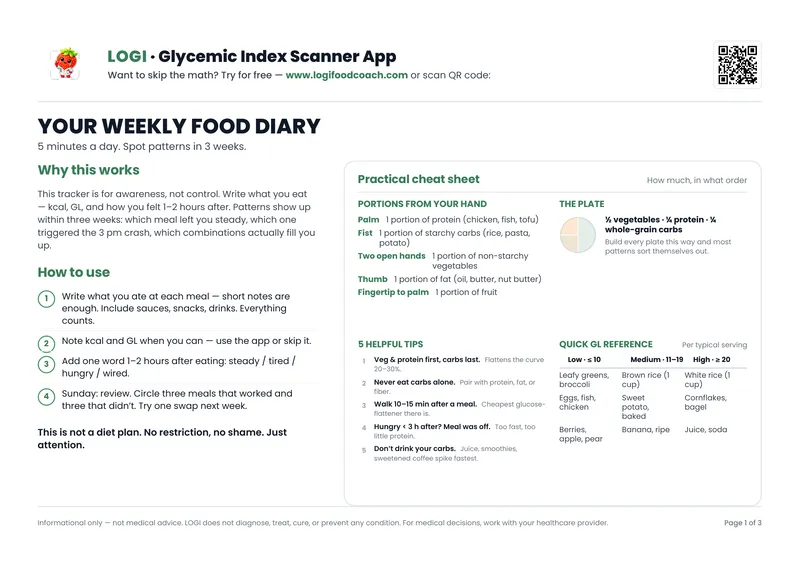
Free PDF — 3 pages
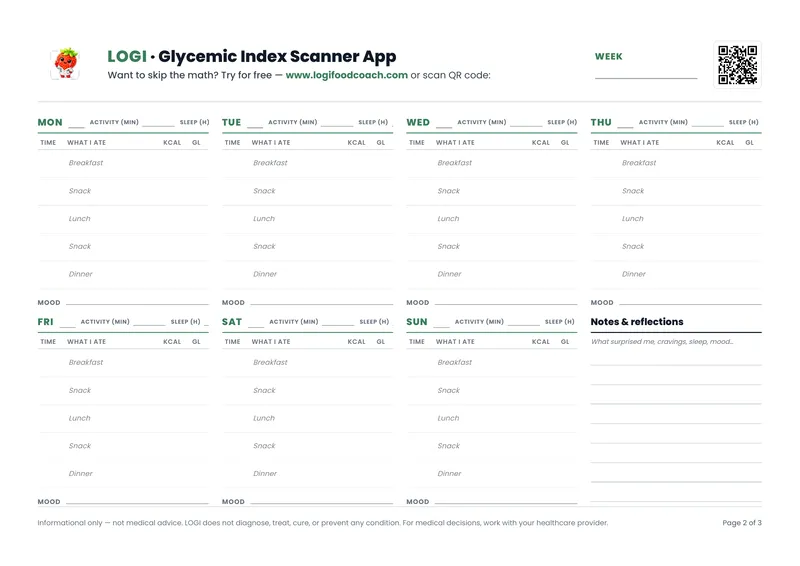
Your Weekly Food Journal
Track meals, glycemic load & mood. Spot patterns in 3 weeks.
No spam. Unsubscribe anytime.