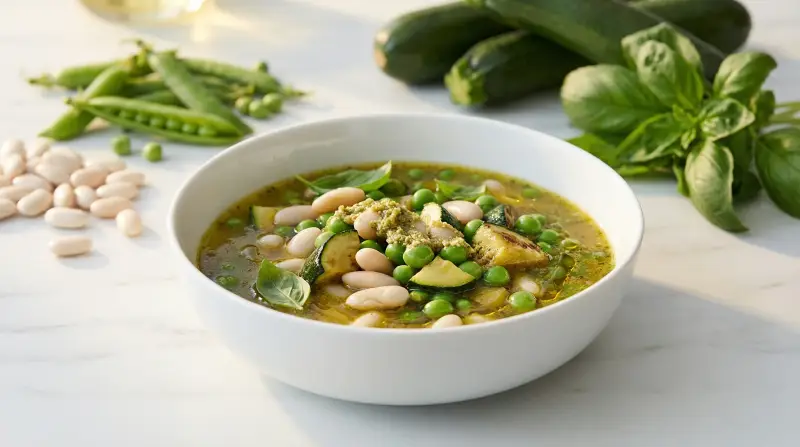
Low-Glycemic Courgette, Pea & White Bean Soup with Basil Pesto
A fiber-rich, blood sugar-friendly soup combining tender courgettes, sweet peas, and creamy cannellini beans in a fragrant basil pesto broth.
This nourishing soup is specifically designed to support stable blood sugar levels while delivering exceptional flavor and satisfaction. The combination of courgettes (zucchini), green peas, and cannellini beans creates a powerhouse of soluble fiber that slows glucose absorption and promotes steady energy throughout your day.
Cannellini beans are a Low GI superstar with a rating of just 31, providing resistant starch that feeds beneficial gut bacteria and minimizes blood sugar spikes. The courgettes add volume and nutrients without impacting glucose levels, while frozen peas (GI 34) offer natural sweetness alongside protein and fiber. The olive oil and pesto contribute healthy fats that further slow digestion and enhance nutrient absorption. This soup is particularly effective when eaten as a first course, as the high fiber content can reduce the glycemic impact of foods consumed afterward.
Perfect for meal prep, this soup actually improves overnight as the resistant starch in the beans increases when cooled and reheated. Pair with a small portion of whole grain sourdough bread or enjoy on its own for a complete, blood sugar-balancing meal that keeps you satisfied for hours without the post-lunch energy crash.
Blood Sugar Impact
This soup will have minimal blood sugar impact due to its low glycemic load of 6.6 and GI of 34. Expect stable, sustained energy for 3-4 hours with minimal glucose spike, thanks to the fiber from beans and vegetables plus healthy fats from olive oil and pesto.
Blood Sugar Tips
- ✓ Add a source of protein like grilled chicken, fish, or a boiled egg to further slow digestion and enhance satiety
- ✓ Eat the soup slowly over 15-20 minutes rather than quickly consuming it to allow better glucose regulation
- ✓ Pair with a 10-15 minute walk after eating to help muscles absorb glucose and blunt any minor blood sugar rise
🥗 Ingredients
- 1 tbsp extra virgin olive oil
- 1 pcs garlic clove, thinly sliced
- 500 g courgettes, quartered lengthways and chopped
- 200 g frozen peas
- 400 g cannellini beans, drained and rinsed
- 1000 ml hot vegetable stock, low-sodium
- 2 tbsp basil pesto
- 1 tbsp extra virgin olive oil
- 1 pcs garlic clove, thinly sliced
- 1.1 lb courgettes, quartered lengthways and chopped
- 7.1 oz frozen peas
- 8.5 oz cannellini beans, drained and rinsed
- 4.2 cups hot vegetable stock, low-sodium
- 2 tbsp basil pesto
👨🍳 Instructions
- 1
Place a large saucepan or soup pot over medium heat and add the olive oil. Allow it to warm for about 30 seconds until it shimmers slightly.
- 2
Add the sliced garlic to the heated oil and sauté for 20-30 seconds, stirring constantly, until fragrant but not browned. Be careful not to burn the garlic as it can become bitter.
- 3
Add the chopped courgettes to the pot and stir to coat them in the garlic-infused oil. Cook for 3-4 minutes, stirring occasionally, until the courgettes begin to soften and turn slightly translucent at the edges.
- 4
Stir in the frozen peas and drained cannellini beans, mixing everything together thoroughly. Pour in the hot vegetable stock and bring the mixture to a gentle boil.
- 5
Reduce the heat to medium-low and simmer for 3-4 minutes until the peas are tender and bright green, and all vegetables are cooked through but still retain some texture.
- 6
Remove the pot from heat and stir in the basil pesto until it's evenly distributed throughout the soup. Season with freshly ground black pepper and a pinch of sea salt to taste.
- 7
Ladle the soup into warmed bowls and serve immediately. For optimal blood sugar control, eat this soup before any bread or other carbohydrates. The soup can also be cooled and stored in an airtight container in the refrigerator for up to 4 days, or frozen for up to 3 months.
📊 Nutrition Per Serving
| Per Serving | Whole Dish | |
|---|---|---|
| Calories | 192 | 766 |
| Carbs | 23g | 92g |
| Sugars | 8g | 31g |
| Natural Sugars | 8g | 31g |
| Protein | 9g | 35g |
| Fat | 8g | 32g |
| Saturated Fat | 1g | 5g |
| Unsaturated Fat | 7g | 26g |
| Fiber | 8g | 30g |
| Soluble Fiber | 1g | 5g |
| Insoluble Fiber | 3g | 11g |
| Sodium | 956mg | 3826mg |
Predicted Glucose Response
What if you...
Estimated model — individual responses vary. Not medical advice.
🔄 Lower GI Swaps
Green beans, broccoli, and spinach have a lower glycemic index than peas (which have a GI of 48-51). These alternatives contain less starch and more fiber, resulting in minimal blood sugar impact.
Black soybeans have a GI of only 15 compared to cannellini beans at 31-38. Lupini beans and edamame also have lower glycemic loads due to higher protein and fat content, causing slower glucose release.
Bone broth and chicken stock contain protein and collagen which help slow carbohydrate absorption and moderate blood sugar response. Mushroom broth adds umami without any glycemic impact.
Increasing the fat content through extra pine nuts, avocado, or tahini further lowers the overall glycemic response of the meal by slowing gastric emptying and carbohydrate digestion.
🔬 The Science Behind This Recipe
# Why This Soup Keeps Your Blood Sugar Steady
This vibrant soup is a masterclass in blood sugar management, with a remarkably low glycemic load of just 6.6 and a GI of 34. The secret lies in how its ingredients work together to slow glucose absorption. Cannellini beans are the star player here—they're packed with soluble fiber and resistant starch that form a gel-like substance in your digestive tract, dramatically slowing down how quickly carbohydrates break down into sugar. Even better, beans contain protein (about 7-8 grams per half cup), which further moderates your glucose response by triggering a slower, more sustained release of energy rather than a sharp spike.
The zucchini and peas add layers of blood sugar protection. Zucchini is over 90% water with barely any carbohydrates, making it an excellent "diluter" that reduces the overall glycemic load of your meal while adding satisfying volume. Peas contribute both fiber and plant-based protein, creating what nutritionists call a "low glycemic matrix"—where multiple components work synergistically to keep glucose levels stable. The olive oil in the pesto plays a crucial role too: healthy fats slow gastric emptying, meaning food moves through your stomach more gradually, preventing that post-meal glucose surge.
Here's a pro tip to maximize this soup's benefits: start your meal with the soup before eating any higher-carb foods. This "veggie-first" approach has been shown to reduce post-meal glucose spikes by up to 73% in some studies. The fiber and protein create a protective barrier in your digestive system, blunting the impact of any carbohydrates that follow. For an extra metabolic boost, take a 10-15 minute walk after eating—even gentle movement helps your muscles absorb glucose without requiring extra insulin.
Related recipes
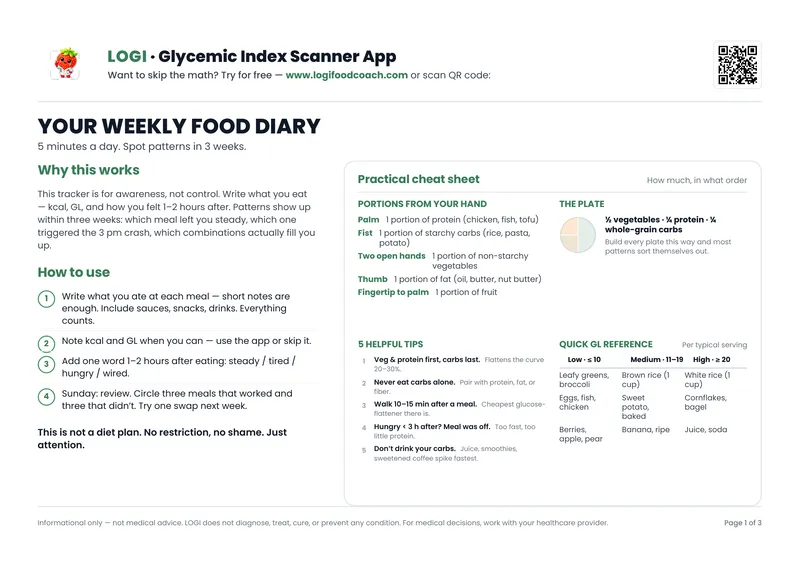
Free PDF — 3 pages
Your Weekly Food Journal
Track meals, glycemic load & mood. Spot patterns in 3 weeks.
No spam. Unsubscribe anytime.