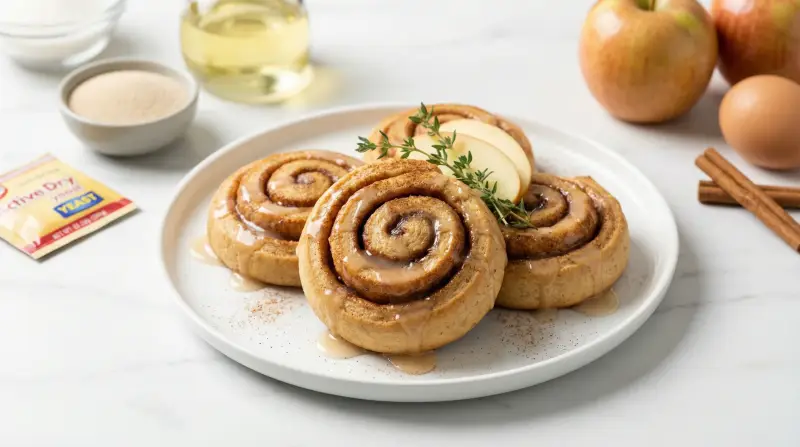
Whole Grain Cinnamon Rolls with Apple Glaze (Lower Glycemic)
Tender whole grain cinnamon rolls with natural apple glaze. Use sugar substitutes for lower glycemic impact in this fiber-rich breakfast treat that supports more stable blood sugar levels.
These wholesome cinnamon rolls prove that comfort food can be adapted to support more stable blood sugar levels. By using a blend of whole wheat and all-purpose flour, we've created rolls with more fiber and a lower glycemic impact than traditional versions made with only refined flour. The dough incorporates skim milk and heart-healthy canola oil while keeping portion sizes moderate. The key to optimizing their blood sugar-friendly profile lies in making smart ingredient swaps. Replace the granulated sugar with erythritol or monk fruit sweetener, and substitute the brown sugar in the filling with a brown sugar alternative like Swerve Brown or a coconut sugar blend. Whole wheat flour digests more slowly than refined white flour, helping prevent glucose spikes. The cinnamon isn't just for flavor—studies suggest it may help improve insulin sensitivity. Raisins add natural sweetness and additional fiber, though you can reduce the amount if desired. For optimal glycemic control, enjoy these rolls as part of a balanced breakfast alongside protein like Greek yogurt or eggs. The fiber content helps slow carbohydrate absorption, while the moderate portion size keeps total carb load in check. These freeze beautifully, so you can enjoy one roll at a time rather than being tempted to overindulge. Reheat gently and pair with a protein source to further minimize blood sugar impact. When made with the recommended sugar substitutes, these rolls achieve a medium glycemic response rather than the high spike of traditional cinnamon rolls.
Blood Sugar Impact
Moderate blood sugar impact expected. The glycemic load of 18.1 and GI of 57 indicate a medium glycemic response that will raise blood sugar moderately over 1-2 hours, though the whole wheat flour provides some fiber to slow absorption compared to refined versions.
Blood Sugar Tips
- ✓ Eat only one roll and pair it with protein like Greek yogurt or eggs to slow sugar absorption and reduce the overall glycemic response
- ✓ Have this as part of a meal rather than alone, and eat it after consuming protein and healthy fats first
- ✓ Take a 15-20 minute walk after eating to help muscles absorb glucose and blunt the blood sugar spike
🥗 Ingredients
- 1 cup skim milk
- 0.25 cup canola oil
- 0.33 cup granulated sugar
- 0.25 tsp salt
- 2 pcs active dry yeast
- 0.25 cup warm water
- 1 pcs large egg
- 2 pcs egg whites
- 3 cup all-purpose flour
- 2.5 cup whole wheat flour
- 1 pcs cooking spray
- 2 tbsp ground cinnamon
- 0.75 cup brown sugar
- 0.25 cup raisins
- 0.5 cup frozen unsweetened apple juice concentrate, thawed
- 1 cup skim milk
- 0.25 cup canola oil
- 0.33 cup granulated sugar
- 0.25 tsp salt
- 2 pcs active dry yeast
- 0.25 cup warm water
- 1 pcs large egg
- 2 pcs egg whites
- 3 cup all-purpose flour
- 2.5 cup whole wheat flour
- 1 pcs cooking spray
- 2 tbsp ground cinnamon
- 0.75 cup brown sugar
- 0.25 cup raisins
- 0.5 cup frozen unsweetened apple juice concentrate, thawed
👨🍳 Instructions
- 1
Gently warm the skim milk in a small saucepan over medium heat until it reaches approximately 180°F, just before boiling point. Remove from heat immediately and stir in the canola oil, granulated sugar (or sugar substitute like erythritol or monk fruit sweetener), and salt until dissolved. Allow this mixture to cool to lukewarm temperature (around 110°F).
- 2
While the milk cools, dissolve the yeast packets in warm water in a small bowl. Stir gently and let stand for 5 minutes until the mixture becomes foamy, indicating the yeast is active.
- 3
In a large mixing bowl, whisk together the whole egg and egg whites until well combined. Pour in the activated yeast mixture and the cooled milk mixture, stirring to incorporate all liquid ingredients thoroughly.
- 4
Gradually add the all-purpose flour and whole wheat flour, one cup at a time, stirring with a wooden spoon after each addition. Continue mixing until a soft, slightly sticky dough forms. If using a stand mixer, attach the dough hook and knead on low speed for 5-6 minutes until the dough becomes smooth and elastic. If kneading by hand, turn out onto a floured surface and knead for 8-10 minutes.
- 5
Transfer the dough to a generously floured work surface. With floured hands, knead the dough gently for about 5 minutes until it becomes smooth, supple, and springs back when pressed. Place the dough in a lightly oiled bowl, turning once to coat. Cover tightly with plastic wrap, and let rise in a warm, draft-free location for approximately 1.5 hours until doubled in volume.
- 6
Once risen, punch down the dough and divide it into two equal portions. Shape each portion into a smooth ball, cover with a clean kitchen towel, and let rest for 10 minutes. Meanwhile, coat an 11x14-inch baking pan with cooking spray and prepare the filling by combining the ground cinnamon, brown sugar (or brown sugar substitute like Swerve Brown or coconut sugar blend), and raisins in a small bowl, mixing well.
- 7
On a floured surface, roll each dough ball into a 16x8-inch rectangle. Lightly spray the surface of each rectangle with cooking spray, then evenly distribute half of the cinnamon-sugar-raisin mixture over each rectangle, spreading to within half an inch of the edges. Starting from the long edge, tightly roll up each rectangle into a log, pinching the seam to seal. Using a sharp knife or unflavored dental floss, slice each log into 16 equal pieces (32 total rolls).
- 8
Arrange the cinnamon roll slices in the prepared baking pan, leaving small spaces between them for expansion. Cover loosely with plastic wrap and let rise in a warm place for another 1.5 hours until doubled in size and touching each other. During the final 30 minutes of rising, preheat your oven to 350°F and prepare the glaze by simmering the apple juice concentrate in a small saucepan over medium heat for 5-7 minutes until reduced by half and syrupy in consistency.
- 9
Once the rolls have completed their second rise, gently brush the top of each roll with half of the warm apple juice glaze. Bake in the preheated oven for 15-18 minutes until the rolls are golden brown on top and cooked through in the center. Remove from oven and brush with the remaining glaze while still warm. Let cool for 5-10 minutes before serving. Serve one roll per person as part of a balanced breakfast with protein. To store, cool completely and freeze individual rolls in airtight containers for up to 3 months. Reheat frozen rolls in the microwave for 30-45 seconds or in a 300°F oven for 10 minutes.
📊 Nutrition Per Serving
| Per Serving | Whole Dish | |
|---|---|---|
| Calories | 143 | 4560 |
| Carbs | 28g | 893g |
| Sugars | 12g | 371g |
| Added Sugars | 7g | 227g |
| Natural Sugars | 5g | 144g |
| Protein | 3g | 106g |
| Fat | 2g | 77g |
| Saturated Fat | 0g | 6g |
| Unsaturated Fat | 2g | 67g |
| Fiber | 2g | 54g |
| Soluble Fiber | 1g | 16g |
| Insoluble Fiber | 1g | 38g |
| Sodium | 30mg | 950mg |
Predicted Glucose Response
What if you...
Estimated model — individual responses vary. Not medical advice.
🔄 Lower GI Swaps
Erythritol, monk fruit sweetener, and allulose are zero-glycemic sweeteners that provide sweetness without raising blood sugar levels. Unlike granulated sugar which has a GI of 65 and causes rapid glucose spikes, these alternatives have minimal to no impact on blood glucose or insulin response, making them ideal for blood sugar management while maintaining the sweet flavor profile of traditional cinnamon rolls.
Brown sugar has a high glycemic index similar to white sugar and causes significant blood sugar elevation. Swerve Brown is a zero-glycemic brown sugar replacement that mimics the flavor and texture without affecting glucose levels. Coconut sugar has a lower GI of around 35 compared to brown sugar's GI of 64, providing a more gradual blood sugar response. The erythritol-molasses blend offers zero-glycemic sweetness with authentic brown sugar flavor from a small amount of molasses.
All-purpose flour is refined and has a higher glycemic index than whole grain alternatives. Increasing the whole wheat flour proportion adds more fiber, which slows carbohydrate digestion and reduces glycemic impact. White whole wheat flour provides the same nutritional benefits as regular whole wheat with a lighter color and milder taste. Almond flour is very low in carbohydrates and has minimal glycemic impact, though it will change the texture slightly and may require recipe adjustments for proper rise.
While raisins provide natural sweetness and some fiber, they are concentrated sources of sugar with a moderate to high glycemic impact. Reducing the amount lowers total sugar content while maintaining some natural sweetness. Nuts like walnuts or pecans add texture, healthy fats, and protein without raising blood sugar, and they help slow the absorption of carbohydrates from the dough. Sugar-free dried cranberries provide tartness and texture with minimal glycemic impact when sweetened with sugar alcohols or alternative sweeteners.
Replace refined sugar with low-glycemic sweeteners to reduce blood sugar spikes.
Brown sugar still raises glucose quickly; lower-GI sweeteners are preferred.
🔬 The Science Behind This Recipe
The lower glycemic impact of these cinnamon rolls comes from several strategic modifications to the traditional recipe. Whole wheat flour contains the entire grain kernel, including the fiber-rich bran and nutrient-dense germ, which slow down carbohydrate digestion and glucose absorption compared to refined all-purpose flour. This fiber content helps prevent the rapid blood sugar spikes associated with traditional cinnamon rolls. When you replace granulated sugar and brown sugar with alternatives like erythritol, monk fruit sweetener, or Swerve Brown, you eliminate the high-glycemic refined sugars that cause immediate glucose elevation. These sugar substitutes provide sweetness without significantly impacting blood glucose levels. The cinnamon in the filling contains bioactive compounds that may enhance insulin sensitivity and improve glucose metabolism. The protein from eggs and the fat from canola oil further slow gastric emptying and carbohydrate absorption, creating a more gradual rise in blood sugar. The apple juice concentrate glaze, while containing natural sugars, is used in small amounts and provides a more complex sugar profile than refined sugar glazes. Portion control is critical—each roll is sized to contain a moderate amount of total carbohydrates, allowing for better blood sugar management when consumed as part of a balanced meal with protein sources.
Related recipes
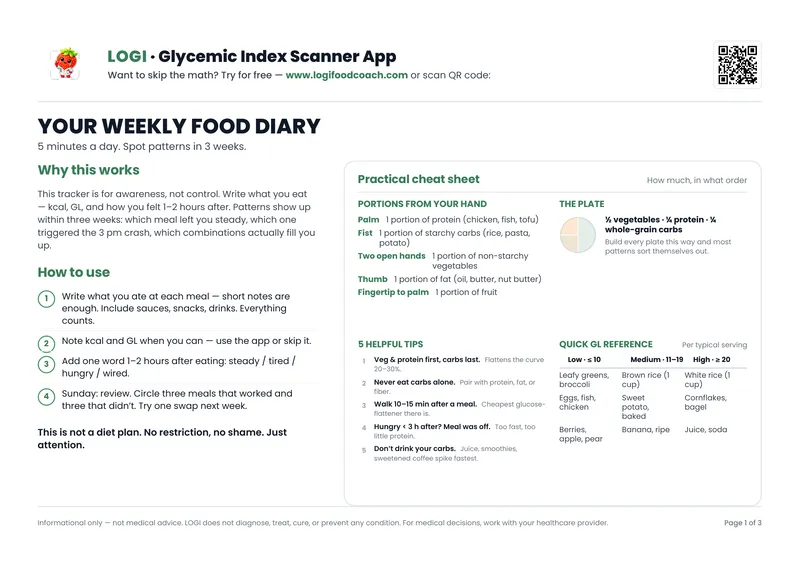
Free PDF — 3 pages
Your Weekly Food Journal
Track meals, glycemic load & mood. Spot patterns in 3 weeks.
No spam. Unsubscribe anytime.