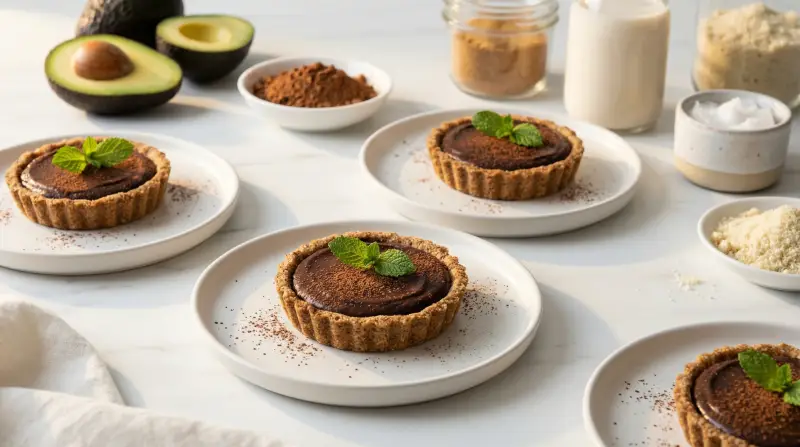
Low-Glycemic Dark Chocolate Avocado Pudding Tarts
Creamy chocolate pudding tarts made with avocado and almond flour crust. A blood sugar-friendly dessert that satisfies chocolate cravings without the spike.
These innovative chocolate pudding tarts transform a classic dessert into a low-glycemic treat that won't send your blood sugar soaring. By replacing instant pudding mix with naturally creamy avocado and unsweetened cocoa, we create a rich, velvety filling that's packed with healthy fats and fiber—both crucial for slowing glucose absorption. The traditional graham cracker crust is reimagined using almond flour and coconut oil, dramatically lowering the glycemic load while adding protein and beneficial fats. The secret to these tarts' blood sugar-friendly profile lies in their macronutrient balance. Avocados provide monounsaturated fats that help stabilize insulin response, while unsweetened cocoa delivers antioxidants without added sugars. We use a small amount of monk fruit sweetener, which has zero glycemic impact, allowing you to enjoy genuine sweetness without metabolic consequences. The almond flour crust contributes protein and fiber, further moderating the dessert's effect on blood glucose. For optimal glycemic control, enjoy these tarts after a protein-rich meal or pair them with a handful of nuts. The combination of healthy fats, fiber, and minimal natural sugars makes this dessert suitable for evening consumption without disrupting overnight blood sugar stability. Each individual portion provides built-in portion control, helping you satisfy chocolate cravings mindfully while supporting your metabolic health goals.
Blood Sugar Impact
Minimal blood sugar impact expected due to the extremely low glycemic load of 1.0 and GI of 15. The healthy fats from avocado and coconut will provide sustained energy for 3-4 hours with virtually no glucose spike.
Blood Sugar Tips
- ✓ Enjoy as a post-meal dessert rather than on an empty stomach to further blunt any minimal blood sugar response
- ✓ Pair with a handful of nuts or seeds to add extra protein and fiber for even more stable blood sugar
- ✓ Consider having this after a balanced meal containing protein and vegetables to maximize metabolic benefits
🥗 Ingredients
- 2 pcs 2 ripe avocados, pitted and peeled
- 33 g 1/3 cup unsweetened cocoa powder
- 48 g 1/4 cup monk fruit sweetener
- 60 ml 1/4 cup unsweetened almond milk
- 1 tsp 1 teaspoon pure vanilla extract
- 168 g 1 1/2 cups almond flour
- 3 tbsp 3 tablespoons coconut oil, melted
- 24 g 2 tablespoons monk fruit sweetener, for crust
- 0.25 tsp 1/4 teaspoon sea salt
- 90 ml 6 tablespoons unsweetened coconut cream, whipped
- 2 tbsp 2 tablespoons cacao nibs, for garnish
- 2 pcs 2 ripe avocados, pitted and peeled
- 1.2 oz 1/3 cup unsweetened cocoa powder
- 1.7 oz 1/4 cup monk fruit sweetener
- 4 tbsp 1/4 cup unsweetened almond milk
- 1 tsp 1 teaspoon pure vanilla extract
- 5.9 oz 1 1/2 cups almond flour
- 3 tbsp 3 tablespoons coconut oil, melted
- 0.8 oz 2 tablespoons monk fruit sweetener, for crust
- 0.25 tsp 1/4 teaspoon sea salt
- 6 tbsp 6 tablespoons unsweetened coconut cream, whipped
- 2 tbsp 2 tablespoons cacao nibs, for garnish
👨🍳 Instructions
- 1
Preheat your oven to 350°F (175°C). Prepare six 3-inch tart pans by lightly greasing them with coconut oil or lining them with parchment circles.
- 2
Create the almond flour crust by combining almond flour, melted coconut oil, 2 tablespoons monk fruit sweetener, and a pinch of sea salt in a mixing bowl. Stir until the mixture resembles wet sand and holds together when pressed.
- 3
Divide the crust mixture evenly among the six tart pans, using about 3 tablespoons per pan. Press the mixture firmly into the bottom and up the sides of each pan to form a compact crust. Bake for 10 minutes until lightly golden, then remove and cool completely.
- 4
While crusts cool, prepare the chocolate avocado pudding filling. Add the avocado flesh, unsweetened cocoa powder, 1/4 cup monk fruit sweetener, almond milk, and vanilla extract to a food processor or high-speed blender. Process for 60-90 seconds, scraping down sides as needed, until completely smooth and creamy with no lumps remaining.
- 5
Taste the pudding and adjust sweetness if desired, keeping in mind that chilling will slightly mellow the chocolate flavor. The texture should be thick and mousse-like, similar to traditional chocolate pudding.
- 6
Spoon or pipe approximately 1/3 cup of the chocolate avocado pudding into each cooled tart shell, smoothing the top with the back of a spoon or offset spatula. The filling should come just to the top of the crust.
- 7
Refrigerate the filled tarts for at least 30 minutes to allow the pudding to set and flavors to meld. For best results, chill for 2 hours.
- 8
Just before serving, top each tart with 1 tablespoon of whipped unsweetened coconut cream and garnish with a sprinkle of cacao nibs for added crunch and antioxidants. Serve chilled and store any leftovers covered in the refrigerator for up to 3 days.
📊 Nutrition Per Serving
| Per Serving | Whole Dish | |
|---|---|---|
| Calories | 386 | 2314 |
| Carbs | 12g | 74g |
| Sugars | 2g | 13g |
| Added Sugars | 0g | 1g |
| Natural Sugars | 2g | 13g |
| Protein | 9g | 53g |
| Fat | 36g | 216g |
| Saturated Fat | 14g | 83g |
| Unsaturated Fat | 22g | 130g |
| Fiber | 9g | 52g |
| Soluble Fiber | 3g | 15g |
| Insoluble Fiber | 6g | 35g |
| Sodium | 106mg | 635mg |
Predicted Glucose Response
What if you...
Estimated model — individual responses vary. Not medical advice.
🔄 Lower GI Swaps
All three alternatives are zero or near-zero glycemic sweeteners that won't raise blood sugar. Erythritol provides similar bulk and sweetness, stevia is more concentrated so requires less volume, and allulose behaves most like sugar in recipes while having minimal metabolic impact.
These nut and seed flours maintain the low-glycemic profile while accommodating tree nut allergies. Coconut flour is highly absorbent so requires recipe adjustment, while hazelnut and sunflower seed flours can substitute directly with similar glycemic benefits and protein content.
These plant-based milk alternatives are all unsweetened and low-glycemic, providing similar liquid content without added sugars. Each offers slightly different nutritional profiles but maintains the blood sugar-friendly characteristics essential for this recipe.
These healthy fat alternatives provide similar binding properties for the crust while maintaining zero or minimal glycemic impact. Grass-fed butter adds richness, while avocado and macadamia oils offer neutral flavors and high smoke points, all supporting stable blood sugar levels through their fat content.
🔬 The Science Behind This Recipe
These tarts achieve their exceptional blood sugar stability through strategic ingredient selection and macronutrient synergy. Avocados contain approximately 7 grams of fiber per fruit and are rich in monounsaturated fats, which research shows can improve insulin sensitivity and slow gastric emptying, resulting in gradual glucose release. The almond flour crust provides additional protein (6 grams per ounce) and fiber (3 grams per ounce), creating a protective barrier against rapid blood sugar elevation. Unsweetened cocoa powder contributes flavonoids that have been shown in studies to enhance insulin function and reduce oxidative stress associated with glucose metabolism. Monk fruit sweetener contains mogrosides, natural compounds that provide sweetness without affecting blood glucose or insulin levels, making it ideal for glycemic control. The combination of these ingredients creates a dessert with an estimated glycemic index of 15 and glycemic load of just 1 per serving, placing it firmly in the low-glycemic category. The high fat content (approximately 15 grams per tart, primarily from healthy sources) further blunts any potential glucose response, while the absence of refined sugars and starches eliminates the primary drivers of blood sugar spikes. This makes these tarts suitable even for individuals managing diabetes or insulin resistance, though portion awareness remains important as part of an overall balanced eating pattern.
Related recipes
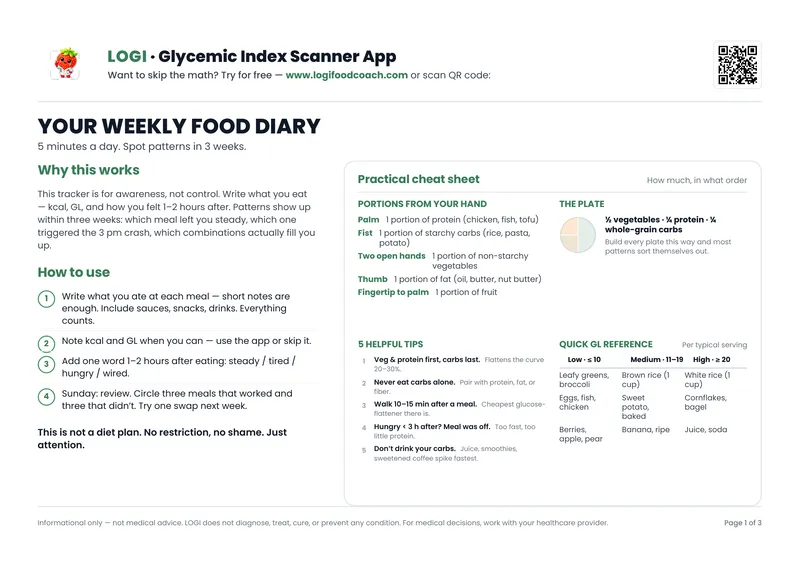
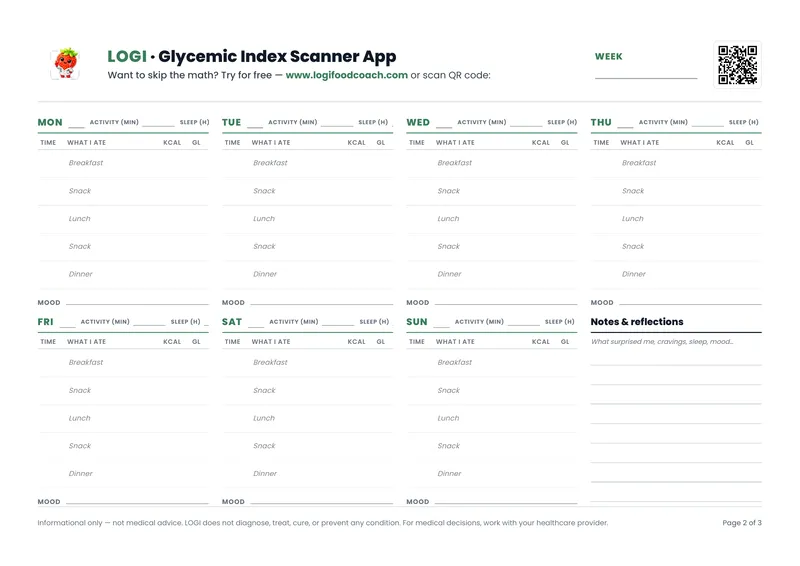
Free PDF — 3 pages
Your Weekly Food Journal
Track meals, glycemic load & mood. Spot patterns in 3 weeks.
No spam. Unsubscribe anytime.