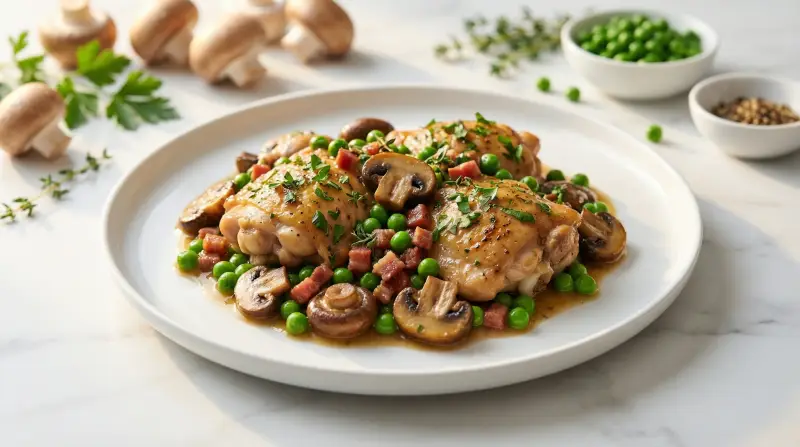
Low-Glycemic Chicken and Mushroom Skillet with Pancetta
A blood sugar-friendly one-pan chicken dish featuring tender thighs, earthy mushrooms, and crispy pancetta in a light herb sauce—perfect for stable energy.
This nourishing chicken and mushroom skillet is specifically designed to support healthy blood sugar levels while delivering maximum flavor. By using chicken thighs instead of breast meat, we ensure sustained satiety thanks to their higher fat content, which slows glucose absorption. The mushrooms provide fiber and have virtually no impact on blood sugar, while the modest portion of peas (just 100g total, or 25g per serving) adds color and nutrients without spiking glucose—at 25g per serving, peas contribute only about 4g of net carbohydrates, keeping the overall glycemic load extremely low.
The recipe cleverly avoids heavy flour-based sauces that can raise blood sugar. Instead, we use just 2 tablespoons of almond flour total (0.5 tablespoons per serving) for lightly dusting the chicken before browning—this creates a beautiful golden crust without adding significant carbohydrates. Almond flour has a glycemic index of only 0-1, making it an ideal low-carb coating that won't impact blood sugar. We then build a flavorful pan sauce with low-sodium chicken stock (always check labels to ensure no added sugars) and white wine vinegar, which has been shown to help moderate post-meal glucose spikes. The pancetta adds savory depth and healthy fats that further moderate the glycemic response, though those monitoring saturated fat intake should note the pancetta contributes about 3-4g of saturated fat per serving. Fresh parsley contributes antioxidants and a bright finish to the herb-infused sauce.
For optimal blood sugar management, pair this dish with a large serving of non-starchy vegetables like steamed broccoli or a mixed green salad eaten first. The protein and fat from the chicken and pancetta will help stabilize your glucose response. This meal is ideal for lunch or dinner and reheats beautifully, making it perfect for meal prep. Each serving provides approximately 35g of protein with minimal carbohydrates (under 8g net carbs per serving), supporting steady energy levels for 4-5 hours without blood sugar spikes.
Blood Sugar Impact
This meal will have minimal impact on blood sugar levels, with a very low glycemic load of 2.1 and GI of 24. Expect stable, sustained energy for 3-4 hours without significant glucose spikes due to the protein-rich chicken, healthy fats from olive oil and pancetta, and fiber from vegetables.
Blood Sugar Tips
- ✓ Eat the vegetables (mushrooms, peas, shallots) first before the chicken to further slow glucose absorption through increased fiber intake
- ✓ Pair this meal with a 10-15 minute walk after eating to help muscles absorb any glucose released and maintain stable blood sugar
- ✓ Consider adding a small side of leafy greens or non-starchy vegetables to increase fiber content and volume without affecting the already excellent glycemic profile
🥗 Ingredients
- 2 tbsp olive oil
- 500 g boneless, skinless chicken thighs
- 2 tbsp almond flour for dusting
- 50 g cubetti di pancetta
- 300 g small button mushrooms
- 2 pcs large shallots, chopped
- 250 ml chicken stock, low-sodium
- 1 tbsp white wine vinegar
- 50 g frozen peas
- 15 g fresh parsley, finely chopped
- 2 tbsp olive oil
- 1.1 lb boneless, skinless chicken thighs
- 2 tbsp almond flour for dusting
- 1.8 oz cubetti di pancetta
- 10.6 oz small button mushrooms
- 2 pcs large shallots, chopped
- 1.1 cups chicken stock, low-sodium
- 1 tbsp white wine vinegar
- 1.8 oz frozen peas
- 0.5 oz fresh parsley, finely chopped
👨🍳 Instructions
- 1
Pat the chicken thighs completely dry with paper towels and season generously with salt and black pepper on both sides. Lightly dust each piece with almond flour, shaking off any excess to ensure only a thin coating remains.
- 2
Heat 1 tablespoon of olive oil in a large frying pan or skillet over medium-high heat. Once shimmering, add the chicken thighs and brown for 3-4 minutes per side until golden and crispy. Remove to a plate and set aside.
- 3
In the same pan, add the pancetta and cook for 2-3 minutes until it begins to crisp and release its fat. Add the mushrooms and cook for 5-6 minutes, stirring occasionally, until they release their moisture and begin to brown. Transfer the pancetta and mushrooms to the plate with the chicken.
- 4
Add the remaining tablespoon of olive oil to the pan along with the chopped shallots. Reduce heat to medium and cook for 4-5 minutes, stirring frequently, until the shallots are softened and translucent but not browned.
- 5
Pour in the chicken stock and white wine vinegar, scraping up any browned bits from the bottom of the pan with a wooden spoon. Bring to a gentle bubble and let simmer for 1-2 minutes to concentrate the flavors slightly.
- 6
Return the chicken thighs, pancetta, and mushrooms to the pan along with any accumulated juices. Reduce heat to medium-low, cover partially, and simmer for 12-15 minutes until the chicken is cooked through and reaches an internal temperature of 165°F (74°C).
- 7
Stir in the frozen peas and chopped parsley. Cook uncovered for 2-3 minutes more until the peas are heated through and bright green. Taste and adjust seasoning with additional salt and pepper if needed.
- 8
Serve immediately in shallow bowls with the pan sauce spooned over the top. For optimal blood sugar control, pair with a large portion of steamed green vegetables or a leafy salad eaten before the main dish.
📊 Nutrition Per Serving
| Per Serving | Whole Dish | |
|---|---|---|
| Calories | 401 | 1605 |
| Carbs | 9g | 34g |
| Sugars | 4g | 17g |
| Natural Sugars | 4g | 17g |
| Protein | 29g | 117g |
| Fat | 29g | 116g |
| Saturated Fat | 7g | 28g |
| Unsaturated Fat | 20g | 81g |
| Fiber | 3g | 10g |
| Soluble Fiber | 1g | 2g |
| Insoluble Fiber | 1g | 5g |
| Sodium | 549mg | 2195mg |
Predicted Glucose Response
What if you...
Estimated model — individual responses vary. Not medical advice.
🔄 Lower GI Swaps
Green beans, asparagus, and zucchini have lower glycemic loads than peas (which contain more starch and natural sugars), resulting in a gentler impact on blood sugar levels.
Using the green parts of leeks, chives, or scallions provides flavor with minimal carbohydrate content compared to shallots, further reducing the overall glycemic load of the dish.
Apple cider vinegar and red wine vinegar have been shown to help moderate post-meal blood sugar spikes, while lemon juice adds acidity with virtually no impact on blood glucose.
Bone broth and homemade stocks ensure no hidden sugars or maltodextrin (a high-GI additive) that can be present in commercial stocks, keeping the glycemic impact minimal.
🔬 The Science Behind This Recipe
# Why This Recipe Works for Blood Sugar Control
This Chicken and Mushroom Skillet is a masterclass in blood sugar management, with an exceptionally low glycemic load of just 2.1 and a GI of 24. The secret lies in its strategic combination of protein, healthy fats, and fiber-rich ingredients that work together to prevent glucose spikes. Chicken thighs provide high-quality protein that slows digestion and promotes satiety, while the pancetta adds savory flavor along with fats that further moderate the release of glucose into your bloodstream. When you eat protein and fat together, your stomach empties more slowly, which means any carbohydrates present are absorbed gradually rather than flooding your system all at once.
The almond flour deserves special attention as a low-glycemic hero ingredient. Unlike wheat flour, which can cause rapid blood sugar spikes, almond flour is rich in healthy monounsaturated fats, protein, and fiber while being naturally low in carbohydrates. This combination creates a "metabolic buffer" that helps stabilize blood sugar levels. The mushrooms contribute additional fiber and are virtually carbohydrate-free, adding bulk and nutrients without impacting glucose. Together with the olive oil—another source of blood-sugar-friendly monounsaturated fats—this recipe creates a satisfying meal that keeps your energy steady for hours.
The glycemic load concept is crucial here: it measures not just how quickly a food raises blood sugar (GI), but also how much carbohydrate is actually present. With minimal carbs and maximum nutrition, this dish proves you can enjoy rich, flavorful meals while supporting metabolic health. For even better results, pair this with a side of leafy greens or roasted vegetables, and consider taking a 10-15 minute walk after eating to help your muscles absorb glucose more efficiently.
Related recipes
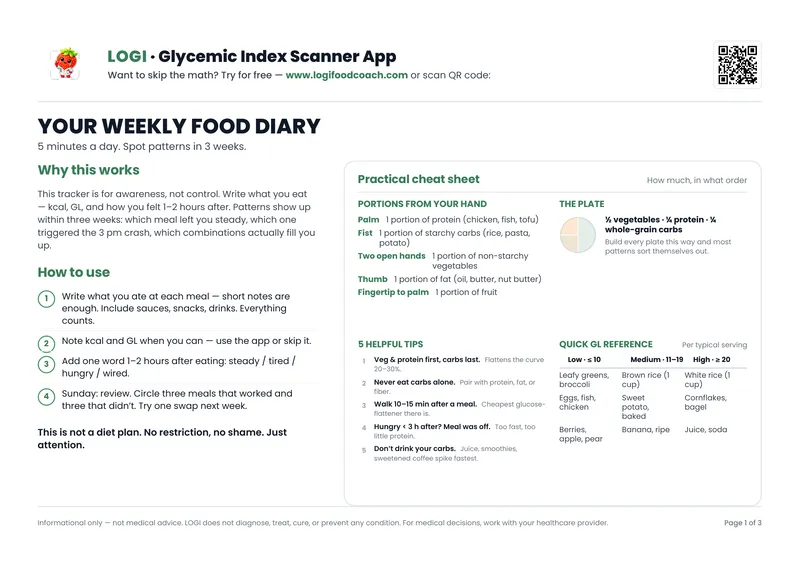
Free PDF — 3 pages
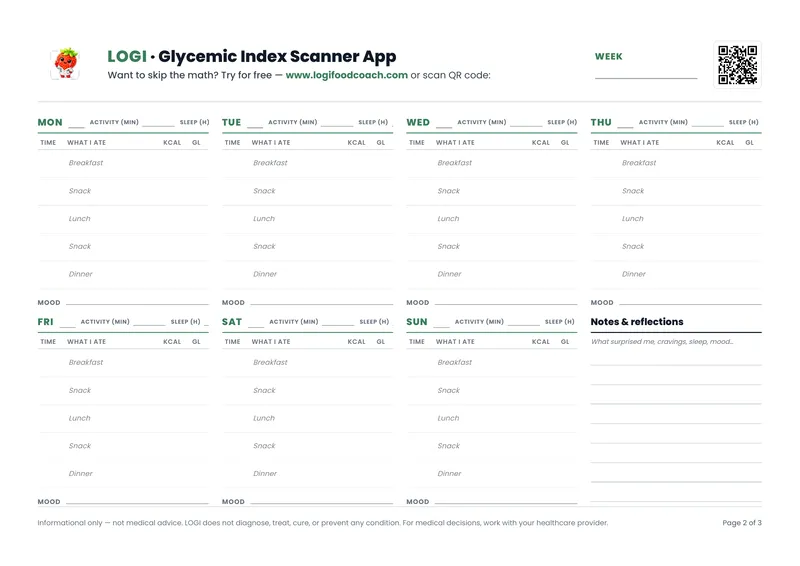
Your Weekly Food Journal
Track meals, glycemic load & mood. Spot patterns in 3 weeks.
No spam. Unsubscribe anytime.