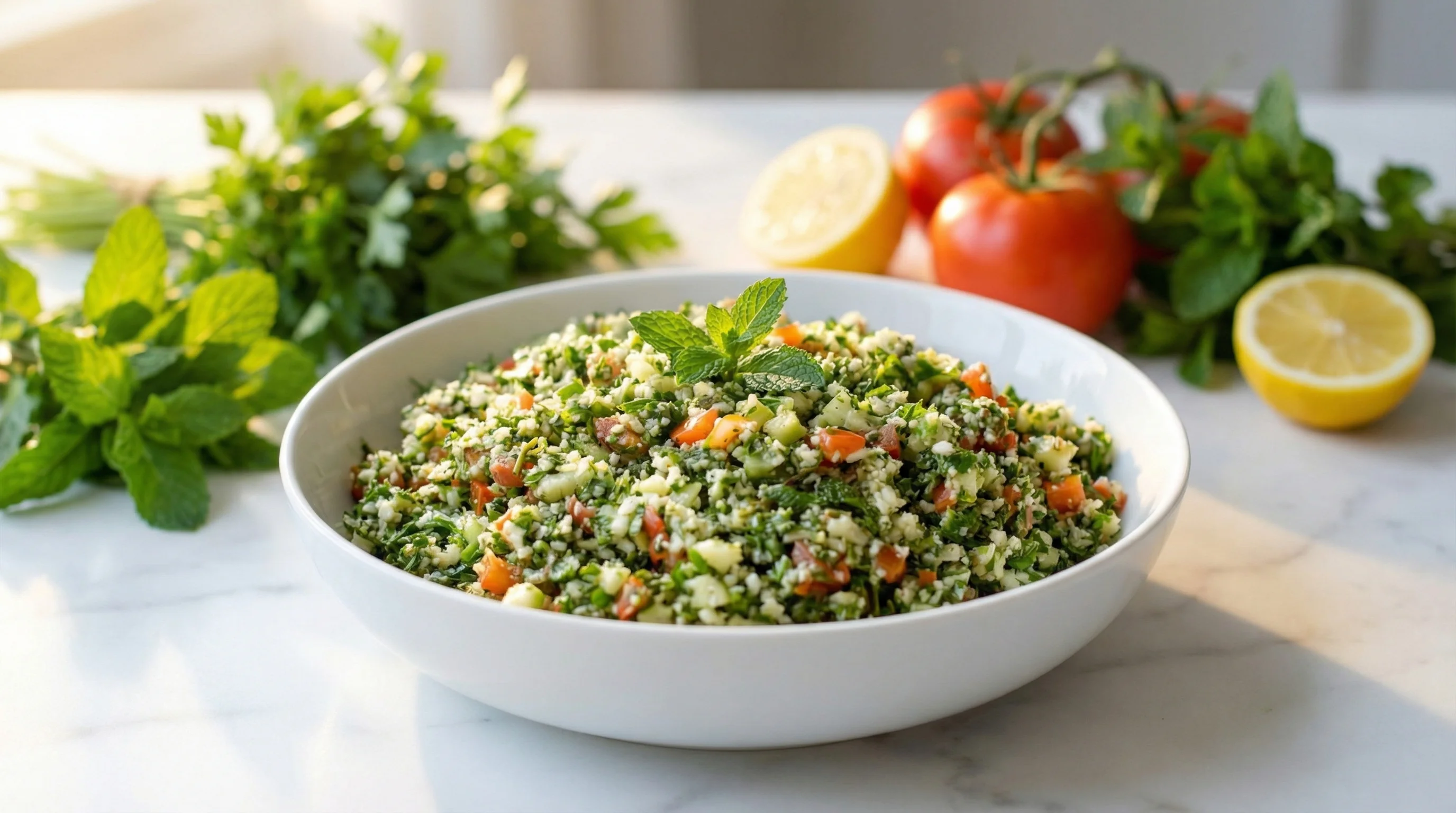
Low-Glycemic Cauliflower Tabbouleh with Fresh Herbs
A blood sugar-friendly twist on traditional tabbouleh using cauliflower instead of bulgur wheat, packed with fiber-rich vegetables and metabolism-boosting herbs.
This innovative cauliflower tabbouleh transforms the classic Middle Eastern grain salad into a low-glycemic powerhouse that won't spike your blood sugar. By replacing high-GI bulgur wheat with finely processed cauliflower, we've created a dish with an estimated glycemic load of less than 5 per serving—making it ideal for anyone managing diabetes, prediabetes, or simply seeking sustained energy throughout the day. The cauliflower provides a mild, nutty base that absorbs the bright flavors of lemon and olive oil while contributing minimal carbohydrates and maximum fiber.
The abundance of fresh parsley and mint does more than add vibrant flavor—these herbs contain compounds that may help improve insulin sensitivity and reduce post-meal glucose spikes. The extra virgin olive oil provides healthy monounsaturated fats that slow digestion and create a more gradual release of glucose into your bloodstream. Tomatoes and cucumbers add refreshing crunch along with additional fiber and water content, further moderating the glycemic response.
For optimal blood sugar management, enjoy this tabbouleh as part of a balanced meal alongside a protein source like grilled chicken, fish, or chickpeas. The combination of fiber, healthy fats, and minimal net carbs makes this an excellent choice for lunch or dinner. Consider eating this salad at the beginning of your meal—studies show that consuming vegetables first can reduce post-meal glucose spikes by up to 30%. This dish keeps well for 2-3 days refrigerated, making it perfect for meal prep and blood sugar-friendly eating throughout the week.
Blood Sugar Impact
Minimal blood sugar impact expected due to the very low glycemic load of 1.9 and GI of 24. This meal should provide stable energy for 3-4 hours without causing significant glucose spikes, making it excellent for blood sugar management.
Blood Sugar Tips
- ✓ Eat this as a starter before higher-carb foods to leverage the fiber and healthy fats for blood sugar buffering
- ✓ Add a protein source like grilled chicken, chickpeas, or feta cheese to further slow digestion and extend satiety
- ✓ Consume at room temperature rather than chilled, as this allows better digestion and nutrient absorption of the olive oil and vegetables
🥗 Ingredients
- 3 cup small head cauliflower, cut into florets
- 4 cup fresh parsley leaves and tender stems
- 1.5 cup fresh mint leaves
- 0.5 cup scallions, chopped
- 2 pcs garlic cloves, peeled
- 0.75 cup ripe tomatoes, finely chopped
- 1 cup cucumber, finely chopped
- 0.5 tsp sea salt
- 3 tbsp fresh lemon juice
- 0.33 cup extra virgin olive oil
- 3 cup small head cauliflower, cut into florets
- 4 cup fresh parsley leaves and tender stems
- 1.5 cup fresh mint leaves
- 0.5 cup scallions, chopped
- 2 pcs garlic cloves, peeled
- 0.75 cup ripe tomatoes, finely chopped
- 1 cup cucumber, finely chopped
- 0.5 tsp sea salt
- 3 tbsp fresh lemon juice
- 0.33 cup extra virgin olive oil
👨🍳 Instructions
- 1
Break the cauliflower head into small florets, removing any thick stems. Working in batches if necessary, add the florets to your food processor and pulse 15-20 times until the cauliflower is broken down into a very fine, couscous-like texture—much finer than typical cauliflower rice. The pieces should resemble tiny grains. Transfer the processed cauliflower to a large mixing bowl.
- 2
Without washing the food processor, add the fresh parsley leaves and stems, mint leaves, peeled garlic cloves, and chopped scallions. Pulse 10-15 times until all the herbs and aromatics are finely minced into small, uniform pieces. You want them well-chopped but not pureed into a paste.
- 3
Transfer the herb mixture from the food processor to the bowl with the cauliflower. Use a fork or your hands to gently toss and combine the cauliflower and herbs, distributing them evenly throughout.
- 4
Add the finely chopped tomatoes and cucumber to the bowl. The vegetables should be diced into small, uniform pieces about the size of the cauliflower grains for the best texture and appearance.
- 5
Sprinkle the salt evenly over the salad, then drizzle the fresh lemon juice and extra virgin olive oil over the top. Using a large spoon or your hands, toss everything together thoroughly, ensuring the dressing coats all the vegetables and herbs evenly.
- 6
Allow the tabbouleh to rest at room temperature for 10-15 minutes before serving. This resting period lets the cauliflower absorb the dressing and allows the flavors to meld together beautifully. The acid from the lemon juice will slightly soften the raw vegetables.
- 7
Taste and adjust seasoning if needed, adding more salt, lemon juice, or olive oil to your preference. Serve immediately at room temperature, or refrigerate for up to 3 days. For best blood sugar management, pair with a protein source and eat the vegetables first before any higher-carb components of your meal.
📊 Nutrition Per Serving
| Per Serving | Whole Dish | |
|---|---|---|
| Calories | 306 | 1225 |
| Carbs | 19g | 74g |
| Sugars | 3g | 13g |
| Natural Sugars | 3g | 13g |
| Protein | 5g | 18g |
| Fat | 26g | 103g |
| Saturated Fat | 9g | 36g |
| Unsaturated Fat | 17g | 67g |
| Fiber | 5g | 19g |
| Soluble Fiber | 1g | 6g |
| Insoluble Fiber | 3g | 13g |
| Sodium | 9729mg | 38917mg |
Predicted Glucose Response
What if you...
Estimated model — individual responses vary. Not medical advice.
🔄 Lower GI Swaps
Cherry tomatoes have a lower glycemic index (15) compared to regular tomatoes (38), while sun-dried tomatoes are more concentrated and used in smaller amounts, reducing overall carbohydrate load per serving.
While cucumber is already low-glycemic, zucchini has an even lower glycemic index (15 vs 23) and celery is virtually carbohydrate-free, further minimizing any blood sugar impact.
Apple cider vinegar has been shown to improve insulin sensitivity and lower post-meal blood sugar spikes by 20-30%, making it superior to lemon juice for glycemic control.
While olive oil is excellent, adding MCT oil or chia seeds increases healthy fats that further slow carbohydrate absorption and reduce the glycemic response of the entire meal.
Green bell peppers have a glycemic index of only 10-15 and add crunch with minimal carbohydrates, while chives provide similar flavor with negligible impact on blood sugar.
🔬 The Science Behind This Recipe
The Science Behind This Blood Sugar-Friendly Dish
This cauliflower tabbouleh is a masterclass in blood sugar management, with a remarkably low glycemic load of just 1.9 and a GI of 24. The secret lies in cauliflower's unique composition: it contains only 3 grams of net carbohydrates per cup, compared to bulgur wheat's 25 grams in traditional tabbouleh. This dramatic carbohydrate reduction means your body has far less glucose to process after eating. Cauliflower is also rich in fiber (about 2 grams per cup), which slows digestion and creates a gentler, more gradual rise in blood sugar rather than a sharp spike. The cruciferous vegetable's high water content (about 92%) further dilutes the carbohydrate density, making this dish incredibly filling without the glucose impact.
The abundance of fresh herbs—parsley and mint—adds another layer of metabolic benefits beyond just flavor. These herbs contain polyphenols and flavonoids that research suggests may improve insulin sensitivity and help your cells use glucose more efficiently. Parsley is particularly rich in vitamin K and antioxidants that support overall metabolic health. The garlic and scallions contribute sulfur compounds that have been studied for their potential role in blood sugar regulation.
To maximize the blood sugar benefits of this dish, consider pairing it with a protein source like grilled chicken, chickpeas, or feta cheese. The protein will further slow digestion and provide sustained energy. You might also enjoy this tabbouleh as a first course before a meal containing higher-glycemic foods—eating vegetables first has been shown to reduce post-meal glucose spikes by up to 73% in some studies. The generous lemon juice not only brightens the flavors but adds acidity, which can also help moderate blood sugar responses.