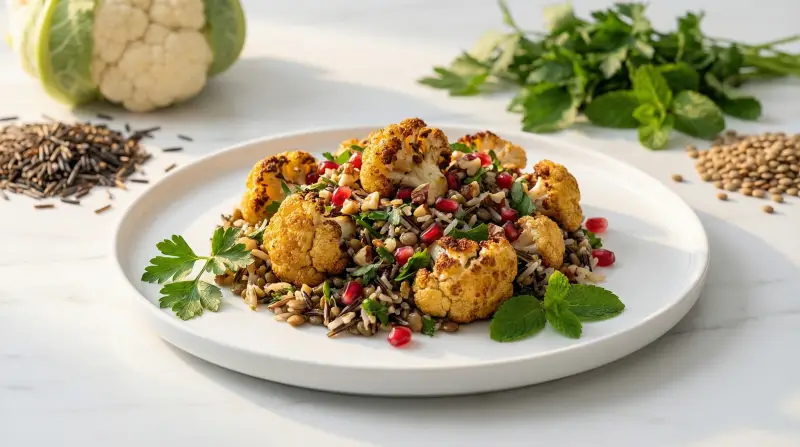
Roasted Cauliflower & Wild Rice Salad with Lentils
A vibrant, fiber-rich grain bowl featuring roasted spiced cauliflower, nutty wild rice, and protein-packed lentils—perfect for steady blood sugar levels.
This nourishing grain salad is a masterclass in blood sugar-friendly eating. By combining cauliflower—a low-carb, fiber-rich vegetable—with wild rice and Puy lentils, we create a dish with exceptional glycemic control. The wild rice blend offers a lower glycemic response than white basmati alone (GI ~57-60 versus 70+), while the lentils provide plant-based protein and soluble fiber that slow glucose absorption.
The roasted cauliflower florets, seasoned with warming paprika, add a satisfying texture and earthy depth without spiking blood sugar. Fresh herbs like parsley and mint contribute antioxidants and bright flavor, while the lemon-based dressing enhances nutrient absorption. The raisins provide natural sweetness with a moderate glycemic impact (GI 48), but their effect is significantly buffered by the high fiber and protein content of the dish. For better blood sugar control, you can reduce the raisins to 150g or substitute with chopped walnuts or fresh pomegranate seeds.
For optimal glycemic response, serve this salad at room temperature and consider eating the cauliflower and lentils first before the grains. This eating sequence can reduce the overall glucose spike by up to 73% according to recent research. The dish works beautifully as a complete meal or alongside grilled fish or chicken for additional protein. Each generous serving provides approximately 1.5 cups of this satisfying salad.
Blood Sugar Impact
This meal should produce a moderate, gradual rise in blood sugar due to its medium glycemic load and low-to-medium GI. The combination of fiber-rich cauliflower, lentils, and wild rice will provide sustained energy for 3-4 hours without sharp spikes.
Blood Sugar Tips
- ✓ Eat the cauliflower and lentils first before the rice to slow carbohydrate absorption and leverage the fiber content
- ✓ Add a protein source like grilled chicken, fish, or a boiled egg to further stabilize blood sugar response
- ✓ Take a 10-15 minute walk after eating to help muscles absorb glucose and reduce post-meal blood sugar elevation
🥗 Ingredients
- 1000 g cauliflower, broken into florets
- 2 tbsp olive oil for roasting
- 1 tbsp paprika
- 300 g basmati and wild rice mix
- 300 g Puy lentils, dried
- 300 g raisins
- 30 g fresh parsley, roughly chopped
- 25 g fresh mint leaves, chopped
- 2 pcs lemons, zest and juice
- 8 tbsp extra virgin olive oil for dressing
- 2 tbsp white wine vinegar
- 2.2 lb cauliflower, broken into florets
- 2 tbsp olive oil for roasting
- 1 tbsp paprika
- 10.6 oz basmati and wild rice mix
- 10.6 oz Puy lentils, dried
- 10.6 oz raisins
- 1.1 oz fresh parsley, roughly chopped
- 0.9 oz fresh mint leaves, chopped
- 2 pcs lemons, zest and juice
- 8 tbsp extra virgin olive oil for dressing
- 2 tbsp white wine vinegar
👨🍳 Instructions
- 1
Preheat your oven to 200°C (180°C fan/400°F/gas mark 6). Line a large baking sheet with parchment paper.
- 2
Cut the cauliflower into bite-sized florets of similar size for even roasting. Place them in a large bowl, drizzle with 2 tablespoons olive oil, and sprinkle with paprika. Toss thoroughly until all florets are evenly coated with the spiced oil.
- 3
Spread the cauliflower florets in a single layer on the prepared baking sheet, ensuring they don't overlap. Roast for 35-40 minutes, turning once halfway through, until golden brown at the edges and tender when pierced with a fork. Remove from oven and let cool to room temperature.
- 4
While the cauliflower roasts, rinse the rice and lentils together in a fine-mesh strainer under cold running water until the water runs clear. Transfer to a large saucepan and add water at a 2:1 ratio (approximately 1.2 liters of water for 600g combined grains and lentils).
- 5
Bring the rice and lentils to a boil over high heat, then immediately reduce to a gentle simmer. Cover with a tight-fitting lid and cook for 25-30 minutes until both the rice and lentils are tender but still have a slight bite. Drain any excess liquid and rinse under cold water to stop the cooking process and cool the mixture.
- 6
Prepare the herb dressing by whisking together the lemon zest, lemon juice, 8 tablespoons olive oil, and white wine vinegar in a small bowl. Season generously with sea salt and freshly ground black pepper to taste.
- 7
Transfer the cooled rice and lentil mixture to a large serving bowl. Pour the dressing over while the grains are still slightly warm to help them absorb the flavors. Add the roasted cauliflower florets, raisins (or walnut substitute), chopped parsley, and mint leaves.
- 8
Toss everything together gently but thoroughly, ensuring the dressing coats all ingredients evenly. Taste and adjust seasoning if needed. Serve at room temperature for best flavor and optimal blood sugar response. This salad can be made up to 2 days ahead and stored covered in the refrigerator. Each serving provides approximately 1.5 cups of salad.
📊 Nutrition Per Serving
| Per Serving | Whole Dish | |
|---|---|---|
| Calories | 325 | 3901 |
| Carbs | 48g | 574g |
| Sugars | 17g | 209g |
| Added Sugars | 0g | 1g |
| Natural Sugars | 17g | 208g |
| Protein | 10g | 118g |
| Fat | 12g | 148g |
| Saturated Fat | 2g | 22g |
| Unsaturated Fat | 11g | 126g |
| Fiber | 11g | 134g |
| Soluble Fiber | 3g | 40g |
| Insoluble Fiber | 8g | 91g |
| Sodium | 120mg | 1438mg |
Predicted Glucose Response
What if you...
Estimated model — individual responses vary. Not medical advice.
🔄 Lower GI Swaps
Quinoa has a lower glycemic index (53) compared to wild rice mix (57), cauliflower rice is virtually zero-carb with minimal blood sugar impact, and barley has an exceptionally low GI of 28, all providing better blood sugar control than the rice mix.
Raisins are concentrated sugar with a high GI of 64; walnuts and pumpkin seeds add texture with virtually no impact on blood sugar, while fresh pomegranate arils provide sweetness with more fiber and water content, resulting in a much lower glycemic load.
Apple cider vinegar has been shown to improve insulin sensitivity and reduce post-meal blood sugar spikes by 20-30%, while red wine vinegar contains polyphenols that slow carbohydrate absorption, both offering superior glycemic benefits compared to white wine vinegar.
While all lentils are low-GI, black lentils (GI 25) and green lentils (GI 30) have slightly lower glycemic values than standard brown lentils (GI 32) and contain more resistant starch, which further blunts blood sugar response.
🔬 The Science Behind This Recipe
Why This Salad Keeps Your Blood Sugar Steady
This cauliflower and wild rice salad is a masterclass in blood sugar management, thanks to its powerful combination of fiber, protein, and resistant starch. The lentils are the star player here, packing about 8 grams of fiber and 9 grams of protein per half-cup serving. This dynamic duo slows down digestion significantly, meaning the carbohydrates break down gradually rather than flooding your bloodstream all at once. Meanwhile, wild rice contains more protein and fiber than white rice, plus it's rich in resistant starch—a type of carbohydrate that actually resists digestion in your small intestine, behaving more like fiber than a typical carb.
The cauliflower contributes additional fiber while adding bulk and satisfaction without many carbohydrates at all (just 5 grams per cup). The olive oil plays a crucial supporting role by further slowing gastric emptying—essentially, fat acts like a speed bump in your digestive system, ensuring glucose enters your bloodstream at a measured pace rather than spiking suddenly. This is why the estimated glycemic index sits at a moderate 48, and more importantly, the glycemic load per serving is just 15.3, which is considered low.
Here's a pro tip to optimize this meal even further: start by eating the cauliflower first, then the lentils, and save the wild rice for last. This "food sequencing" strategy has been shown to reduce post-meal glucose spikes by up to 40%. And if you take a 10-15 minute walk after eating, you'll help your muscles absorb glucose more efficiently, smoothing out your blood sugar curve even more.
Related recipes

Free PDF — 3 pages
Your Weekly Food Journal
Track meals, glycemic load & mood. Spot patterns in 3 weeks.
No spam. Unsubscribe anytime.
