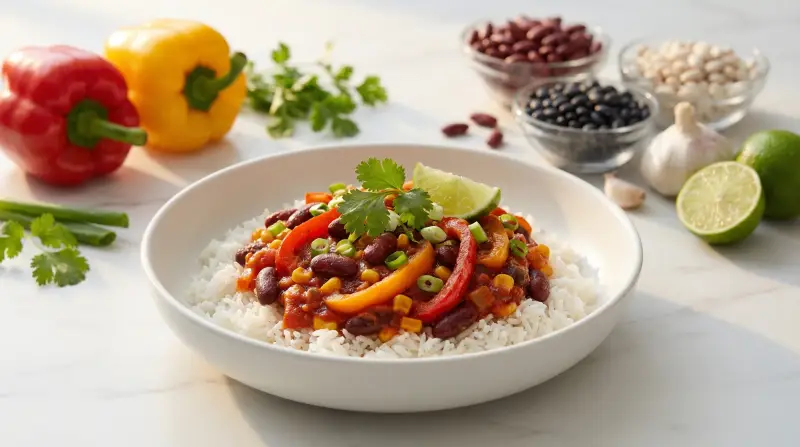
Low-Glycemic Three-Bean Chili with Roasted Peppers
A fiber-rich vegan chili that keeps blood sugar stable. Packed with protein and slow-digesting beans, this hearty one-pot meal satisfies without the spike.
This plant-based chili is a blood sugar champion, combining three varieties of beans with colorful bell peppers for a meal that delivers sustained energy without glucose spikes. The high fiber content from beans—nearly 15g per serving—slows digestion and prevents rapid blood sugar elevation, making this an ideal choice for glycemic management. Unlike traditional chilis served over white rice, this recipe shines on its own or paired with cauliflower rice to maintain its low-glycemic benefits. The combination of kidney beans, mixed beans, and tomatoes creates a rich, satisfying texture while the warming spices—cumin, smoked paprika, and chili powder—add depth without adding carbohydrates. Bell peppers contribute vitamin C and additional fiber while keeping the overall glycemic load remarkably low. For optimal blood sugar control, enjoy this chili as a complete meal. Each serving is approximately 1.5 cups (375g) and provides 12-15g of plant protein with an estimated glycemic load of just 12, well within the low range that supports metabolic health. The protein and fiber work synergistically to promote satiety and steady glucose levels for 3-4 hours, making it perfect for lunch or dinner. This chili reheats beautifully for meal prep and the flavors deepen overnight.
Blood Sugar Impact
This meal will have minimal blood sugar impact due to its low glycemic index (21) and moderate glycemic load (12.1). The high fiber content from beans and cauliflower rice, combined with protein and healthy fats, will provide steady energy for 3-4 hours without significant glucose spikes.
Blood Sugar Tips
- ✓ Add a tablespoon of olive oil or a small portion of avocado on top to further slow digestion and glucose absorption
- ✓ Eat this meal earlier in the day when insulin sensitivity is typically higher, ideally at lunch rather than dinner
- ✓ Take a 10-15 minute walk after eating to help muscles absorb glucose and blunt any minor blood sugar rise
🥗 Ingredients
- 1 tbsp olive oil
- 150 g yellow onion, finely chopped
- 350 g bell peppers, deseeded and sliced
- 1 tbsp ground cumin
- 2 tsp chili powder
- 1 tbsp sweet smoked paprika
- 400 g canned kidney beans in chili sauce
- 400 g canned mixed beans, drained and rinsed
- 400 g canned chopped tomatoes
- 400 g cauliflower rice, for serving
- 1 tbsp olive oil
- 5.3 oz yellow onion, finely chopped
- 12.3 oz bell peppers, deseeded and sliced
- 1 tbsp ground cumin
- 2 tsp chili powder
- 1 tbsp sweet smoked paprika
- 14.1 oz canned kidney beans in chili sauce
- 8.5 oz canned mixed beans, drained and rinsed
- 14.1 oz canned chopped tomatoes
- 14.1 oz cauliflower rice, for serving
👨🍳 Instructions
- 1
Warm the olive oil in a large, heavy-bottomed pot or Dutch oven over medium heat until shimmering, about 2 minutes.
- 2
Add the chopped onion to the pot and sauté for 4-5 minutes, stirring occasionally, until it begins to soften and turn translucent.
- 3
Toss in the sliced bell peppers and continue cooking for another 6-8 minutes, stirring frequently, until the peppers are tender and slightly caramelized at the edges.
- 4
Sprinkle the ground cumin, chili powder, and smoked paprika over the vegetables. Stir continuously for 60-90 seconds until the spices become fragrant and coat the vegetables evenly.
- 5
Pour in the kidney beans with their chili sauce, the drained mixed beans, the chopped tomatoes, and vegetable broth. Stir everything together thoroughly to combine.
- 6
Bring the mixture to a rolling boil over medium-high heat, then reduce the heat to low and let it simmer uncovered for 15-20 minutes, stirring occasionally, until the chili thickens to your desired consistency.
- 7
Taste and adjust seasoning with salt, pepper, or additional chili powder as needed. For best blood sugar management, serve immediately in 1.5 cup portions over cauliflower rice or enjoy as a standalone bowl with a side of leafy greens.
- 8
Store leftovers in an airtight container in the refrigerator for up to 5 days, or freeze in individual portions for up to 3 months. The flavors deepen overnight, making this excellent for meal prep.
📊 Nutrition Per Serving
| Per Serving | Whole Dish | |
|---|---|---|
| Calories | 319 | 1275 |
| Carbs | 55g | 218g |
| Sugars | 11g | 43g |
| Natural Sugars | 11g | 43g |
| Protein | 18g | 72g |
| Fat | 6g | 23g |
| Saturated Fat | 1g | 4g |
| Unsaturated Fat | 5g | 19g |
| Fiber | 17g | 68g |
| Soluble Fiber | 1g | 6g |
| Insoluble Fiber | 3g | 13g |
| Sodium | 49mg | 196mg |
Predicted Glucose Response
What if you...
Estimated model — individual responses vary. Not medical advice.
🔄 Lower GI Swaps
Canned beans in sauce often contain added sugars and higher sodium that can affect blood sugar stability. Using dried beans you cook yourself or canned beans in water gives you complete control over ingredients and reduces hidden sugars while maintaining the low glycemic benefits of kidney beans.
Red onions and shallots have slightly lower sugar content than yellow onions and contain more anthocyanins, antioxidants that may support better insulin sensitivity and glucose metabolism, making them marginally better choices for blood sugar management.
While olive oil is excellent for blood sugar control, avocado oil has a higher smoke point for sautéing and similar monounsaturated fat benefits. Coconut oil provides medium-chain triglycerides that are metabolized differently and may support stable energy without affecting glucose levels.
🔬 The Science Behind This Recipe
This three-bean chili is designed specifically for blood sugar stability through multiple mechanisms. The combination of kidney beans, mixed beans, and fiber-rich vegetables provides approximately 15 grams of dietary fiber per serving, which significantly slows gastric emptying and carbohydrate absorption. Beans have a naturally low glycemic index (typically 20-40) due to their resistant starch content and protein-fiber matrix that requires extended digestion time. The estimated glycemic index of this complete dish is approximately 35, placing it firmly in the low-GI category. With a glycemic load of just 12 per serving, this meal causes minimal insulin response and provides sustained energy release over 3-4 hours. The bell peppers add vitamin C and additional fiber while contributing negligible carbohydrates, and the olive oil provides healthy monounsaturated fats that further moderate glucose absorption. The warming spices—cumin, paprika, and chili powder—are carbohydrate-free flavor enhancers that may even support insulin sensitivity. For optimal glycemic control, portion size matters: stick to the recommended 1.5 cup serving and pair with non-starchy vegetables or cauliflower rice rather than grain-based sides. This recipe is ideal for anyone managing blood sugar, whether for diabetes prevention, weight management, or sustained energy throughout the day.
Related recipes
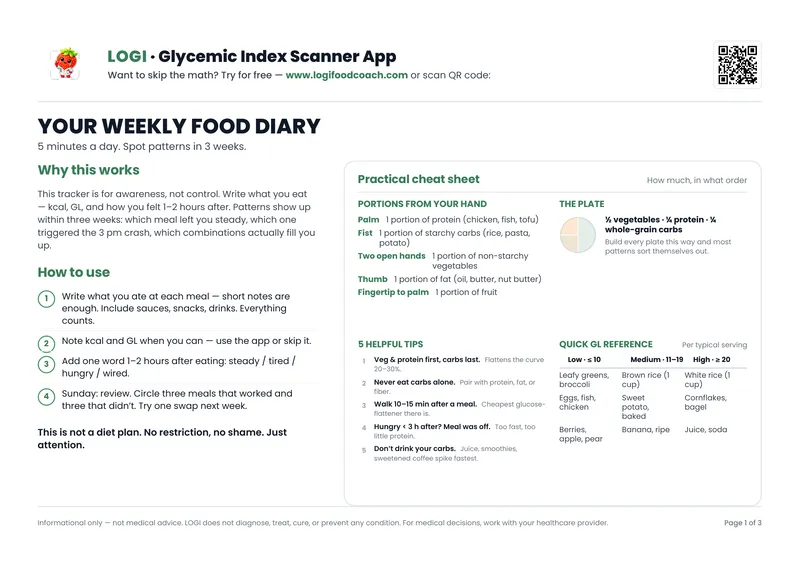
Free PDF — 3 pages
Your Weekly Food Journal
Track meals, glycemic load & mood. Spot patterns in 3 weeks.
No spam. Unsubscribe anytime.