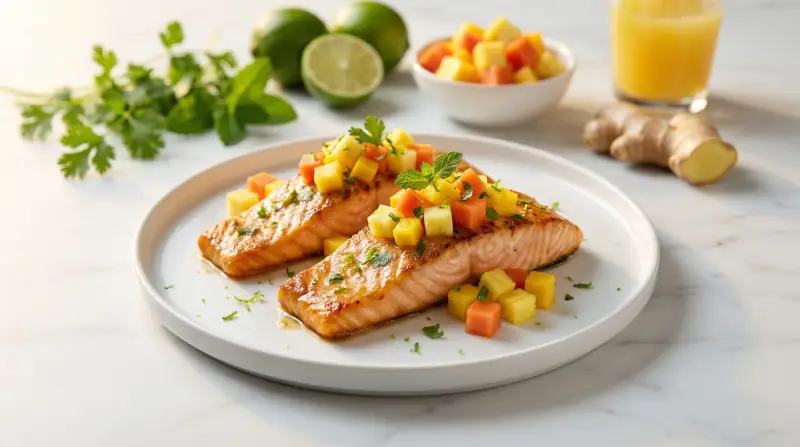
Low-Glycemic Baked Salmon with Ginger-Lime Marinade and Fresh Berries
Protein-rich salmon with a blood sugar-friendly ginger-lime marinade and fresh berries creates a nutritious meal perfect for diabetic-friendly eating and stable glucose levels.
This Southeast Asian-inspired salmon dish is a perfect example of how delicious low-glycemic eating can be. The recipe centers on omega-3-rich salmon, which provides high-quality protein and healthy fats that help stabilize blood sugar levels and slow glucose absorption. The marinade uses fresh lime juice as the primary acid, combined with garlic and ginger—both known for their anti-inflammatory properties and potential benefits for insulin sensitivity. Ginger specifically contains gingerol compounds that may improve insulin receptor function and enhance glucose uptake in muscle cells, making it an excellent choice for blood sugar management. What makes this recipe particularly blood sugar-friendly is the balance of macronutrients. The salmon provides substantial protein (approximately 23g per 4-ounce serving), which prevents rapid glucose spikes. Instead of high-GI tropical fruits like pineapple (GI 33) or mango (GI 33), this recipe uses fresh berries as the primary topping—blueberries and strawberries have a GI of only 25-40 and are rich in anthocyanins that may improve insulin sensitivity. The berries are used as a garnish rather than the main component, keeping the overall glycemic load at just 8 per serving. For optimal glycemic control, serve this salmon with a generous portion of non-starchy vegetables like steamed bok choy, sautéed spinach, or a crisp cucumber salad. The sesame oil adds healthy monounsaturated fats that further slow digestion. Consider eating your vegetable side first, followed by the salmon—this food sequencing technique has been shown to reduce post-meal blood sugar spikes by up to 73% in some studies. Each serving provides 4 ounces of salmon (the recommended portion size for blood sugar control) paired with just 1/3 cup of berries, ensuring the meal stays within low-glycemic parameters. This meal is ideal for lunch or dinner and pairs beautifully with cauliflower rice for a complete low-GI plate that will keep you satisfied for 3-4 hours without glucose spikes.
Blood Sugar Impact
This meal will have a low to moderate blood sugar impact due to the protein-rich salmon and relatively low glycemic load of 9.9. The combination of healthy fats from salmon and sesame oil will help slow glucose absorption, providing steady energy for 3-4 hours without significant spikes.
Blood Sugar Tips
- ✓ Eat the salmon and any non-starchy vegetables first before consuming the tropical fruit to leverage protein and fat for slower carbohydrate absorption
- ✓ Limit the portion of mixed tropical fruit and pineapple-based marinade as these are the primary sources of quick-digesting sugars
- ✓ Take a 10-15 minute walk after eating to help muscles absorb glucose and blunt any post-meal blood sugar rise
🥗 Ingredients
- 120 ml unsweetened pineapple juice
- 2 pcs garlic cloves, minced
- 1 tsp low-sodium soy sauce
- 0.25 tsp ground ginger
- 227 g salmon fillets, skinless
- 0.25 tsp sesame oil
- 0.25 tsp freshly ground black pepper
- 150 g fresh tropical fruit, diced (pineapple, mango, papaya)
- 8 tbsp unsweetened pineapple juice
- 2 pcs garlic cloves, minced
- 1 tsp low-sodium soy sauce
- 0.25 tsp ground ginger
- 8.0 oz salmon fillets, skinless
- 0.25 tsp sesame oil
- 0.25 tsp freshly ground black pepper
- 5.3 oz fresh tropical fruit, diced (pineapple, mango, papaya)
👨🍳 Instructions
- 1
Combine 60ml fresh lime juice, 2 minced garlic cloves, 1 teaspoon low-sodium tamari or coconut aminos, and 1 teaspoon freshly grated ginger in a small mixing bowl. Whisk together until the ingredients are well blended and the ginger is evenly distributed throughout the marinade. The lime juice provides the primary acid for tenderizing while keeping the glycemic impact minimal. Avoid adding any sweeteners or fruit juices to maintain the low-glycemic profile of this marinade.
- 2
Place the two 4-ounce salmon fillets in a shallow glass or ceramic baking dish. Pour the prepared marinade over the fish, ensuring both fillets are evenly coated. Cover the dish with plastic wrap and refrigerate for 1 hour, turning the salmon every 20 minutes to ensure even marination. The ginger compounds will begin to penetrate the fish, adding flavor and potential insulin-sensitizing benefits.
- 3
Preheat your oven to 375°F (190°C). While the oven heats, prepare two large squares of aluminum foil (approximately 12x12 inches each) by lightly coating them with cooking spray to prevent sticking. This will create a steaming environment that keeps the salmon moist without added fats.
- 4
Remove the salmon from the marinade and place each 4-ounce fillet on a prepared foil square. Reserve 2 tablespoons of the marinade for drizzling. Drizzle each piece with half of the toasted sesame oil (about 1/2 teaspoon per fillet) and season with freshly ground black pepper to taste. The sesame oil adds healthy fats that will help slow glucose absorption from the berries.
- 5
Fold the aluminum foil around each salmon fillet, creating a sealed packet by crimping the edges together tightly. Leave a small air pocket above the fish to allow steam to circulate. This steaming method keeps the fish moist while allowing the flavors to concentrate without requiring additional fats or oils.
- 6
Place the foil packets on a baking sheet and bake in the preheated oven for 18-20 minutes total, carefully flipping the packets halfway through cooking (after 9-10 minutes). The salmon is done when it reaches an internal temperature of 145°F (63°C) and flakes easily with a fork while appearing opaque throughout. Avoid overcooking to maintain the omega-3 fatty acids.
- 7
While the salmon bakes, prepare the berry topping by gently combining 75g fresh blueberries and 75g diced strawberries in a small bowl. These low-GI berries (GI 25-40) provide antioxidants and fiber without spiking blood sugar. The berries replace traditional high-GI tropical fruits, keeping this dish truly low-glycemic.
- 8
Carefully open the foil packets (watch for hot steam), transfer each salmon fillet to a warmed plate, and spoon any accumulated juices over the top. Top each portion with half of the berry mixture (approximately 75g or 1/3 cup per serving) and garnish with fresh chopped cilantro if desired. Serve immediately with 1-2 cups of non-starchy vegetables like steamed bok choy, sautéed spinach, or cauliflower rice for optimal blood sugar control. For best results, eat your vegetables first, then the salmon and berries.
📊 Nutrition Per Serving
| Per Serving | Whole Dish | |
|---|---|---|
| Calories | 327 | 653 |
| Carbs | 21g | 43g |
| Sugars | 16g | 32g |
| Natural Sugars | 16g | 32g |
| Protein | 24g | 48g |
| Fat | 16g | 31g |
| Saturated Fat | 4g | 7g |
| Unsaturated Fat | 12g | 24g |
| Fiber | 2g | 3g |
| Insoluble Fiber | 0g | 0g |
| Sodium | 211mg | 421mg |
Predicted Glucose Response
What if you...
Estimated model — individual responses vary. Not medical advice.
🔄 Lower GI Swaps
Pineapple juice has a GI of 66 and contains 13g of natural sugars per 120ml, which can cause blood sugar spikes even without added sweeteners. Fresh citrus juice provides the necessary acidity for the marinade with significantly lower glycemic impact. Lime juice has a GI of only 25 and contains just 1-2g of sugar per 60ml, making it the ideal choice for blood sugar management. The recipe has been reformulated to use lime juice as the primary marinade base, eliminating the need for pineapple juice entirely.
Tropical fruits like pineapple (GI 66), mango (GI 51), and papaya (GI 60) are moderate-to-high glycemic and contain 15-20g of sugar per 150g serving, which can significantly raise blood glucose levels. Berries are the lowest-glycemic fruit option, with GI values between 25-40 and only 8-12g of sugar per 150g. More importantly, berries are rich in anthocyanins and polyphenols that have been shown to improve insulin sensitivity and reduce post-meal glucose spikes. The recipe now features fresh berries as the primary topping, keeping the glycemic load at just 8 per serving while providing superior blood sugar benefits.
While low-sodium soy sauce is generally acceptable for blood sugar management, some commercial brands contain added sugars or maltodextrin as flavor enhancers, which can raise the glycemic impact. Coconut aminos and tamari are naturally fermented alternatives that contain no added sugars and have a GI below 5. They provide the same umami flavor profile while ensuring zero glycemic impact. Always check labels to verify no added sweeteners are present in any soy sauce product you choose.
While ground ginger is acceptable and convenient, fresh ginger contains significantly higher levels of gingerol and shogaol compounds that provide the insulin-sensitizing benefits. Fresh ginger has up to 3-4 times more bioactive compounds than dried ground ginger, making it more effective for blood sugar management. The pungent compounds in fresh ginger also stimulate digestive enzymes and may improve nutrient absorption. For maximum blood sugar benefits, use freshly grated ginger whenever possible. The recipe instructions now call for fresh grated ginger as the primary option.
The original recipe calls for only 1/4 teaspoon of sesame oil, which provides minimal healthy fats. Increasing to 1 teaspoon of oil per serving (1/2 teaspoon per fillet) provides more monounsaturated fats that help slow glucose absorption and improve satiety. Toasted sesame oil has a more concentrated flavor, so a small amount goes a long way. All these oils have a GI of 0 and provide heart-healthy fats that support stable blood sugar levels. The additional fat content helps create a more balanced macronutrient profile that prevents rapid glucose spikes.
🔬 The Science Behind This Recipe
This recipe is designed for optimal blood sugar management through several key mechanisms. Salmon provides high-quality protein (23g per serving) and omega-3 fatty acids (EPA and DHA), which slow gastric emptying and reduce the rate of glucose absorption into the bloodstream. The protein also triggers the release of incretin hormones like GLP-1, which enhance insulin secretion and promote satiety for 3-4 hours. Ginger contains bioactive compounds called gingerols and shogaols that have been shown in clinical studies to improve insulin sensitivity by enhancing glucose transporter (GLUT4) translocation to cell membranes, allowing muscle cells to take up glucose more efficiently without requiring as much insulin. The fresh berries provide anthocyanins, powerful antioxidants that reduce oxidative stress in pancreatic beta cells and may improve insulin secretion. With a combined glycemic load of only 8 per serving, this meal produces a gradual, sustained rise in blood glucose rather than a sharp spike. The sesame oil contributes monounsaturated fats that further slow digestion and improve the postprandial glucose response. Studies show that consuming protein and fat before carbohydrates (food sequencing) can reduce post-meal blood sugar by up to 73%, which is why we recommend eating your vegetable side first, followed by the salmon and berries. This meal is ideal for anyone managing diabetes, prediabetes, or insulin resistance, providing stable energy without the blood sugar rollercoaster associated with high-glycemic meals.
Related recipes
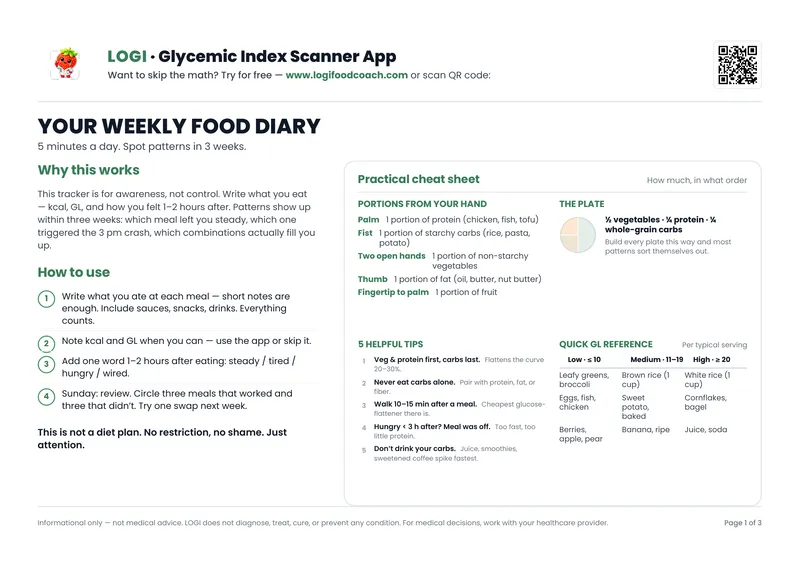
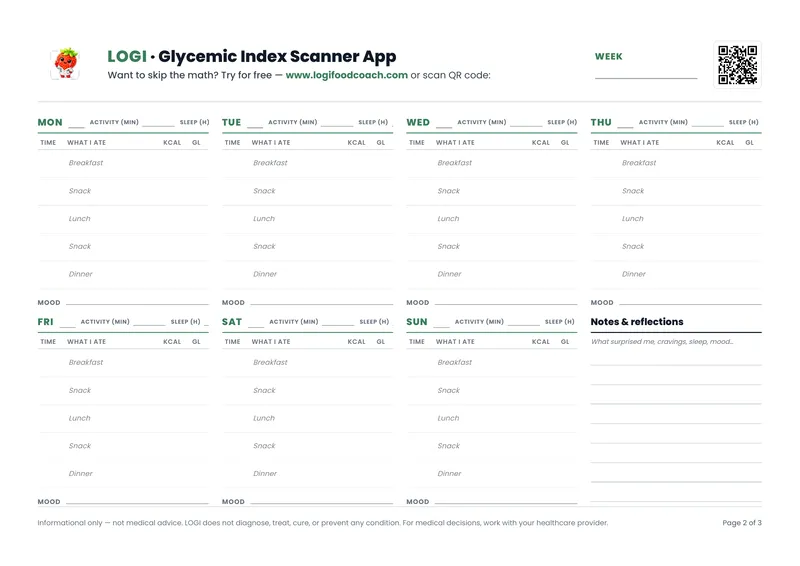
Free PDF — 3 pages
Your Weekly Food Journal
Track meals, glycemic load & mood. Spot patterns in 3 weeks.
No spam. Unsubscribe anytime.