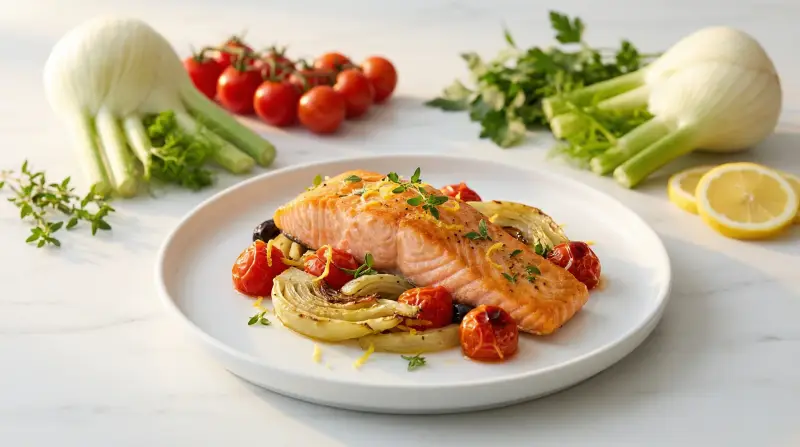
Mediterranean Baked Salmon with Fennel and Cherry Tomatoes
Heart-healthy omega-3 rich salmon nestled with caramelized fennel and burst cherry tomatoes creates a perfectly balanced low-glycemic Mediterranean meal.
This Mediterranean-inspired dish showcases wild-caught salmon paired with aromatic fennel and sweet cherry tomatoes, creating a nutrient-dense meal that's ideal for blood sugar management. The combination of high-quality protein from salmon and fiber-rich vegetables ensures steady glucose levels while delivering exceptional flavor.
Fennel's natural sweetness and anise-like flavor complement the rich salmon without adding any glycemic load, while cherry tomatoes provide antioxidants and minimal carbohydrates. The healthy fats from both salmon and olive oil slow digestion and promote stable blood sugar levels. This dish is particularly beneficial when eaten as part of a balanced meal, with the protein and healthy fats consumed first to minimize any glucose spike.
Perfect for a weeknight dinner or meal prep, this recipe requires minimal hands-on time while the oven does most of the work. The bright citrus notes from lemon zest and the herbaceous parsley finish create layers of flavor that make this simple preparation feel restaurant-worthy. Serve with a side of leafy greens or cauliflower rice for an even more blood-sugar-friendly complete meal.
Blood Sugar Impact
Minimal blood sugar impact expected. This meal combines high-quality protein and healthy fats with very low carbohydrate content, resulting in stable, sustained energy for 4-5 hours without significant glucose spikes.
Blood Sugar Tips
- ✓ Eat the fennel and vegetables first to maximize fiber intake and slow any glucose absorption
- ✓ Pair this meal with a 10-15 minute walk after eating to enhance insulin sensitivity and glucose uptake
- ✓ Consider adding a small portion of quinoa or wild rice if more sustained energy is needed, eating it last after the protein and vegetables
🥗 Ingredients
- 2 pcs medium fennel bulbs, trimmed
- 2 tbsp fresh flat-leaf parsley, chopped
- 1 pcs fresh lemon, zest and juice
- 175 g cherry tomatoes
- 1 tbsp extra virgin olive oil
- 350 g wild-caught salmon fillets, skin-on
- 8 pcs pitted black olives
- 2 pcs medium fennel bulbs, trimmed
- 2 tbsp fresh flat-leaf parsley, chopped
- 1 pcs fresh lemon, zest and juice
- 6.2 oz cherry tomatoes
- 1 tbsp extra virgin olive oil
- 12.3 oz wild-caught salmon fillets, skin-on
- 8 pcs pitted black olives
👨🍳 Instructions
- 1
Preheat your oven to 180°C (350°F/Gas Mark 4). Remove the feathery fronds from the fennel bulbs and set them aside for garnish. Slice each fennel bulb in half lengthwise, then cut each half into three equal wedges, keeping the core intact so wedges hold together.
- 2
Bring a large pot of salted water to a rolling boil. Add the fennel wedges and parboil for 10 minutes until they're tender but still hold their shape. Drain thoroughly in a colander and let excess water evaporate for a minute.
- 3
While the fennel drains, finely chop the reserved fennel fronds and combine them in a small bowl with the chopped parsley and freshly grated lemon zest. Set this herb mixture aside for finishing the dish.
- 4
Arrange the drained fennel wedges in a single layer in a shallow baking dish. Scatter the cherry tomatoes around and between the fennel pieces. Drizzle everything with the olive oil and season with a pinch of sea salt and freshly ground black pepper. Place in the preheated oven and roast for 10 minutes.
- 5
Remove the baking dish from the oven and nestle the salmon fillets skin-side down among the roasted vegetables, creating space by gently moving the fennel and tomatoes aside. Squeeze the fresh lemon juice over the salmon and vegetables.
- 6
Return the dish to the oven and bake for an additional 15 minutes, or until the salmon is just cooked through and flakes easily with a fork. The internal temperature should reach 145°F (63°C). The tomatoes should be blistered and bursting.
- 7
Remove from the oven and immediately scatter the reserved herb and lemon zest mixture over the top. Add the black olives if using. Let rest for 2-3 minutes before serving to allow the flavors to meld and the fish to finish cooking with residual heat.
📊 Nutrition Per Serving
| Per Serving | Whole Dish | |
|---|---|---|
| Calories | 528 | 1057 |
| Carbs | 22g | 44g |
| Sugars | 10g | 20g |
| Natural Sugars | 10g | 20g |
| Protein | 39g | 78g |
| Fat | 32g | 64g |
| Saturated Fat | 7g | 13g |
| Unsaturated Fat | 25g | 50g |
| Fiber | 9g | 17g |
| Soluble Fiber | 0g | 1g |
| Insoluble Fiber | 1g | 1g |
| Sodium | 332mg | 664mg |
Predicted Glucose Response
What if you...
Estimated model — individual responses vary. Not medical advice.
🔄 Lower GI Swaps
All suggested fish alternatives provide similar high-quality protein and omega-3 fatty acids with zero glycemic load, maintaining the blood sugar stability of the original recipe while offering variety in flavor profiles.
While cherry tomatoes are already low-glycemic, these alternatives provide even lower glycemic loads for those seeking maximum blood sugar control, while maintaining the Mediterranean flavor profile and roasted vegetable texture.
These root vegetables offer comparable roasting characteristics and slightly lower glycemic loads than fennel, while providing similar textural contrast and ability to caramelize beautifully alongside the salmon.
These Mediterranean pantry staples provide similar salty, umami-rich flavor accents with minimal to zero glycemic impact, enhancing the dish's complexity without affecting blood sugar levels.
🔬 The Science Behind This Recipe
This recipe exemplifies optimal blood sugar management through strategic macronutrient composition. Wild-caught salmon provides approximately 35g of complete protein per serving along with 15g of omega-3 rich fats, creating a powerful combination that slows gastric emptying and minimizes post-meal glucose excursions. The total carbohydrate content per serving is approximately 12g, primarily from fennel (8g) and cherry tomatoes (4g), both of which have low glycemic indices due to their fiber content and cellular structure. Fennel contains approximately 3g of fiber per serving, which further blunts glucose absorption. The extra virgin olive oil contributes monounsaturated fats that enhance insulin sensitivity and provide additional satiety. When consumed together, this meal's macronutrient ratio of approximately 45% fat, 35% protein, and 20% carbohydrate produces minimal insulin response and sustained energy release over 4-5 hours. The estimated glycemic load of 3.6 per serving is exceptionally low, making this an ideal choice for anyone managing blood glucose levels, whether for diabetes prevention, weight management, or metabolic health optimization.
Related recipes
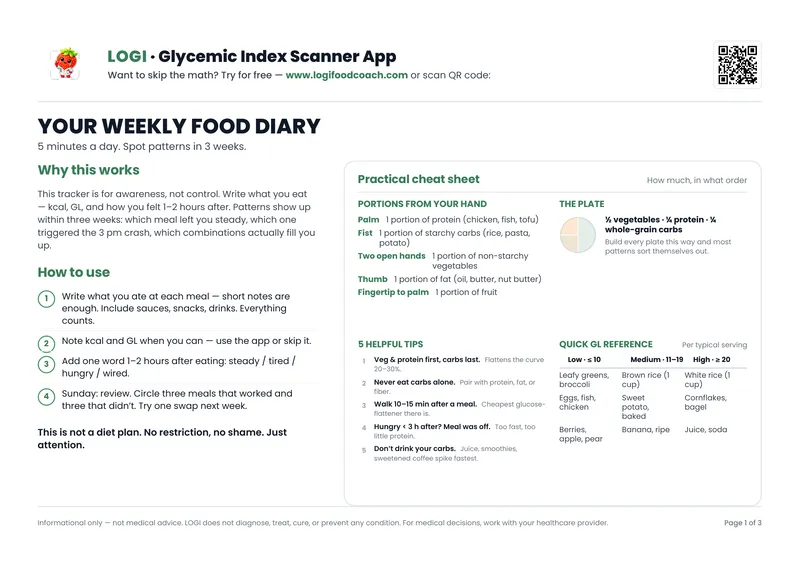
Free PDF — 3 pages
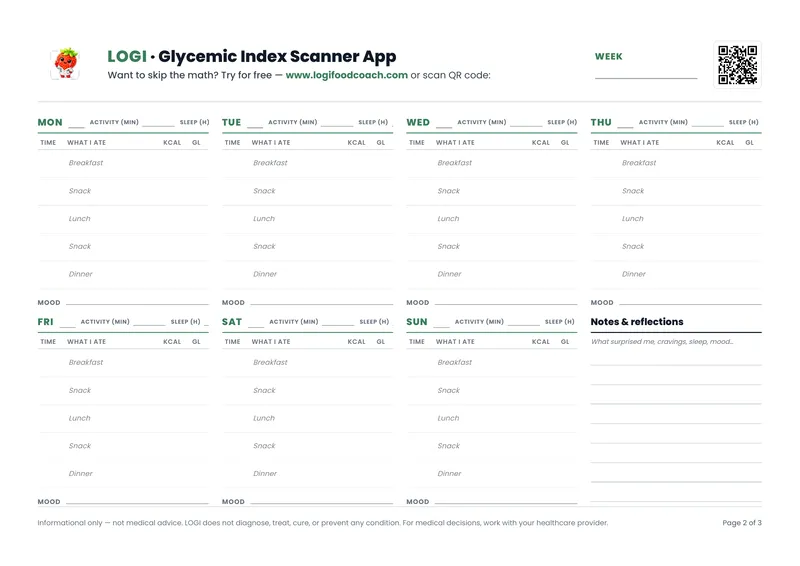
Your Weekly Food Journal
Track meals, glycemic load & mood. Spot patterns in 3 weeks.
No spam. Unsubscribe anytime.