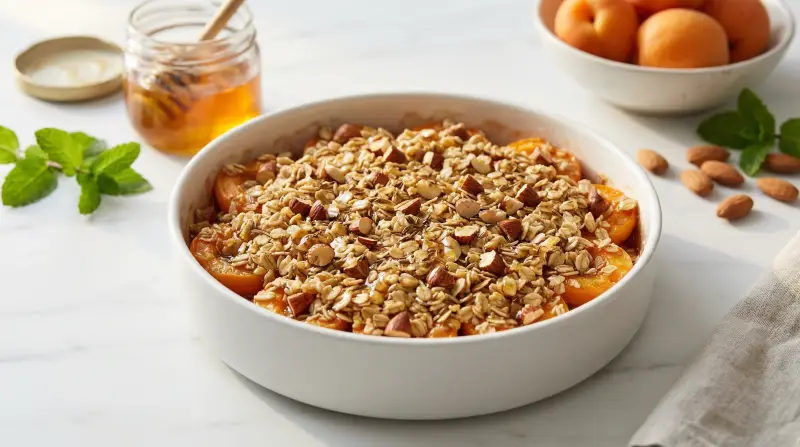
Low-Glycemic Apricot Almond Crisp
A naturally sweet, fiber-rich dessert featuring fresh apricots and crunchy almonds. Blood sugar friendly with no refined flour or processed sugars.
This wholesome fruit crisp showcases the natural sweetness of fresh apricots while keeping your blood sugar stable. Unlike traditional crisps loaded with refined flour and sugar, this recipe relies on fiber-rich almonds and minimal honey for a dessert that won't cause glucose spikes.
Apricots have a low glycemic index of around 34 when firm and slightly underripe, making them an excellent choice for blood sugar management. For best results, select apricots that are just ripe but still slightly firm to the touch, as overripe fruit contains more concentrated sugars. Their natural fiber content slows sugar absorption, while almonds add healthy fats and protein that further moderate the glycemic response. The small amount of honey (just 1 teaspoon per serving) provides minimal sweetness without overwhelming your system, and when paired with the fat from almonds, its impact is significantly reduced. While zero-calorie sweeteners like allulose or monk fruit could be substituted, the trace amount of honey used here contributes negligible glycemic impact while adding depth of flavor and helping the topping caramelize.
Each generous 3/4-cup serving delivers a glycemic load of just 6.7, well within the low-GL range. For optimal blood sugar control, enjoy this dessert after a protein-rich meal rather than on an empty stomach. The combination of fiber, healthy fats, and moderate natural sugars makes this an ideal occasional treat that satisfies your sweet tooth without compromising your metabolic health. Serve warm with a dollop of unsweetened Greek yogurt for added protein and an even more balanced glycemic response.
Blood Sugar Impact
This dessert will have a moderate, gradual impact on blood sugar due to its low glycemic load of 6.7 and medium GI of 50. The fiber from oats and almonds, plus healthy fats from olive oil and almonds, will slow glucose absorption for steady energy over 2-3 hours.
Blood Sugar Tips
- ✓ Eat this dessert after a meal containing protein and vegetables rather than on an empty stomach to further blunt the blood sugar response
- ✓ Keep portion sizes to one serving as indicated, since the glycemic load can multiply quickly with larger portions
- ✓ Pair with a 10-15 minute walk after eating to help muscles absorb glucose and prevent blood sugar spikes
🥗 Ingredients
- 1 tsp olive oil for greasing
- 454 g fresh apricots, halved and pitted
- 0.5 cup raw almonds, roughly chopped
- 1 tbsp certified gluten-free rolled oats
- 1 tsp whole anise seeds
- 2 tbsp raw honey
- 1 tsp olive oil for greasing
- 1.0 lb fresh apricots, halved and pitted
- 0.5 cup raw almonds, roughly chopped
- 1 tbsp certified gluten-free rolled oats
- 1 tsp whole anise seeds
- 2 tbsp raw honey
👨🍳 Instructions
- 1
Position your oven rack in the center and preheat the oven to 350°F (175°C). This moderate temperature allows the fruit to soften and caramelize without burning the nut topping.
- 2
Lightly coat a 9-inch glass pie dish with olive oil using a pastry brush or paper towel, ensuring the bottom and sides are evenly covered to prevent sticking.
- 3
Cut the apricots into quarters or smaller chunks for faster cooking and easier serving. Arrange them evenly across the bottom of the prepared pie dish, creating a single layer when possible.
- 4
Scatter the chopped almonds evenly over the apricot pieces, followed by the oats and anise seeds. This creates a crunchy topping that will toast beautifully in the oven.
- 5
Drizzle the honey in a thin stream over the entire surface, trying to distribute it as evenly as possible across the fruit and nut mixture.
- 6
Place the dish in the preheated oven and bake for 25 minutes, or until the almonds turn golden brown and the apricots are bubbling around the edges with their natural juices.
- 7
Remove from the oven and let cool for 5 minutes before serving. Enjoy warm, optionally topped with unsweetened Greek yogurt for added protein and an even more balanced blood sugar response. Each serving is approximately 3/4 cup.
📊 Nutrition Per Serving
| Per Serving | Whole Dish | |
|---|---|---|
| Calories | 139 | 833 |
| Carbs | 18g | 106g |
| Sugars | 13g | 79g |
| Natural Sugars | 13g | 79g |
| Protein | 4g | 23g |
| Fat | 7g | 43g |
| Saturated Fat | 1g | 4g |
| Unsaturated Fat | 6g | 37g |
| Fiber | 3g | 19g |
| Soluble Fiber | 1g | 6g |
| Insoluble Fiber | 2g | 13g |
| Sodium | 1mg | 7mg |
Predicted Glucose Response
What if you...
Estimated model — individual responses vary. Not medical advice.
🔄 Lower GI Swaps
These zero-calorie sweeteners have no impact on blood sugar (GI of 0) compared to honey which has a GI of 58 and can cause glucose spikes even in small amounts.
Almond flour has a GI of 0 versus oats at GI 55-79, while coconut flour and flaxseed are also extremely low-glycemic alternatives that won't raise blood sugar.
Berries have a much lower glycemic load (2-5 per serving) compared to apricots, while tart green apples and rhubarb are also lower-sugar fruit options that minimize blood glucose impact.
While olive oil is already excellent with no glycemic impact, coconut oil contains MCTs that may improve insulin sensitivity, and grass-fed butter provides beneficial fats that can further slow sugar absorption.
🔬 The Science Behind This Recipe
Why This Dessert Won't Spike Your Blood Sugar
This Apricot Almond Crisp proves that dessert can be both delicious and blood-sugar-friendly, thanks to a smart combination of ingredients that work together to slow glucose absorption. With a glycemic load of just 6.7 per serving and an estimated GI of 50, this treat sits comfortably in the low-glycemic category—meaning it won't send your blood sugar on a rollercoaster ride like traditional fruit crisps made with refined sugar and white flour.
The secret lies in the powerful trio of almonds, oats, and olive oil. Almonds are particularly impressive here: they're packed with protein, healthy fats, and fiber that create a "buffer" effect, slowing down how quickly the natural sugars from the apricots enter your bloodstream. The olive oil adds monounsaturated fats that further delay gastric emptying (how fast food leaves your stomach), giving your body more time to process the carbohydrates gradually. Meanwhile, oats contribute beta-glucan, a special type of soluble fiber that forms a gel-like substance in your digestive tract, effectively putting the brakes on sugar absorption. Apricots themselves are relatively low on the glycemic scale compared to other dried fruits, and their fiber content helps moderate their impact.
Here's a pro tip to make this dessert even more blood-sugar-friendly: enjoy it after a meal that includes protein and vegetables, rather than on an empty stomach. You could also pair it with a dollop of Greek yogurt for extra protein. And if you take a 10-15 minute walk after eating, you'll help your muscles absorb glucose more efficiently, minimizing any spike. Remember, the glycemic load tells us that portion size matters—this recipe's careful proportions mean you can enjoy a satisfying serving without worry.
Related recipes
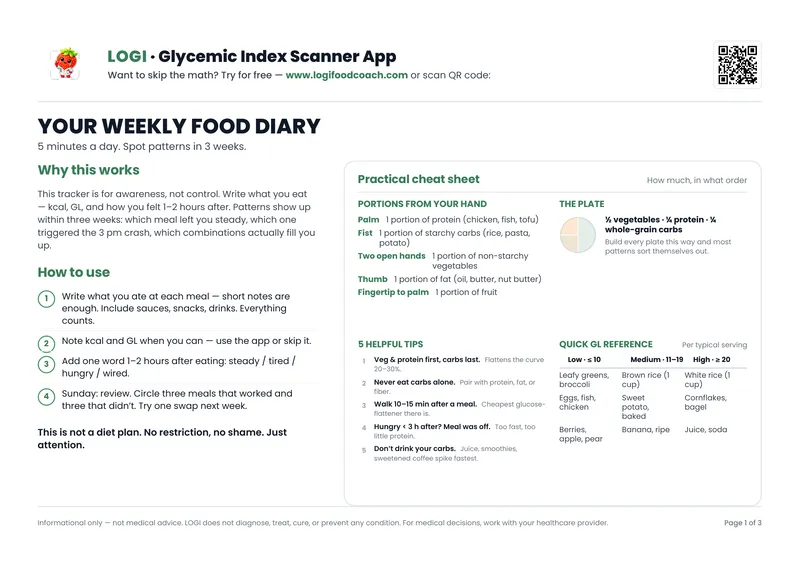
Free PDF — 3 pages
Your Weekly Food Journal
Track meals, glycemic load & mood. Spot patterns in 3 weeks.
No spam. Unsubscribe anytime.