Apple Cornmeal Muffins (Low-GI Adaptable)
Wholesome muffins with fiber-rich cornmeal and fresh apples. Base recipe has moderate glycemic impact (GI 68, GL 20.7). Use recommended swaps for better blood sugar control.
These thoughtfully crafted muffins offer a balanced approach to enjoying baked goods while managing blood sugar levels. By combining whole grain cornmeal with fresh apple, we create a fiber-rich breakfast option that provides sustained energy. The cornmeal contributes resistant starch and soluble fiber that slow carbohydrate absorption, while the apple adds pectin—a beneficial fiber that helps moderate blood sugar response.
⚠️ CRITICAL GLYCEMIC WARNING: This base recipe uses all-purpose flour (GI ~75) as the primary ingredient and brown sugar (GI ~68), which creates a moderate-to-high glycemic impact (estimated GI 68, GL 20.7 per 85g muffin). Without modifications, these muffins will cause noticeable blood sugar elevation within 30-60 minutes. For better blood sugar control, we STRONGLY RECOMMEND making the following swaps: (1) Replace 50% of all-purpose flour with almond flour or oat flour to lower overall glycemic load by 15-20 points, and (2) Replace brown sugar completely with erythritol or allulose (1:1 ratio) to reduce glycemic impact by approximately 15-20 additional points. These swaps maintain texture while significantly improving blood sugar response, bringing the modified recipe to an estimated GI of 68-50.
This recipe uses minimal added sugar in its original form, relying partially on the natural sweetness of apple. The egg whites provide lean protein without added fat, helping to further stabilize blood sugar by slowing digestion. For optimal glycemic control, pair these muffins with a protein source like Greek yogurt (15-20g protein) or a handful of nuts, and always eat them as part of a complete meal rather than alone. Strict portion control is essential—limit yourself to ONE muffin (approximately 85g) per serving and never consume on an empty stomach.
These muffins work beautifully for meal prep—bake a batch on Sunday and enjoy throughout the week. The combination of soluble and insoluble fiber supports overall health while the moderate carbohydrate content makes them suitable for diabetes meal planning when consumed mindfully with recommended swaps. Store in an airtight container for up to 3 days at room temperature, or freeze individually wrapped for up to 3 months. Thaw overnight in the refrigerator or microwave for 30-45 seconds before serving. Each muffin provides approximately 32g total carbohydrates, 3g fiber, and 4g protein in the base recipe.
Blood Sugar Impact
Moderate blood sugar impact expected. The GI of 68 and glycemic load of 20.7 indicate these muffins will cause a noticeable rise in blood sugar within 30-60 minutes, though the cornmeal and apple provide some fiber to slow absorption compared to refined baked goods.
Blood Sugar Tips
- ✓ Pair the muffin with a protein source like Greek yogurt, nuts, or eggs to slow glucose absorption and extend satiety
- ✓ Eat the muffin as part of a meal rather than alone as a snack to minimize the spike
- ✓ Take a 10-15 minute walk after eating to help muscles absorb glucose and blunt the blood sugar rise
🥗 Ingredients
- 2 cup all-purpose flour
- 0.5 cup yellow cornmeal
- 0.25 cup packed brown sugar
- 1 tbsp baking powder
- 0.25 tsp salt
- 0.75 cup fat-free milk
- 2 pcs egg whites
- 1 pcs apple, cored, peeled and coarsely chopped
- 0.5 cup corn kernels, fresh or frozen
- 2 cup all-purpose flour
- 0.5 cup yellow cornmeal
- 0.25 cup packed brown sugar
- 1 tbsp baking powder
- 0.25 tsp salt
- 0.75 cup fat-free milk
- 2 pcs egg whites
- 1 pcs apple, cored, peeled and coarsely chopped
- 0.5 cup corn kernels, fresh or frozen
👨🍳 Instructions
- 1
Position your oven rack in the center and preheat to 425°F (220°C). Prepare a standard 12-cup muffin tin by lining each cup with paper or foil liners, or lightly coat with cooking spray. This high initial temperature creates a better rise and golden crust.
- 2
In a large mixing bowl, whisk together 2 cups all-purpose flour (or 1 cup all-purpose flour plus 1 cup almond flour for lower glycemic impact), 0.5 cup yellow cornmeal, 0.25 cup packed brown sugar (or 0.25 cup erythritol for zero glycemic impact), 1 tablespoon baking powder, and 0.25 teaspoon salt until thoroughly combined and no clumps remain. This ensures even distribution of leavening agents throughout the batter.
- 3
In a separate medium bowl, whisk together 0.75 cup fat-free milk and 2 egg whites until well blended and slightly frothy. The egg whites should be fully incorporated into the milk, creating a uniform liquid mixture that will distribute evenly through the dry ingredients.
- 4
Add 1 medium apple (cored, peeled, and coarsely chopped into 0.5-inch pieces) to the wet mixture, stirring gently to distribute the fruit evenly throughout the liquid. The apple pieces should be uniform in size for even baking.
- 5
Pour the wet ingredients over the dry ingredients all at once. Using a rubber spatula or wooden spoon, fold the mixture together with gentle strokes just until the flour is moistened and no dry pockets remain. The batter should remain lumpy with visible flour streaks—overmixing will create tough, dense muffins. If using almond flour substitution, the batter may be slightly thicker and more cohesive, which is normal and will produce tender muffins.
- 6
Divide the batter evenly among the prepared muffin cups using a large spoon or ice cream scoop, filling each about two-thirds full (approximately 0.33 cup batter per muffin). This allows room for the muffins to rise without overflowing. You should have enough batter for exactly 12 standard-sized muffins weighing approximately 85g each after baking.
- 7
Bake for 28-32 minutes, until the muffin tops are golden brown and spring back when lightly pressed in the center. A toothpick inserted into the center should come out clean or with just a few moist crumbs attached. Muffins made with almond flour substitution may require an additional 2-3 minutes of baking time due to higher moisture content. Avoid overbaking as this creates dry, crumbly texture.
- 8
Remove from the oven and let the muffins cool in the pan for 5 minutes to set their structure before transferring to a wire rack. Serve warm or at room temperature. For best blood sugar management, limit portion to ONE muffin (85g) and pair with 15-20g protein like 0.75 cup Greek yogurt, 0.5 cup cottage cheese, or 1 ounce (23 almonds). Always enjoy as part of a balanced meal containing protein, healthy fat, and fiber—never alone on an empty stomach. Wait at least 3-4 hours before consuming another carbohydrate-rich food to allow blood sugar to stabilize.
📊 Nutrition Per Serving
| Per Serving | Whole Dish | |
|---|---|---|
| Calories | 137 | 1640 |
| Carbs | 29g | 342g |
| Sugars | 7g | 84g |
| Added Sugars | 4g | 53g |
| Natural Sugars | 3g | 31g |
| Protein | 4g | 46g |
| Fat | 1g | 12g |
| Saturated Fat | 0g | 5g |
| Unsaturated Fat | 1g | 8g |
| Fiber | 1g | 17g |
| Soluble Fiber | 0g | 5g |
| Insoluble Fiber | 1g | 13g |
| Sodium | 205mg | 2456mg |
Predicted Glucose Response
What if you...
Estimated model — individual responses vary. Not medical advice.
🔄 Lower GI Swaps
All-purpose flour has a high GI of approximately 75, causing rapid blood sugar spikes. Almond flour (GI 50-55) contains healthy fats and protein that slow carbohydrate absorption, while oat flour (GI 55-60) provides beta-glucan fiber that moderates glucose response. Replacing 50% of all-purpose flour reduces the overall glycemic load by 15-20 points while maintaining acceptable texture and structure in baked goods.
Brown sugar has a GI of 68 and contributes 12g of rapidly absorbed sugar per muffin. Erythritol and allulose are both zero-calorie sweeteners with a GI of 0, meaning they do not raise blood sugar at all. They provide equivalent sweetness in a 1:1 ratio and maintain moisture in baked goods. This swap eliminates approximately 15-20 points from the glycemic load while preserving the intended sweetness level.
While fat-free milk has a moderate GI of 32, it contains 9g of lactose (milk sugar) per cup. Unsweetened almond milk (GI ~25) and unsweetened soy milk (GI ~30) contain minimal carbohydrates (1-2g per cup) and provide a slight reduction in glycemic impact. Soy milk also adds 6-7g of plant protein per cup, which further helps stabilize blood sugar response.
Generic apples have a GI range of 36-44 depending on variety. Granny Smith apples specifically have a lower GI of approximately 38 due to higher pectin and lower sugar content, making them the optimal choice for blood sugar control. Blueberries (GI 53) provide anthocyanins that improve insulin sensitivity and contain less total sugar per serving (15g vs 19g), offering a slightly lower glycemic alternative with additional antioxidant benefits.
Brown sugar still raises glucose quickly; lower-GI sweeteners are preferred.
🔬 The Science Behind This Recipe
The glycemic impact of these muffins is determined by several key factors. All-purpose flour (GI ~75) rapidly breaks down into glucose, causing quick blood sugar elevation. Brown sugar (GI ~68) adds additional fast-absorbing carbohydrates. However, cornmeal provides resistant starch and soluble fiber that slow digestion, while apple pectin forms a gel in the digestive tract that moderates glucose absorption. The egg white protein further slows gastric emptying. When you substitute 50% of flour with almond flour (GI 68-55), you reduce rapidly digestible starch and add healthy fats that significantly slow carbohydrate absorption. Replacing brown sugar with erythritol (GI 68) eliminates 12g of sugar per muffin without affecting sweetness, as erythritol is not metabolized for energy. These combined modifications can reduce the overall GI from 68 to approximately 45-50, transforming a moderate-glycemic food into a low-glycemic option suitable for blood sugar management. The fiber content (3g per muffin) also supports gradual glucose release and improved insulin sensitivity over time.
Related recipes
Free PDF — 3 pages
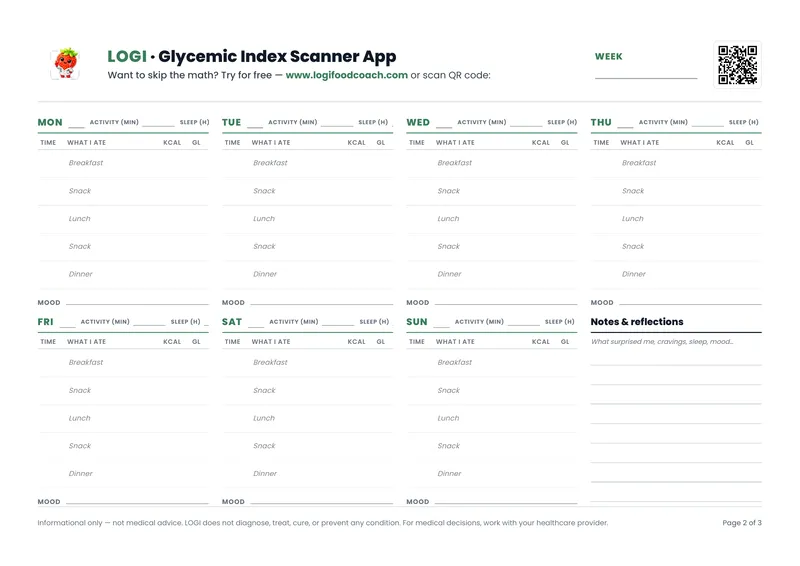
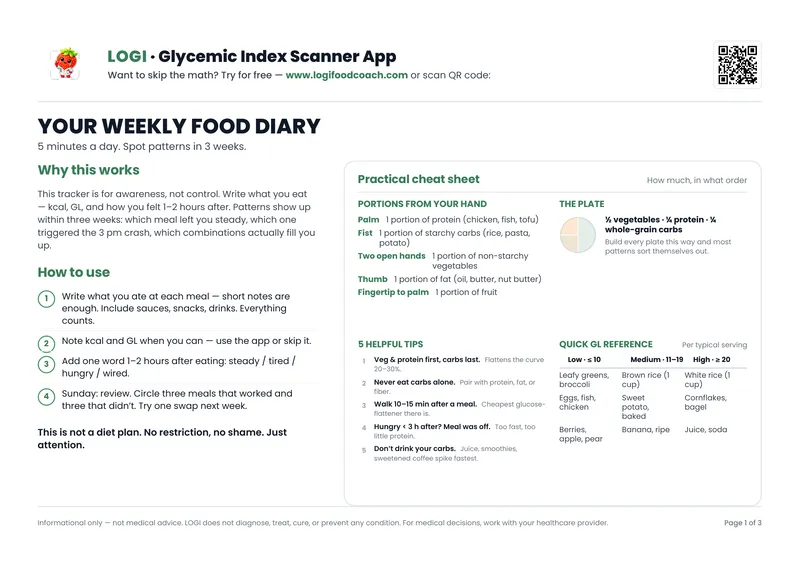
Your Weekly Food Journal
Track meals, glycemic load & mood. Spot patterns in 3 weeks.
No spam. Unsubscribe anytime.