Blood Sugar-Friendly Egg Salad with Creamy Yogurt Dressing
A protein-rich egg salad that keeps blood sugar stable. Made with Greek yogurt instead of mayo, packed with fiber-rich vegetables and healthy fats.
This low-glycemic egg salad is a nutritional powerhouse designed to support steady blood sugar levels throughout your day. Unlike traditional egg salads loaded with mayonnaise and hidden sugars, this recipe features protein-packed hard-boiled eggs combined with probiotic-rich Greek yogurt for a creamy texture that won't spike your glucose.
Eggs are a perfect low-GI food with virtually zero impact on blood sugar, providing high-quality protein and healthy fats that promote satiety and slow digestion. The addition of crunchy celery and red onion adds fiber and volume without carbohydrates, while fermented dill pickles contribute gut-healthy probiotics. Greek yogurt delivers additional protein and creates a tangy, creamy base that's far more blood sugar-friendly than traditional mayonnaise.
For optimal glycemic control, enjoy this egg salad over a bed of leafy greens, wrapped in crisp lettuce leaves, or paired with low-carb vegetable sticks. The high protein content (approximately 18g per serving) helps stabilize blood sugar for 3-4 hours, making it an ideal lunch or snack. The healthy fats from egg yolks further slow glucose absorption, while the fiber from vegetables supports digestive health and sustained energy.
Blood Sugar Impact
Minimal blood sugar impact expected due to the very low glycemic load (1.1) and GI (16). This high-protein, low-carb meal should provide stable energy for 3-4 hours without causing significant glucose spikes.
Blood Sugar Tips
- ✓ Serve on a bed of leafy greens or with raw vegetables like cucumber and bell peppers to add fiber and further slow digestion
- ✓ Pair with whole grain crackers or seeded bread rather than white bread if making a sandwich to maintain the low glycemic response
- ✓ Eat this meal earlier in the day when insulin sensitivity is typically higher, or enjoy as a satisfying lunch that won't cause an afternoon energy crash
🥗 Ingredients
- 6 pcs hard boiled eggs, chopped into small pieces
- 0.75 cup celery, diced
- 0.25 cup red onion, finely diced
- 1 pcs medium dill pickle, finely diced
- 0.25 cup plain Greek yogurt
- 1 tsp dijon mustard
- 0.25 tsp smoked paprika
- 0.25 tsp ground black pepper
- 1 tbsp fresh dill, finely chopped
- 0.25 tsp sea salt, to taste
- 6 pcs hard boiled eggs, chopped into small pieces
- 0.75 cup celery, diced
- 0.25 cup red onion, finely diced
- 1 pcs medium dill pickle, finely diced
- 0.25 cup plain Greek yogurt
- 1 tsp dijon mustard
- 0.25 tsp smoked paprika
- 0.25 tsp ground black pepper
- 1 tbsp fresh dill, finely chopped
- 0.25 tsp sea salt, to taste
👨🍳 Instructions
- 1
Prepare hard-boiled eggs by placing them in a pot and covering with cold water by 1 inch. Bring to a rolling boil over high heat, then immediately remove from heat and cover. Let stand for 10-12 minutes for perfectly cooked eggs with creamy yolks.
- 2
Transfer eggs to an ice bath and let cool for 5 minutes to stop the cooking process. This makes peeling easier and prevents that greenish ring around the yolk. Peel eggs under cool running water.
- 3
Chop the peeled eggs into small, uniform pieces about 1/4-inch in size and transfer to a large mixing bowl. The smaller pieces help distribute the creamy dressing evenly throughout the salad.
- 4
Dice the celery stalks, red onion, and dill pickle into fine pieces, keeping them roughly the same size as the chopped eggs. Add all the vegetables to the bowl with the eggs. Note: Keep red onion portion small (1/4 cup) as it has moderate glycemic impact.
- 5
In a small bowl, whisk together the Greek yogurt, dijon mustard, smoked paprika, and black pepper until smooth and well combined. This creates a creamy, tangy dressing that coats every ingredient.
- 6
Pour the yogurt dressing over the egg and vegetable mixture. Add the freshly chopped dill and gently fold everything together with a spatula until evenly coated. Avoid overmixing to maintain texture.
- 7
Taste and adjust seasoning with sea salt as needed. Remember that pickles add saltiness, so start with less and add more if desired. Cover and refrigerate for at least 30 minutes to allow flavors to meld.
- 8
Serve chilled over a bed of mixed greens, stuffed in crisp lettuce cups, with cucumber slices, or alongside raw vegetables for dipping. Store covered in the refrigerator for up to 3 days for meal prep convenience.
📊 Nutrition Per Serving
| Per Serving | Whole Dish | |
|---|---|---|
| Calories | 259 | 518 |
| Carbs | 8g | 15g |
| Sugars | 4g | 8g |
| Natural Sugars | 4g | 8g |
| Protein | 23g | 46g |
| Fat | 15g | 31g |
| Saturated Fat | 5g | 10g |
| Unsaturated Fat | 11g | 21g |
| Fiber | 2g | 4g |
| Soluble Fiber | 0g | 1g |
| Insoluble Fiber | 1g | 1g |
| Sodium | 977mg | 1953mg |
Predicted Glucose Response
What if you...
Estimated model — individual responses vary. Not medical advice.
🔄 Lower GI Swaps
While Greek yogurt has a low GI of 11, full-fat sour cream or crème fraîche have an even lower glycemic impact due to higher fat content which further slows digestion and minimizes blood sugar response.
Scallions and chives provide onion flavor with virtually zero carbohydrates and no measurable glycemic impact, while adding extra celery maintains crunch without any blood sugar effect.
Fresh cucumber with vinegar or sugar-free fermented pickles eliminate any potential added sugars found in commercial pickles, while radishes add crunch with a GI of 0 and negligible carbohydrates.
While Dijon mustard is already low-glycemic, whole grain or yellow mustard varieties often contain even less sugar, and horseradish provides sharp flavor with zero glycemic impact.
🔬 The Science Behind This Recipe
Why This Recipe Works for Blood Sugar Control
This egg salad is a blood sugar champion because it's built almost entirely from protein and fat—two nutrients that have minimal impact on glucose levels. Eggs are the star here, providing high-quality protein (about 6 grams per egg) and healthy fats that slow digestion and keep blood sugar stable for hours. Unlike carbohydrate-heavy sandwich fillings, eggs have virtually no impact on blood sugar, which is why this recipe scores an impressively low glycemic index of 16 and a glycemic load of just 1.1. The Greek yogurt dressing adds even more protein while contributing beneficial probiotics, and its creamy texture means you won't miss mayonnaise-heavy versions that can add unnecessary calories without the protein benefit.
The supporting ingredients—celery, red onion, and dill pickle—contribute negligible carbohydrates while adding fiber, crunch, and flavor. Celery is particularly beneficial because it's composed mostly of water and fiber, adding volume to your meal without affecting blood sugar. The small amount of carbohydrates in the pickles and onions is offset by their vinegar content (in pickles) and sulfur compounds (in onions), both of which have been shown in research to support healthy glucose metabolism. This combination means you can enjoy a satisfying, flavorful meal that won't trigger the blood sugar roller coaster.
For optimal blood sugar management, pair this egg salad with high-fiber crackers, stuff it into a whole grain pita, or serve it over a bed of mixed greens. If you're adding bread or crackers, eat the egg salad first—starting your meal with protein can reduce post-meal glucose spikes by up to 30%. A short 10-15 minute walk after eating can further help your muscles absorb glucose more efficiently.
Related recipes
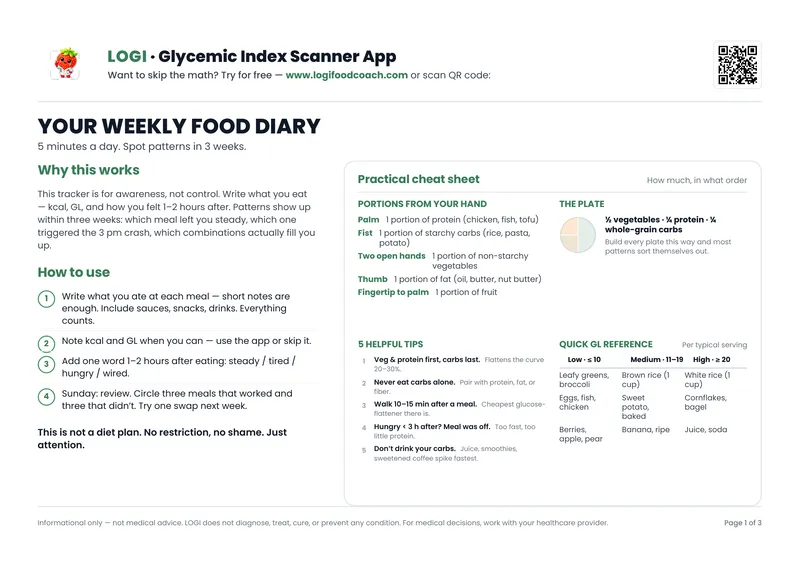
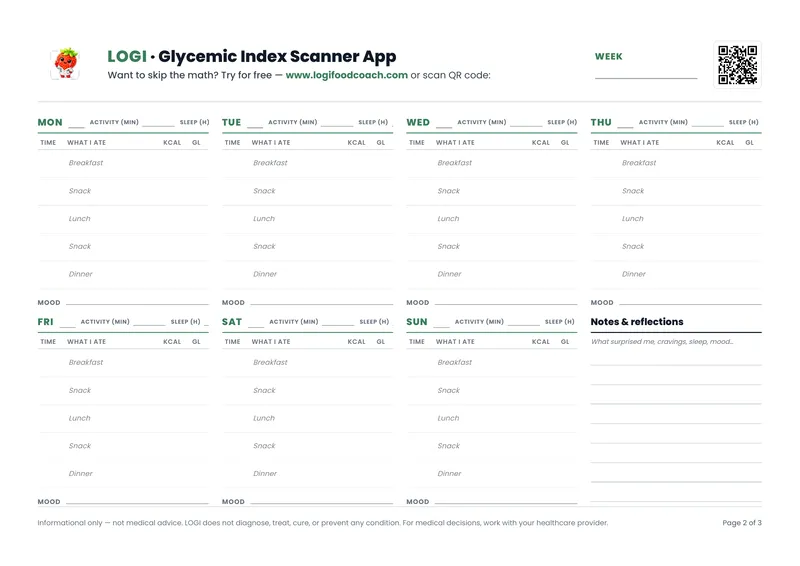
Free PDF — 3 pages
Your Weekly Food Journal
Track meals, glycemic load & mood. Spot patterns in 3 weeks.
No spam. Unsubscribe anytime.