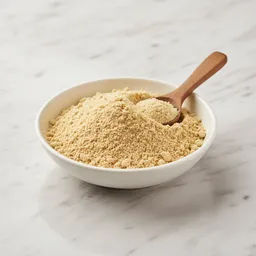
Roasted gram flour
Logi · Manage Insulin Resistance
Lower your blood sugar through smarter food choices
Logi scans your meals, calculates glycemic load in real time, and shows you exactly how each ingredient affects your blood sugar — so you can eat better without guessing.
Start for free →
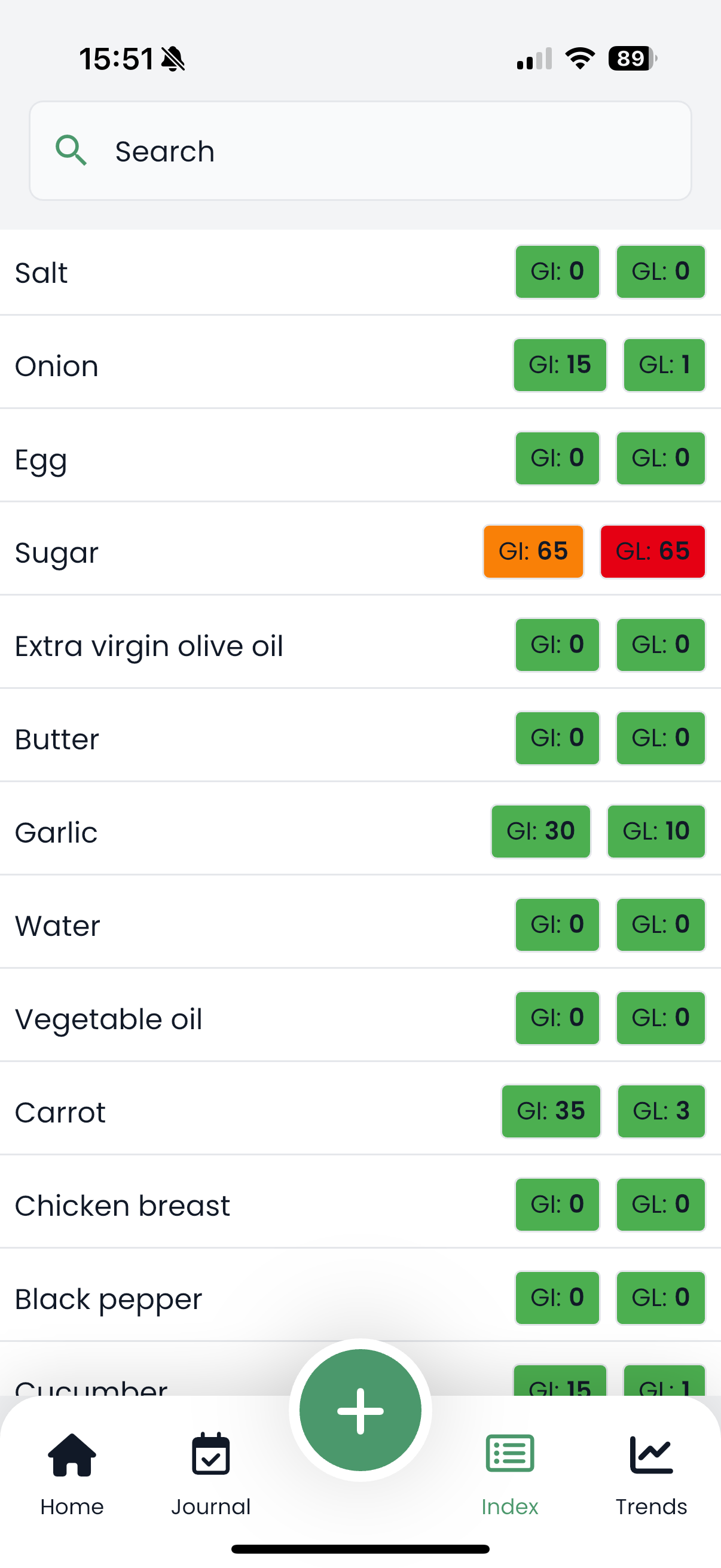
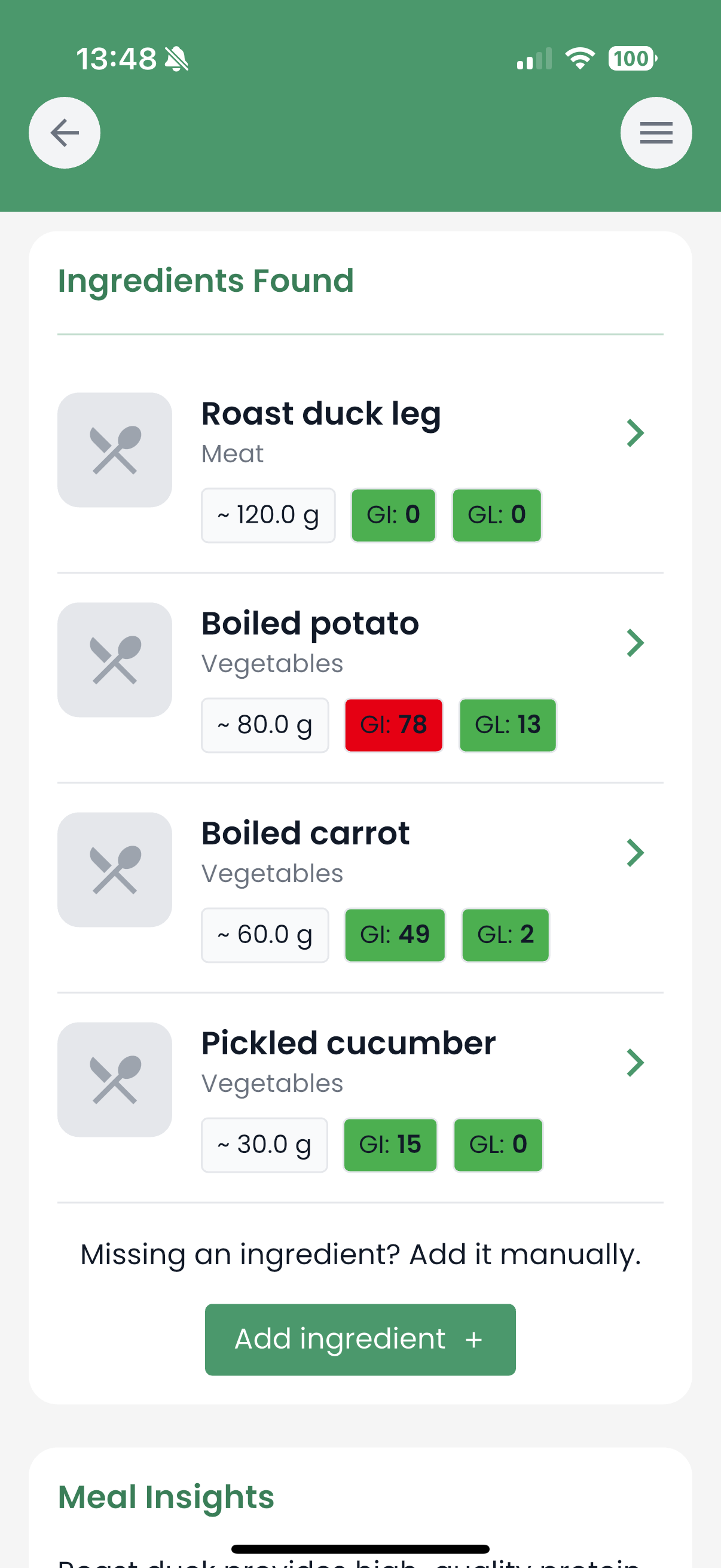
Roasted gram flour has a glycemic index of 28, which classifies it as a low GI food. With a glycemic load of 17 per 100g, it has a moderate impact on blood sugar.
Compared to other legumes, Roasted gram flour ranks among the lowest in glycemic index.
Roasted gram flour is a good choice for people managing blood sugar, insulin resistance, or following a low-GI diet.
Logi Score: 8/10
Why this score?
- ✓ Low glycemic index
- ✓ High protein content
- ✓ Very high fiber
- ✗ Moderate glycemic load
- ✗ Somewhat high carbohydrate content
Processing Level
Nutrition Facts (per 100g)
| Calories | 370 kcal |
| Carbohydrates | 60g |
| Sugars (Total) | 7g |
| Natural | 7.0g |
| Added | 0g |
| Fiber | 18g |
| Soluble | 5.4g |
| Insoluble | 12.6g |
| Protein | 22g |
| Fat | 6g |
| Saturated | 0.7g |
| Unsaturated | 5.3g |
| Sodium | 20mg |
Frequently Asked Questions
What is the glycemic index of Roasted gram flour?
Roasted gram flour has a glycemic index of 28, which classifies it as a low GI food. With a glycemic load of 17 per 100g, it has a moderate impact on blood sugar.
Is Roasted gram flour good for people with insulin resistance?
Roasted gram flour has a low glycemic index (28), making it a good option for people with insulin resistance. It causes a slow, gradual rise in blood sugar.
How does Roasted gram flour affect blood sugar?
Roasted gram flour has a glycemic load of 17 per 100g, which indicates a moderate impact on blood sugar levels. The glycemic load accounts for both the quality and quantity of carbohydrates.
Logi · Manage Insulin Resistance
Lower your blood sugar through smarter food choices
Logi scans your meals, calculates glycemic load in real time, and shows you exactly how each ingredient affects your blood sugar — so you can eat better without guessing.
Start for free →