Random blood glucose (RBG) tests measure your blood sugar at any time of the day, regardless of meals. For healthy adults, normal levels typically range from 80 to 140 mg/dL, while 200 mg/dL or higher may indicate diabetes. Levels between 140 and 199 mg/dL suggest prediabetes. This test is a quick way to check for blood sugar issues, especially if you have symptoms like excessive thirst, frequent urination, or unexplained weight loss.
Key points:
- Normal for adults: Up to 125 mg/dL.
- Prediabetes: 140–199 mg/dL.
- Diabetes: 200 mg/dL or higher.
- Factors like meals, stress, medications, and physical activity can influence results.
- Follow-up tests like A1C or fasting glucose are often needed for confirmation.
Monitoring glucose levels regularly helps detect potential problems early and manage overall health effectively.
Normal Random Glucose Ranges
Healthy Random Glucose Levels for Adults
For adults without diabetes, a normal random glucose level is typically 125 mg/dL (6.9 mmol/L) or lower. This test can be done at any time of day, regardless of your last meal, and reflects how well your body is managing energy.
Dr. Nate Wood, Director of Culinary Medicine at Yale School of Medicine, explains: "Blood glucose is like 'Goldilocks,' meaning we don't want too much or too little. Instead, there's a zone that's 'just right.'"
In some cases, especially for younger or thinner individuals, levels as low as 50 to 70 mg/dL (2.8 to 3.9 mmol/L) might still fall within the normal range.
It's worth noting that laboratories may use slightly different reference ranges, and your healthcare provider will interpret your results based on your unique circumstances. As NewYork-Presbyterian highlights: "A value that isn't in the normal range may still be normal for you". These variations are shaped by individual factors, which are explored below.
How Individual Factors Affect Normal Ranges
What is considered a "normal" glucose range can vary depending on several personal factors. For instance, meal timing has a significant impact - blood sugar naturally rises after eating carbohydrates, as your body processes them into glucose (a process influenced by glycemic load). This explains why random glucose tests have a higher acceptable range compared to fasting tests.
Age is another important consideration. The American Diabetes Association recommends diabetes screening for all adults starting at age 35. However, children as young as 10 may need testing if they are overweight and have additional risk factors. Physical activity also influences glucose levels - regular exercise can help lower blood sugar, while a sedentary lifestyle (less than three workouts per week) can increase the risk of higher levels. Stressful events, such as surgery, trauma, stroke, or a heart attack, may also temporarily push glucose levels above normal.
Medications can further alter glucose readings. Be sure to inform your healthcare provider about any drugs you're taking. For example, corticosteroids, beta-blockers, and statins can elevate blood sugar, while ACE inhibitors and certain antibiotics might lower it.
sbb-itb-0899721
What is a Normal Blood Glucose Level?
What Abnormal Random Glucose Results Mean
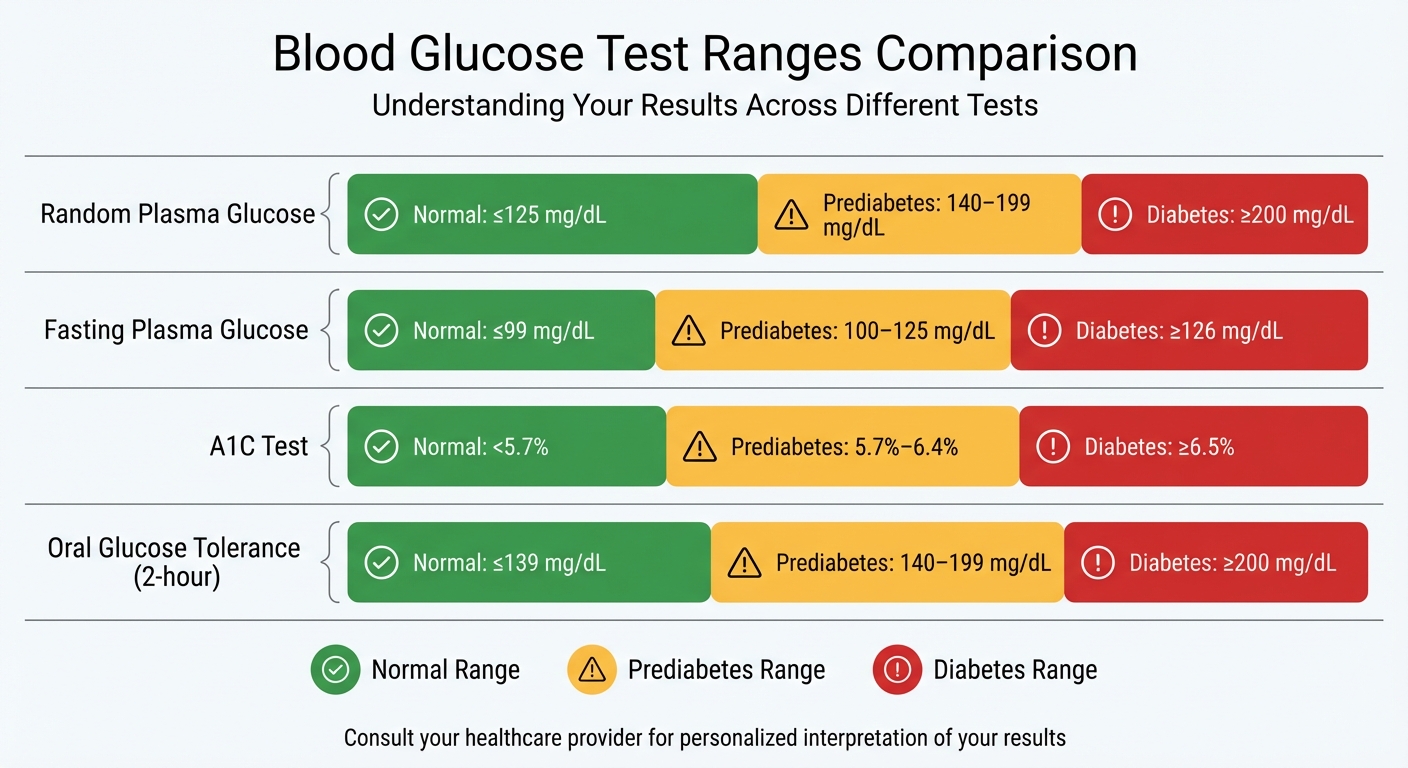
Blood Glucose Test Ranges: Normal, Prediabetes, and Diabetes Levels
A high random glucose result can suggest your body is having trouble managing blood sugar levels, often due to insulin resistance or decreased insulin production. Temporary factors like stress or certain medications can also cause elevated readings. However, a single high result doesn’t necessarily mean you have diabetes.
Here’s a closer look at what different elevated levels might indicate about your blood sugar health.
Prediabetes and Elevated Glucose Levels
Random glucose levels between 140 and 199 mg/dL (7.8 to 11.0 mmol/L) often point to prediabetes. This means your blood sugar is higher than normal but hasn’t reached the threshold for diabetes. According to the Cleveland Clinic:
"Prediabetes happens when you have elevated blood sugar levels, but they're not high enough to be considered Type 2 diabetes."
The numbers are startling - about one-third of adults in the U.S. have prediabetes, and most don’t even know it. If you’re diagnosed with prediabetes, your risk of developing Type 2 diabetes within 5 to 10 years is as high as 50%. The bright side? Losing just 7% of your body weight can slash your risk of Type 2 diabetes by 58%.
Diabetes Diagnosis Thresholds
A random glucose level of 200 mg/dL (11.1 mmol/L) or higher is a key marker for diagnosing diabetes. The American Diabetes Association states:
"Diabetes is diagnosed at blood glucose of greater than or equal to 200 mg/dl."
This threshold becomes especially critical if it’s paired with symptoms like excessive thirst, frequent urination, blurred vision, or unexplained weight loss.
To confirm a diabetes diagnosis, healthcare providers often repeat the test or use a different method on another day. However, if your random glucose is 200 mg/dL or higher and you’re experiencing severe symptoms, a diagnosis may be made immediately.
When to Get Follow-Up Testing
If your random glucose result is outside the normal range, follow-up testing is crucial to better understand your blood sugar health.
For results 140 mg/dL or higher, consider a fasting plasma glucose or A1C test. If you’re diagnosed with prediabetes, retesting every 1–2 years is recommended. If you have risk factors, testing every 3 years is a good idea. However, if you experience severe symptoms like confusion, fruity-smelling breath, nausea, abdominal pain, or vomiting, seek medical attention immediately - these could signal dangerously high blood sugar levels.
Here’s a breakdown of glucose thresholds for different tests:
| Test Type | Normal Range | Prediabetes Range | Diabetes Range |
|---|---|---|---|
| Random Plasma Glucose | 125 mg/dL or below | 140–199 mg/dL | 200 mg/dL or higher |
| Fasting Plasma Glucose | 99 mg/dL or below | 100–125 mg/dL | 126 mg/dL or higher |
| A1C Test | Below 5.7% | 5.7%–6.4% | 6.5% or higher |
| Oral Glucose Tolerance (2-hr) | 139 mg/dL or below | 140–199 mg/dL | 200 mg/dL or higher |
What Affects Random Glucose Measurements
Random glucose tests measure your blood sugar at any given time, without requiring fasting beforehand. These readings can vary significantly based on recent meals, stress levels, physical activity, and other factors, which explains why glucose levels may fluctuate throughout the day.
How Food and Meals Affect Results
What you eat - and when - plays a major role in random glucose levels. Carbohydrates, in particular, are the main drivers of blood sugar changes. Simple carbs, like those in sugary snacks or white bread, tend to cause quick spikes, while complex carbs, such as whole grains or starchy vegetables, result in a steadier rise in glucose levels.
The glycemic load (GL) of a meal, which combines both the type and amount of carbs, further determines how your blood sugar responds. Dexcom offers a helpful analogy:
"Think of the two working together like driving a car: GI tells you how fast you're going, while GL tells you both your speed and the total distance you travel."
Adding protein, fat, or fiber to your meal can slow down how quickly glucose enters your bloodstream. As the American Diabetes Association explains:
"Protein, fat, and fiber all make foods take longer to affect your glucose. This is why chocolate isn't used to treat low blood glucose."
Timing matters too. Blood sugar levels typically peak two to four hours after eating, so a random glucose test during this window will likely show higher numbers compared to one taken several hours later. Alcohol also affects glucose - raising it because of its carb content or lowering it if consumed on an empty stomach. Its impact can last up to 24 hours. Even dehydration can artificially elevate glucose readings by concentrating sugar in the bloodstream.
But food isn’t the only factor. Lifestyle and environmental elements can also shape your glucose readings.
Lifestyle and Environmental Factors
Understanding the external influences on blood sugar levels can help you interpret your readings more effectively and manage your health better.
Stress and physical pain cause your body to release hormones like cortisol, which can raise blood sugar. Similarly, when you're sick, your body produces hormones to fight the illness, and these can also increase glucose levels. The American Diabetes Association explains:
"Illness - your body releases hormones to fight the illness, and those hormones raise blood glucose levels."
On the flip side, physical activity generally lowers blood sugar because your muscles use glucose for energy. This effect can last up to 24 hours after exercise. However, very intense workouts may temporarily raise blood sugar before it drops again.
Medications can also have an impact. Drugs like corticosteroids and antipsychotics tend to increase glucose levels, while others, such as ACE inhibitors or quinolone antibiotics, may lower them. Hormonal changes, such as those during menstrual cycles, can lead to unpredictable swings in blood sugar. Lastly, rapid shifts in glucose caused by exercise or stress can make alternative testing sites, like the arm or thigh, less reliable than fingertip tests.
How to Monitor and Manage Blood Sugar Levels
Keeping track of your blood sugar is a cornerstone of diabetes management. The CDC highlights its importance, stating: "Monitoring your blood sugar is the most important thing you can do to manage diabetes." Even if you’re not diabetic, keeping an eye on your glucose levels can help you take proactive steps to avoid future complications.
Lifestyle Changes for Better Glucose Control
Even small lifestyle tweaks can have a meaningful impact. For instance, losing just 5-7% of your body weight can significantly improve insulin sensitivity and lower glucose levels. If you weigh 200 pounds, that’s about 10-14 pounds - a manageable and realistic goal.
One practical way to manage your diet is by using the Plate Method. Here’s how it works:
- Fill half your plate with non-starchy vegetables like spinach, carrots, or cauliflower.
- Reserve one-quarter for lean protein, such as grilled chicken, fish, or tofu.
- Use the remaining quarter for healthy carbs, like quinoa, whole-grain bread, or sweet potatoes.
This method naturally balances portions and reduces the risk of blood sugar spikes without the hassle of counting calories.
Exercise is another powerful tool. Aim for 150 minutes of moderate aerobic activity each week - think brisk walking or cycling - and add strength training 2-3 times a week. These activities help your muscles process glucose more effectively.
While these changes can make a big difference, modern technology offers even more ways to monitor and fine-tune your blood sugar management.
Using Technology to Track Glucose
Traditional glucose meters require a finger prick and give you a quick snapshot of your levels. While accurate, they don’t provide a full picture of how your blood sugar fluctuates throughout the day.
That’s where continuous glucose monitors (CGMs) come in. According to Nutrisense:
"A CGM, or continuous glucose monitor, is a small, minimally-invasive device that sits on your arm and tracks your glucose levels continuously."
These devices measure glucose levels in the fluid between your cells every few minutes. They can alert you to highs or lows, offering a more comprehensive view of your blood sugar trends.
Apps like Logi - Glycemic Index Tracker can also be valuable. This app helps you estimate how meals will impact your blood sugar through tools like a glycemic load scanner and meal tracker. The free plan covers basic features like scanning and tracking, while the Premium plan ($9.99/month) adds personalized meal suggestions and advanced insights.
To make the most of these tools, try checking your glucose before eating and again two hours later. This will show how specific meals affect your levels. Logging additional details - like exercise, stress, or sleep - can uncover patterns that might otherwise go unnoticed. Sharing these logs with your doctor can help them fine-tune your treatment plan.
These tools not only help you manage your blood sugar but also signal when it’s time to seek professional advice.
When Medical Treatment Is Needed
If your blood sugar stays above target for three days without an obvious reason, it’s time to contact your healthcare provider. A random glucose reading of 200 mg/dL or higher could point to diabetes and should prompt further testing.
In emergencies, quick action is critical. Symptoms like confusion, fainting, or seizures could indicate diabetic ketoacidosis, which requires immediate medical attention. Mayo Clinic advises:
"If your blood sugar level is 240 mg/dL (13.3 mmol/L) or above, use an over-the-counter urine ketones test kit. If the urine test is positive, your body may have started making the changes that can lead to diabetic ketoacidosis."
On the flip side, frequent readings below 70 mg/dL suggest hypoglycemia. If you experience symptoms like sweating, shaking, or dizziness that don’t improve with quick treatment, seek medical help. Your doctor might adjust your medication, recommend insulin therapy, or help you create a plan for managing blood sugar during illness or other disruptions.
Conclusion
Keeping track of your random glucose levels gives you the power to take charge of your health. Abnormal readings can serve as warning signs for potential issues, making early detection incredibly important. Random glucose testing is a simple way to identify prediabetes or undiagnosed diabetes before symptoms even show up. Considering that nearly 1 in 10 Americans lives with diabetes, this straightforward test could be the first step toward prevention and better health.
If your random glucose level hits 200 mg/dL or higher, it’s time to consult your doctor for further evaluation. On the flip side, numbers below 70 mg/dL might signal hypoglycemia, which needs immediate attention. Understanding these numbers helps you take the right steps before complications like heart disease, vision problems, or kidney damage arise.
Regular monitoring connects day-to-day management with the benefits of modern tools. The American Diabetes Association advises starting screenings by age 35 - or earlier if you have risk factors such as obesity or a family history. Whether you rely on traditional methods or tools like Logi - Glycemic Index Tracker, consistent tracking helps guide your choices around diet, exercise, and treatment.
Your blood sugar health is something you can manage. Stay informed, take action, and work closely with your healthcare provider to maintain healthy, balanced levels.
FAQs
What can affect random glucose test results?
Random glucose test results can shift for a variety of reasons. One major factor is food intake - eating just before the test can lead to higher blood sugar levels. On the flip side, physical activity often causes a temporary drop in glucose levels, as your body uses up energy during exercise.
Other elements that can influence results include stress, illness, and hormonal changes, all of which can create noticeable fluctuations. Certain medications, like steroids, may also affect glucose levels, and being dehydrated can skew the numbers further. Even the timing of your meals or when you take medication can play a role. To get a clearer picture of your glucose levels, it’s important to keep these factors in mind when interpreting the results.
How does exercise affect random glucose levels?
Exercise plays an important role in managing random glucose levels. When you engage in physical activity, it typically lowers blood sugar by boosting insulin sensitivity and prompting muscles to use glucose as fuel. This natural process helps improve blood sugar regulation and overall health.
That said, not all exercise has the same effect. High-intensity activities like heavy weightlifting or sprinting can sometimes lead to a temporary rise in blood sugar. This happens because your body releases stress hormones like adrenaline during intense efforts, causing a short-term glucose spike. Don't worry - this is a normal response and usually resolves quickly.
To get a better handle on your blood sugar, try tracking how different types of exercise impact your levels. Tools like Logi can help you identify patterns, empowering you to make smarter choices about your workouts and diet.
When should I see a doctor about unusual blood sugar levels?
If your blood sugar levels stay consistently too high (hyperglycemia) or too low (hypoglycemia), it’s time to consult a doctor. Symptoms such as extreme thirst, frequent urination, fatigue, confusion, or weakness could signal a more serious problem that needs medical attention.
When abnormal readings persist or symptoms start disrupting your daily life, addressing the issue quickly is crucial. Regular monitoring and timely care can play a big role in managing blood sugar levels and supporting your overall well-being.