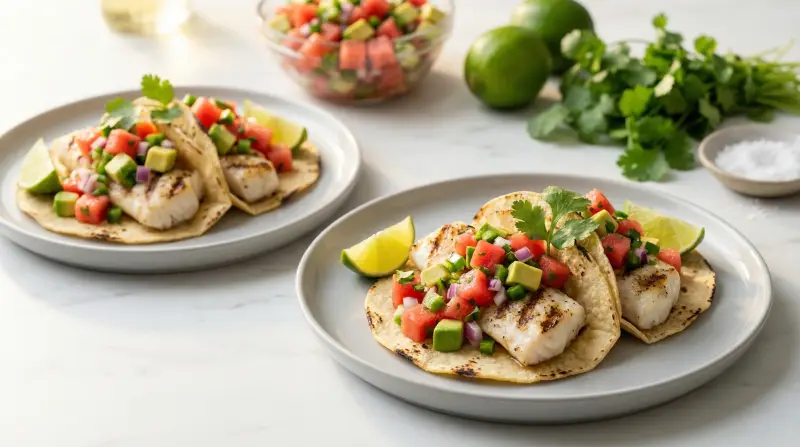
Grillowane tacos z białą rybą i świeżą salsą z arbuza i awokado
Kolorowe tacos z rybą o niskim IG z grillowanym dorszem w chrupiących liściach sałaty, z orzeźwiającą salsą arbuzową, która nie podniesie poziomu cukru we krwi.
Te innowacyjne tacos z rybą przekształcają letni klasyk w danie przyjazne dla poziomu cukru we krwi. Zamieniając tradycyjne tortille kukurydziane na chrupiące liście sałaty rzymskiej, eliminujemy wysokoglikemiczne węglowodany, jednocześnie dodając błonnik i składniki odżywcze. Główne białko — delikatna biała ryba jak dorsz lub halibut — zapewnia trwałą energię bez wpływu na poziom glukozy, podczas gdy zdrowe tłuszcze z awokado i oliwy z oliwek spowalniają trawienie i wspierają stabilny poziom cukru we krwi.
Niespodziewana salsa arbuzowa wnosi naturalną słodycz bez obciążenia glikemicznego typowych dodatków do tacos. W połączeniu z białkiem, zdrowymi tłuszczami i błonnikiem z sałaty, naturalne cukry z arbuza są wchłaniane wolniej. Świeża kolendra, limonka i jalapeño dostarczają związków przeciwzapalnych i kapsaicyny przyspieszającej metabolizm. Ten przepis to przykład idealnej struktury posiłku o niskim IG: najpierw chude białko, dużo warzyw niskoskrobiowych i zdrowe tłuszcze, które zapewnią uczucie sytości.
Dla optymalnego zarządzania poziomem cukru we krwi zjedz najpierw rybę i awokado, a potem delektuj się salsą. Ta kolejność jedzenia — białko i tłuszcz przed jakimikolwiek owocami — dodatkowo minimalizuje reakcję glukozy. Te tacos świetnie sprawdzają się na lunch lub obiad, zapewniając pełne odżywienie z około 25 g białka, 15 g zdrowych tłuszczów i tylko 12 g węglowodanów netto na porcję. Posiłek trawi się powoli, zapobiegając spadkom energii związanym z tradycyjnymi tacos, jednocześnie dostarczając autentycznych smaków inspirowanych kuchnią meksykańską.
Wpływ na cukier we krwi
Oczekiwany minimalny wpływ na poziom cukru we krwi dzięki bardzo niskiemu ładunkowi glikemicznemu 4,4 i IG 22. Ten posiłek powinien zapewnić stabilną energię przez 3-4 godziny bez znaczących skoków glukozy, dzięki połączeniu chudego białka, zdrowych tłuszczów z awokado i świeżych składników bogatych w błonnik.
Porady o cukrze
- ✓ Zjedz najpierw rybę przed salsą arbuzową, aby białko spowolniło wchłanianie cukru z owoców
- ✓ Dodaj więcej awokado lub porcję czarnej fasoli, aby zwiększyć ilość zdrowych tłuszczów i błonnika, dodatkowo stabilizując poziom cukru we krwi
- ✓ Wybierz się na 10-15 minutowy spacer po jedzeniu, aby pomóc mięśniom wchłonąć glukozę i utrzymać stabilny poziom cukru we krwi
🥗 Składniki
- 2 cup arbuz bezpestkowy, pokrojony w kostkę
- 1 pcs świeże dojrzałe awokado, bez pestek i pokrojone w kostkę
- 0.5 pcs czerwona cebula, drobno posiekana
- 1 pcs świeża limonka, sok i skórka
- 0.5 pcs świeża cytryna, tylko sok
- 1 pcs papryczka jalapeño, bez szypułki i pokrojona w kostkę
- 0.5 cup świeża kolendra, posiekana
- 0.25 tsp sól morska, podzielona
- 1.5 tbsp oliwa z oliwek extra virgin, podzielona
- 1 tbsp meksykańska mieszanka przypraw lub chili w proszku
- 1 oz filety z białej delikatnej ryby (dorsz lub halibut)
- 16 pcs liście sałaty rzymskiej lub masłowej
- 2 cup arbuz bezpestkowy, pokrojony w kostkę
- 1 pcs świeże dojrzałe awokado, bez pestek i pokrojone w kostkę
- 0.5 pcs czerwona cebula, drobno posiekana
- 1 pcs świeża limonka, sok i skórka
- 0.5 pcs świeża cytryna, tylko sok
- 1 pcs papryczka jalapeño, bez szypułki i pokrojona w kostkę
- 0.5 cup świeża kolendra, posiekana
- 0.25 tsp sól morska, podzielona
- 1.5 tbsp oliwa z oliwek extra virgin, podzielona
- 1 tbsp meksykańska mieszanka przypraw lub chili w proszku
- 1 oz filety z białej delikatnej ryby (dorsz lub halibut)
- 16 pcs liście sałaty rzymskiej lub masłowej
👨🍳 Instrukcje
- 1
Przygotuj salsę arbuzową, łącząc pokrojony w kostkę arbuz, pokrojone w kostkę awokado, drobno posiekaną czerwoną cebulę, jalapeño i świeżą kolendrę w średniej misce.
- 2
Dodaj do salsy sok i skórkę z jednej limonki oraz sok z połowy cytryny. Skrop 1 łyżką oliwy z oliwek i przypraw 1/4 łyżeczki soli morskiej. Delikatnie wymieszaj, a następnie wstaw do lodówki podczas przygotowywania ryby.
- 3
Osusz dokładnie filety rybne ręcznikami papierowymi. Posmaruj obie strony pozostałą 1/2 łyżki oliwy z oliwek i obficie przypraw meksykańską mieszanką przypraw i szczyptą soli morskiej.
- 4
Rozgrzej grill do wysokiej temperatury lub postaw dużą patelnię na średnio-wysokim ogniu. Gdy będzie gorąca, dodaj przyprawione filety rybne i smaż bez mieszania przez 4-5 minut, aż spód będzie złoty i chrupiący.
- 5
Ostrożnie odwróć rybę i kontynuuj smażenie przez kolejne 4-5 minut, aż ryba będzie nieprzezroczysta w całości i osiągnie wewnętrzną temperaturę 65°C. Zdejmij z ognia i odstaw na 5 minut.
- 6
Podczas gdy ryba odpoczywa, umyj i dokładnie osusz liście sałaty. Wybierz największe, najmocniejsze liście do opakowań tacos.
- 7
Używając widelca, delikatnie pokrusz ugotowaną rybę na duże, kęsy kawałki, zachowując niektóre kawałki nienaruszone dla tekstury.
- 8
Do złożenia, ułóż dwa liście sałaty razem dla stabilności. Dodaj około 1/4 szklanki pokruszonej ryby do każdego podwójnego opakowania z liści, a następnie nałóż 2-3 łyżki salsy z arbuza i awokado. Podawaj natychmiast, gdy ryba jest jeszcze ciepła.
📊 Wartości odżywcze na porcję
| Na porcję | Całe danie | |
|---|---|---|
| Kalorie | 251 | 1004 |
| Węglowodany | 16g | 62g |
| Cukry | 7g | 28g |
| Cukry naturalne | 7g | 28g |
| Białko | 23g | 92g |
| Tłuszcz | 12g | 50g |
| Tłuszcz nasycony | 2g | 7g |
| Tłuszcze nienasycone | 10g | 40g |
| Błonnik | 6g | 23g |
| Błonnik rozpuszczalny | 1g | 6g |
| Błonnik nierozpuszczalny | 3g | 13g |
| Sód | 217mg | 868mg |
Przewidywana odpowiedź glukozowa
A gdybyś...
Model szacunkowy — indywidualne reakcje mogą się różnić. To nie porada medyczna.
🔄 Zamienniki o niższym IG
Arbuz ma wysoki indeks glikemiczny 72-80. Ogórek, jikama i zielona papryka to alternatywy o bardzo niskim IG, które zapewniają podobny orzeźwiający chrupot i zawartość wody bez skoku cukru.
Chociaż czerwona cebula ma stosunkowo niski IG, dymka, szczypiorek i szalotka mają jeszcze niższą zawartość węglowodanów na porcję, dodatkowo minimalizując wpływ glikemiczny przy zachowaniu ostrego, aromatycznego smaku.
Sałata rzymska już ma niski IG, ale kapusta ma nieco więcej błonnika i mniej węglowodanów netto na porcję. Mieszanka sałaty rzymskiej z kapustą lub użycie nori jako opakowań tworzy jeszcze bardziej stabilną dla poziomu cukru we krwi bazę z dodatkowymi składnikami odżywczymi i chrupotem.
Chociaż cytrusy mają stosunkowo niski IG, zmniejszenie ilości lub rozcieńczenie octem jabłkowym (który może poprawić wrażliwość na insulinę) lub użycie skórki dla smaku bez objętości soku może dodatkowo zminimalizować niewielki ładunek glikemiczny z naturalnych cukrów owocowych.
🔬 Nauka za tym przepisem
# Nauka stojąca za twoimi tacos z rybą przyjaznymi dla poziomu cukru we krwi
Te grillowane tacos z rybą to lekcja zarządzania poziomem cukru we krwi, łącząca chude białko z mądrym wyborem węglowodanów, aby utrzymać stabilny poziom glukozy. Z niezwykle niskim ładunkiem glikemicznym wynoszącym zaledwie 4,4 i szacowanym IG na poziomie 22, ten posiłek pokazuje, jak przemyślane łączenie składników może przekształcić zazwyczaj węglowodanowe danie w metaboliczny sukces. Gwiazdą jest tu biała ryba — pełna wysokiej jakości białka, które spowalnia trawienie i zapobiega gwałtownym skokom cukru we krwi związanym z posiłkami składającymi się tylko z węglowodanów. Kiedy jesz białko razem z węglowodanami, twoje ciało uwalnia glukozę do krwiobiegu stopniowo, tworząc łagodną krzywą zamiast ostrego szczytu.
Salsa z arbuza i awokado to miejsce, gdzie dzieje się prawdziwa magia. Chociaż arbuz zawiera naturalne cukry, jego wysoka zawartość wody oznacza, że dostajesz stosunkowo niewiele węglowodanów na porcję, dlatego wielkość porcji ma większe znaczenie niż sam indeks glikemiczny. To właśnie koncepcja ładunku glikemicznego w działaniu — rzeczywista ilość spożytych węglowodanów, a nie tylko szybkość ich wchłaniania. Awokado wnosi zdrowe tłuszcze jednonienasycone i błonnik, które dodatkowo spowalniają wchłanianie glukozy i zwiększają uczucie sytości. Te kremowe tłuszcze pomagają również organizmowi wchłaniać witaminy rozpuszczalne w tłuszczach z warzyw, czyniąc to danie bogatym w składniki odżywcze.
Aby zmaksymalizować korzyści tego posiłku dla poziomu cukru we krwi, spróbuj zjeść najpierw rybę i salsę przed jakimikolwiek tortillami lub dodatkami. Ta strategia "sekwencjonowania jedzenia" wykazała w niektórych badaniach redukcję skoków glukozy po posiłku nawet o 73%. Błonnik z warzyw i tłuszcz z awokado tworzą ochronną barierę w układzie pokarmowym, spowalniając wchłanianie wszelkich węglowodanów, które następują później. Rozważ 10-minutowy spacer po jedzeniu, aby pomóc mięśniom efektywniej wchłaniać glukozę — ruch to naturalny sensytyzator insuliny, który nie wymaga recepty.
Podobne przepisy

Darmowy PDF — 3 strony
Tygodniowy dziennik jedzenia
Notuj posiłki, ładunek glikemiczny i samopoczucie. Wzorce widać po 3 tygodniach.
Zero spamu. Wypisz się kiedy chcesz.
