# Pieczony kurczak parmezan o niskim indeksie glikemicznym
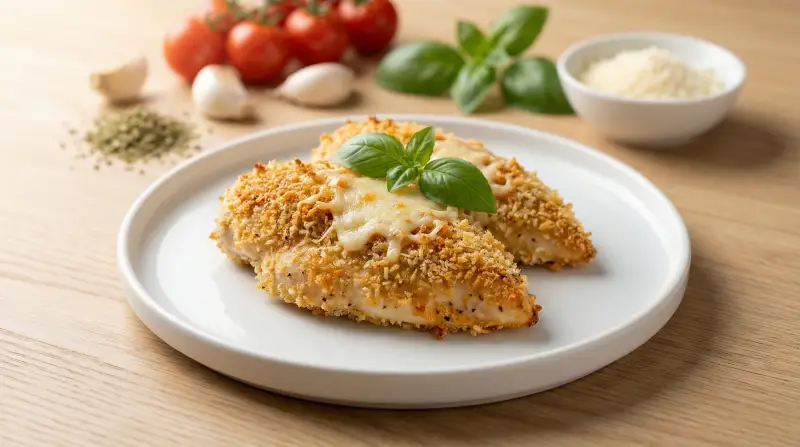
Chrupiący kurczak w ziołowej panierce z sosem marinara i roztopionym serem mozzarella — włoski klasyk przyjazny dla poziomu cukru we krwi, który nie spowoduje skoków glukozy.
Ten przepis na kurczaka w parmezanie to przemyślana wersja ukochanej włosko-amerykańskiej potrawy, która nie powoduje gwałtownych skoków cukru we krwi. Zamiast tradycyjnej panierki z białej mąki używamy bułki panko, która tworzy lżejszą powłokę o niższym indeksie glikemicznym. Połączenie chudego fileta z kurczaka i mozzarelli o obniżonej zawartości tłuszczu dostarcza wysokiej jakości białka, które spowalnia wchłanianie glukozy i zapewnia uczucie sytości na dłużej.
Sekret korzystnego wpływu tego przepisu na poziom cukru tkwi w przemyślanych składnikach. Bułka panko ma grubszą strukturę niż zwykła bułka tarta, co oznacza, że jest mniej przetworzona i wolniej się trawi. Duża ilość parmezanu i ziół nie tylko dodaje wspaniałego smaku, ale także dostarcza białka i zdrowych tłuszczów, które dodatkowo łagodzą reakcję poziomu cukru we krwi. Sos pomidorowy o obniżonej zawartości soli utrzymuje sód w ryzach, jednocześnie dostarczając likopen i inne korzystne związki z pomidorów.
Aby optymalnie kontrolować poziom cukru we krwi, podawaj to danie z dużą porcją warzyw niskoskrobiowych, takich jak pieczony brokuł, szpinak smażony na patelni lub mieszana sałata z oliwą z oliwek i octem. Jedzenie najpierw warzyw, a potem bogatego w białko kurczaka, może pomóc zminimalizować skoki glukozy. Ten posiłek świetnie sprawdza się na obiad i doskonale znosi podgrzewanie, co czyni go idealnym do przygotowywania posiłków z wyprzedzeniem. Każda porcja dostarcza około 35-40 g białka przy minimalnym wpływie na poziom cukru we krwi.
Wpływ na cukier we krwi
To danie powinno spowodować stopniowy, umiarkowany wzrost poziomu cukru we krwi i zapewnić energię na 3-4 godziny. Połączenie chudego białka, sera i umiarkowanej ilości węglowodanów z bułki tartej tworzy zrównoważoną odpowiedź glikemiczną, która unika gwałtownych skoków.
Porady o cukrze
- ✓ Dodaj dużą porcję warzyw niskoskrobiowych, takich jak sałatka lub pieczony brokuł, aby jeszcze bardziej spowolnić trawienie i obniżyć ogólny wpływ glikemiczny
- ✓ Zjedz najpierw bogate w białko mięso z kurczaka, zanim sięgniesz po dodatki na bazie pieczywa – to wykorzystuje efekt „kolejności jedzenia", który minimalizuje skoki poziomu glukozy
- ✓ Zrób 10-15 minutowy spacer po posiłku, aby pomóc mięśniom wchłonąć glukozę i złagodzić wzrost poziomu cukru we krwi po jedzeniu
🥗 Składniki
- 16 oz filety z piersi kurczaka bez kości i skóry
- 2 pcs białka jaj
- 1 cup bułka tarta panko
- 0.5 cup tarty parmezan
- 2 tsp suszona bazylia
- 2 tsp suszone oregano
- 1 tsp czosnek granulowany
- 1 tsp cebula granulowana
- 2 cup sos marinara o obniżonej zawartości sodu
- 0.5 cup startą mozzarellę częściowo odtłuszczoną
- 16 oz filety z piersi kurczaka bez kości i skóry
- 2 pcs białka jaj
- 1 cup bułka tarta panko
- 0.5 cup tarty parmezan
- 2 tsp suszona bazylia
- 2 tsp suszone oregano
- 1 tsp czosnek granulowany
- 1 tsp cebula granulowana
- 2 cup sos marinara o obniżonej zawartości sodu
- 0.5 cup startą mozzarellę częściowo odtłuszczoną
👨🍳 Instrukcje
- 1
Rozgrzej piekarnik do 190°C. Przygotuj dużą blachę do pieczenia, spryskując ją obficie sprayem do pieczenia lub wykładając papierem do pieczenia, aby zapobiec przywieraniu.
- 2
Umieść każdy filet z kurczaka między dwiema warstwami folii spożywczej lub papieru do pieczenia. Używając tłuczka do mięsa lub wałka do ciasta, delikatnie rozbij kurczaka na równą grubość około 0,5 cm. Dzięki temu mięso będzie się równomiernie piekło i będzie miękkie.
- 3
Przygotuj stanowisko do panierowania z dwiema płytkimi miskami. W pierwszej misce lekko ubij białka na pianę. W drugiej misce połącz bułkę panko, starty parmezan, suszoną bazylię, suszone oregano, czosnek w proszku i cebulę w proszku, dokładnie mieszając, aby równomiernie rozprowadzić zioła.
- 4
Pracując z jednym filetem na raz, zanurz go w białkach, pozwalając nadmiarowi ściec. Następnie mocno obtoczy obie strony w przyprawionej bułce tartej, upewniając się, że równomierna warstwa przylega do całej powierzchni. Ułóż panierowanego kurczaka na przygotowanej blasze, zostawiając co najmniej 2,5 cm odstępu między kawałkami.
- 5
Piecz kurczaka w rozgrzanym piekarniku przez 15 do 20 minut, aż panierka stanie się złocista i chrupiąca, a temperatura wewnętrzna osiągnie 74°C, sprawdzona termometrem do mięsa wbitym w najgrubszą część.
- 6
Wyjmij blachę z piekarnika. Na każdy filet nałóż około pół szklanki sosu marinara o obniżonej zawartości sodu, a następnie posyp każdy kawałek 2 łyżkami startej mozzarelli częściowo odtłuszczonej.
- 7
Włóż blachę z powrotem do piekarnika na dodatkowe 3 do 5 minut, tylko do momentu, aż ser mozzarella się roztopi i zacznie bąbelkować. Podawaj natychmiast z dużą porcją warzyw niskoskrobiowych lub świeżą zieloną sałatką dla optymalnej kontroli poziomu cukru we krwi.
📊 Wartości odżywcze na porcję
| Na porcję | Całe danie | |
|---|---|---|
| Kalorie | 340 | 1361 |
| Węglowodany | 22g | 86g |
| Cukry | 7g | 26g |
| Cukry dodane | 1g | 6g |
| Cukry naturalne | 5g | 21g |
| Białko | 39g | 155g |
| Tłuszcz | 10g | 42g |
| Tłuszcz nasycony | 5g | 19g |
| Tłuszcze nienasycone | 6g | 23g |
| Błonnik | 3g | 13g |
| Błonnik rozpuszczalny | 1g | 3g |
| Błonnik nierozpuszczalny | 2g | 8g |
| Sód | 933mg | 3731mg |
Przewidywana odpowiedź glukozowa
A gdybyś...
Model szacunkowy — indywidualne reakcje mogą się różnić. To nie porada medyczna.
🔄 Zamienniki o niższym IG
Te alternatywy mają praktycznie zerowy wpływ glikemiczny w porównaniu z bułką tartą panko (IG ~70). Mąka migdałowa, skwarki wieprzowe i siemię lniane tworzą chrupiącą panierkę bez podnoszenia poziomu cukru we krwi.
Wiele gotowych sosów marinara zawiera dodany cukier, który zwiększa indeks glikemiczny. Używając zwykłych przecieranych pomidorów lub sprawdzonych wersji bez dodatku cukru, eliminujemy ukryte cukry, które mogą podnosić poziom glukozy we krwi.
Mozzarella o niższej zawartości tłuszczu zmniejsza ogólną kaloryczność, zachowując jednocześnie zawartość białka, co pomaga złagodzić odpowiedź insulinową i utrzymać niski indeks glikemiczny.
Choć parmezan już ma niski indeks glikemiczny, płatki drożdżowe dają serowy smak bez żadnego wpływu na glukozę i dodatkowo dostarczają witamin z grupy B. Dojrzałe twarde sery jak pecorino mają jeszcze niższą zawartość laktozy, co dodatkowo minimalizuje wpływ na poziom glukozy.
🔬 Nauka za tym przepisem
# Dlaczego ten przepis działa na rzecz równowagi poziomu cukru we krwi
Ten pieczony kurczak parmezan pokazuje, jak mądry wybór składników może przekształcić tradycyjne danie komfortowe o wysokim indeksie glikemicznym w posiłek przyjazny dla poziomu cukru we krwi. Z ładunkiem glikemicznym wynoszącym zaledwie 11,8 i indeksem glikemicznym 43, to danie pozostaje zdecydowanie w kategorii niskiego indeksu glikemicznego, co oznacza, że nie spowoduje gwałtownych skoków cukru we krwi związanych z tradycyjnymi panierowanymi i smażonymi wersjami.
Sekret tkwi w składzie opartym na białku. Pierś z kurczaka jest tu gwiazdą, dostarczając wysokiej jakości białko praktycznie bez węglowodanów. Białko spowalnia opróżnianie żołądka — tempo, w jakim jedzenie opuszcza żołądek — co oznacza, że węglowodany z bułki tartej panko wchodzą do krwiobiegu stopniowo, a nie wszystkie naraz. Powłoka z białka jajka dodaje kolejną warstwę białka, jednocześnie pomagając panierze się przyczepić, a parmezan dostarcza zarówno białka, jak i tłuszczu. To połączenie białka i tłuszczu jest kluczowe, ponieważ łagodzi wchłanianie glukozy, zapobiegając ostrym wzrostom i spadkom, które sprawiają, że w jednej chwili czujesz się pełen energii, a w następnej wyczerpany.
Bułka tarta panko, choć nadal jest źródłem węglowodanów, jest w tym przepisie używana oszczędnie — tylko tyle, ile potrzeba dla tekstury i satysfakcji. Tu właśnie staje się ważne pojęcie ładunku glikemicznego: nie chodzi tylko o to, co jesz, ale ile. Utrzymując porcję bułki tartej w umiarkowanych ilościach i otaczając ją białkiem i tłuszczem, ogólny wpływ na poziom cukru we krwi pozostaje minimalny. Aby zmaksymalizować korzyści, podawaj to danie z dużą porcją warzyw niskoskrobiowych, takich jak pieczony brokuł lub sałata z zielonych liści z oliwą z oliwek. Rozpoczęcie posiłku od tych warzyw może dodatkowo spowolnić wchłanianie glukozy, zapewniając ci stabilną energię na wiele godzin.
Podobne przepisy
Darmowy PDF — 3 strony
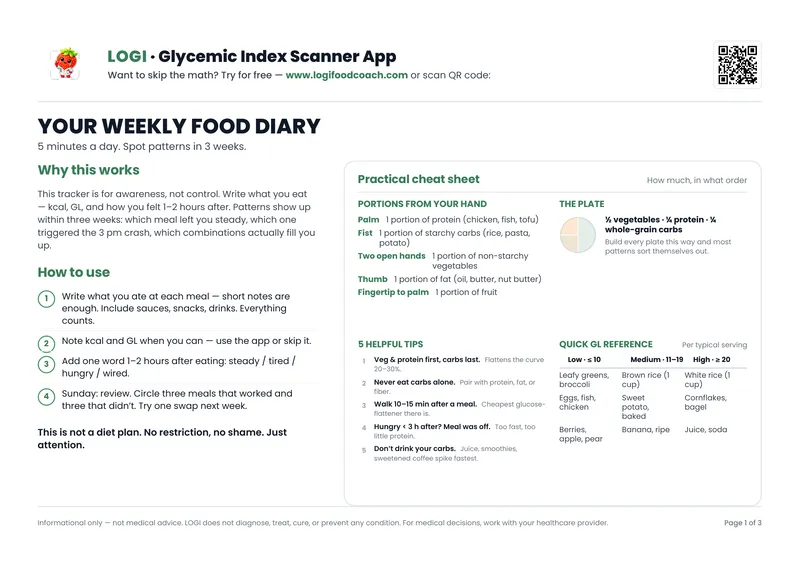
Tygodniowy dziennik jedzenia
Notuj posiłki, ładunek glikemiczny i samopoczucie. Wzorce widać po 3 tygodniach.
Zero spamu. Wypisz się kiedy chcesz.