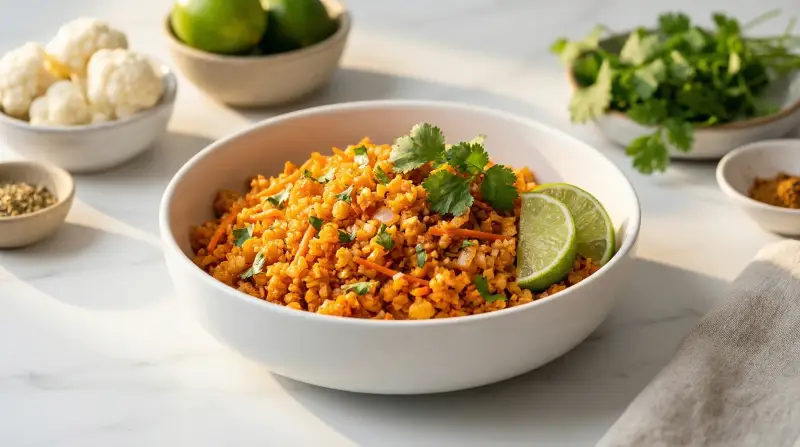
Niskowęglowodanowy ryż kalafiorowy w stylu hiszpańskim
Kolorowe, przyjazne dla poziomu cukru danie, które dostarcza autentycznych hiszpańskich smaków bez skoków glukozy. Gotowe w zaledwie 15 minut z warzywami bogatymi w składniki odżywcze.
Ten ryż kalafiorowy w hiszpańskim stylu to prawdziwa rewolucja dla osób kontrolujących poziom cukru we krwi. Zastępując tradycyjny biały ryż kalafiorem, stworzyliśmy danie o ładunku glikemicznym bliskim zeru, zachowując jednocześnie wszystkie aromatyczne, pikantne smaki klasycznego hiszpańskiego ryżu. Kalafior dostarcza błonnika i składników odżywczych, które spowalniają wchłanianie glukozy, a dodatek marchewki dodaje naturalnej słodyczy i beta-karotenu bez znaczącego wpływu na poziom cukru we krwi.
Połączenie masła klarowanego lub oliwy z oliwek z warzywami tworzy sycące danie, które wspiera stabilny poziom energii. Zdrowe tłuszcze pomagają łagodzić odpowiedź glikemiczną każdego posiłku, dzięki czemu idealnie komponuje się z chudymi białkami jak kurczak z grilla, ryby czy rośliny strączkowe. Aromatyczne przyprawy — kminek, oregano i wędzona papryka — nie tylko wzbogacają smak, ale także zawierają związki, które mogą wspierać prawidłowe funkcjonowanie insuliny.
Dla optymalnego zarządzania poziomem cukru we krwi podawaj to danie jako część zbilansowanego talerza: zacznij od małej sałatki lub warzyw niskoskrobiowych, następnie zjedz białko, a na koniec ten aromatyczny ryż kalafiorowy. Taka kolejność jedzenia pomaga minimalizować skoki glukozy. Przepis jest naturalnie niskowęglowodanowy (około 8-10g węglowodanów netto na porcję) i bogaty w błonnik, co czyni go odpowiednim dla diet diabetycznych, niskowęglowodanowych i dla każdego, kto szuka stabilnej energii bez poposiłkowego spadku związanego z tradycyjnymi daniami ryżowymi.
Wpływ na cukier we krwi
Ten posiłek będzie miał minimalny wpływ na poziom cukru we krwi z bardzo niskim ładunkiem glikemicznym 3,3 i IG 30. Możesz spodziewać się stabilnej, trwałej energii przez 3-4 godziny bez znaczących skoków glukozy dzięki wysokiej zawartości błonnika z kalafiora i obecności zdrowych tłuszczów z masła klarowanego.
Porady o cukrze
- ✓ Zjedz to danie ze źródłem białka, takim jak kurczak z grilla, ryby lub rośliny strączkowe, aby dodatkowo ustabilizować poziom cukru we krwi i zwiększyć uczucie sytości
- ✓ Jedz w spokojnym tempie, dokładnie przeżuwając, aby wspomóc trawienie i pozwolić ciału zarejestrować sygnały sytości
- ✓ Rozważ 10-15 minutowy spacer po jedzeniu, aby pomóc mięśniom wchłonąć glukozę i utrzymać stabilny poziom cukru we krwi
🥗 Składniki
- 2 tbsp masło klarowane (lub masło z mleka krów karmionych trawą lub oliwa z oliwek)
- 1 pcs żółta cebula, posiekana
- 2 pcs ząbki czosnku, posiekane
- 4 cup ryż z kalafiora (świeży lub mrożony)
- 1 cup starta marchewka
- 2 tbsp koncentrat pomidorowy
- 2 tbsp filtrowana woda
- 0.5 tsp mielony kminek
- 1 tsp suszone oregano
- 0.5 tsp sól morska
- 0.25 cup świeża kolendra i ćwiartki limonki do dekoracji
- 2 tbsp masło klarowane (lub masło z mleka krów karmionych trawą lub oliwa z oliwek)
- 1 pcs żółta cebula, posiekana
- 2 pcs ząbki czosnku, posiekane
- 4 cup ryż z kalafiora (świeży lub mrożony)
- 1 cup starta marchewka
- 2 tbsp koncentrat pomidorowy
- 2 tbsp filtrowana woda
- 0.5 tsp mielony kminek
- 1 tsp suszone oregano
- 0.5 tsp sól morska
- 0.25 cup świeża kolendra i ćwiartki limonki do dekoracji
👨🍳 Instrukcje
- 1
Rozgrzej jedną łyżkę masła klarowanego na dużej patelni na średnio-małym ogniu. Dodaj posiekaną cebulę i smaż delikatnie przez około 3 minuty, od czasu do czasu mieszając, aż cebula stanie się przezroczysta i miękka, ale nie zbrązowieje.
- 2
Dodaj posiekany czosnek do zmiękłej cebuli i mieszaj nieprzerwanie przez 30 sekund, aż zacznie pachnieć. Uważaj, żeby czosnek się nie przypalił, bo może to nadać gorzki smak.
- 3
Dodaj pozostałą łyżkę masła klarowanego do patelni, a następnie natychmiast dodaj ryż z kalafiora. Dobrze wymieszaj, żeby wszystkie kawałki kalafiora pokryły się tłuszczem i aromatami, zapewniając równomierne rozłożenie na całej patelni.
- 4
Dodaj startą marchewkę i smaż dalej przez 2-3 minuty, od czasu do czasu mieszając, aby warzywa zaczęły mięknąć i łączyć się ze sobą.
- 5
W małej miseczce wymieszaj przecier pomidorowy z przefiltrowaną wodą, aby uzyskać gładką masę. Dodaj tę mieszankę do patelni razem z kminkiem, oregano, wędzoną papryką i solą morską. Dokładnie wymieszaj, żeby przecier pomidorowy i przyprawy równomiernie pokryły wszystkie warzywa bez grudek.
- 6
Zmniejsz ogień do małego, przykryj patelnię jeśli chcesz i gotuj ryż z kalafiora przez kolejne 4-5 minut, aż wszystkie warzywa będą miękkie, ale nie rozgotowane. Spróbuj i dopraw dodatkowo solą, kminkiem, oregano lub wędzoną papryką według potrzeb.
- 7
Zdejmij z ognia i przełóż na półmisek. Udekoruj świeżo posiekaną kolendrą i podawaj z ćwiartkami limonki lub cytryny z boku, żeby goście mogli skropić swoje porcje. Podawaj natychmiast, póki jest gorące, jako dodatek do ulubionego białka.
📊 Wartości odżywcze na porcję
| Na porcję | Całe danie | |
|---|---|---|
| Kalorie | 126 | 504 |
| Węglowodany | 14g | 54g |
| Cukry | 6g | 23g |
| Cukry naturalne | 6g | 23g |
| Białko | 3g | 12g |
| Tłuszcz | 8g | 30g |
| Tłuszcz nasycony | 4g | 18g |
| Tłuszcze nienasycone | 3g | 12g |
| Błonnik | 4g | 16g |
| Błonnik rozpuszczalny | 1g | 4g |
| Błonnik nierozpuszczalny | 2g | 8g |
| Sód | 342mg | 1367mg |
Przewidywana odpowiedź glukozowa
A gdybyś...
Model szacunkowy — indywidualne reakcje mogą się różnić. To nie porada medyczna.
🔄 Zamienniki o niższym IG
Szalotki, pory i dymka mają niższy wpływ glikemiczny niż cebula żółta ze względu na niższą ogólną zawartość węglowodanów na porcję, pomagając utrzymać bardziej stabilny poziom cukru we krwi
Marchewka ma umiarkowany indeks glikemiczny (35-92 w zależności od sposobu gotowania), podczas gdy cukinia, papryka i seler naciowy to warzywa o bardzo niskim indeksie glikemicznym, które dodają objętości i składników odżywczych bez podnoszenia poziomu cukru we krwi
Koncentrat pomidorowy jest zagęszczony i zawiera więcej cukru na łyżkę stołową niż świeże pomidory czy papryka, które zapewniają podobny smak przy niższym ładunku glikemicznym dzięki większej zawartości wody i błonnika
Podczas gdy woda nie ma wpływu na poziom glikemii, użycie bulionu dodaje białka i zdrowych tłuszczy, które dodatkowo spowalniają wchłanianie glukozy i poprawiają uczucie sytości, prowadząc do lepszej kontroli poziomu cukru we krwi podczas całego posiłku
🔬 Nauka za tym przepisem
Dlaczego ten przepis działa na równowagę poziomu cukru we krwi
Ten ryż kalafiorowy w hiszpańskim stylu to mistrzostwo w zarządzaniu poziomem cukru we krwi, z niezwykle niskim ładunkiem glikemicznym wynoszącym zaledwie 3,3 na porcję. Główny składnik, ryż kalafiorowy, zastępuje tradycyjny biały ryż (który ma IG 30) warzywem pełnym błonnika i wody, a jednocześnie ubogim w węglowodany. Sama ta zamiana drastycznie redukuje wpływ glukozy w twoim posiłku. Kalafior zawiera około 5 gramów węglowodanów na szklankę w porównaniu do 45 gramów w białym ryżu, co oznacza, że twoje ciało ma znacznie mniej glukozy do przetworzenia. Błonnik w kalafiorze również spowalnia trawienie, tworząc łagodniejszy, bardziej stopniowy wzrost poziomu cukru we krwi zamiast ostrego skoku.
Dodatkowe składniki tworzą synergiczny efekt, który dodatkowo stabilizuje odpowiedź glukozową. Masło klarowane, bogate w zdrowe tłuszcze, spowalnia opróżnianie żołądka — tempo, w jakim jedzenie opuszcza żołądek. Oznacza to, że węglowodany z marchewki i cebuli przedostają się do krwiobiegu bardziej stopniowo. Niewielka ilość marchewki dodaje koloru i składników odżywczych bez znaczącego wpływu na ogólny ładunek glikemiczny, ponieważ całkowita ilość na porcję pozostaje umiarkowana. Czosnek i cebula, choć aromatyczne, dostarczają minimalnych ilości węglowodanów i zawierają związki, które mogą wspierać wrażliwość na insulinę.
Aby zmaksymalizować korzyści tego dania dla poziomu cukru we krwi, połącz je ze źródłem białka, takim jak kurczak z grilla, ryby lub rośliny strączkowe. Połączenie białka, tłuszczu z masła klarowanego i błonnika z kalafiora tworzy idealną triadę dla kontroli glukozy. Rozważ zjedzenie najpierw białka, a potem ryżu kalafiorowego — ta strategia "sekwencjonowania jedzenia" wykazała w niektórych badaniach redukcję poposiłkowych skoków glukozy nawet o 73%.
Podobne przepisy
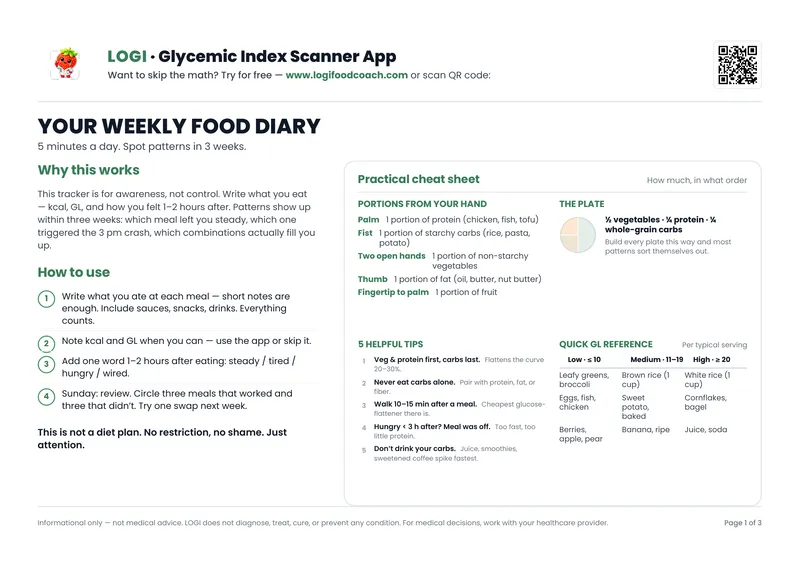
Darmowy PDF — 3 strony
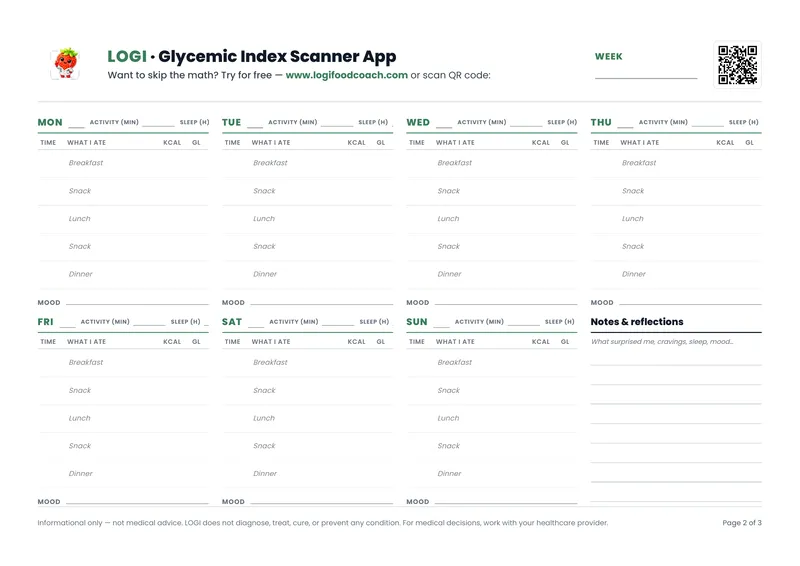
Tygodniowy dziennik jedzenia
Notuj posiłki, ładunek glikemiczny i samopoczucie. Wzorce widać po 3 tygodniach.
Zero spamu. Wypisz się kiedy chcesz.